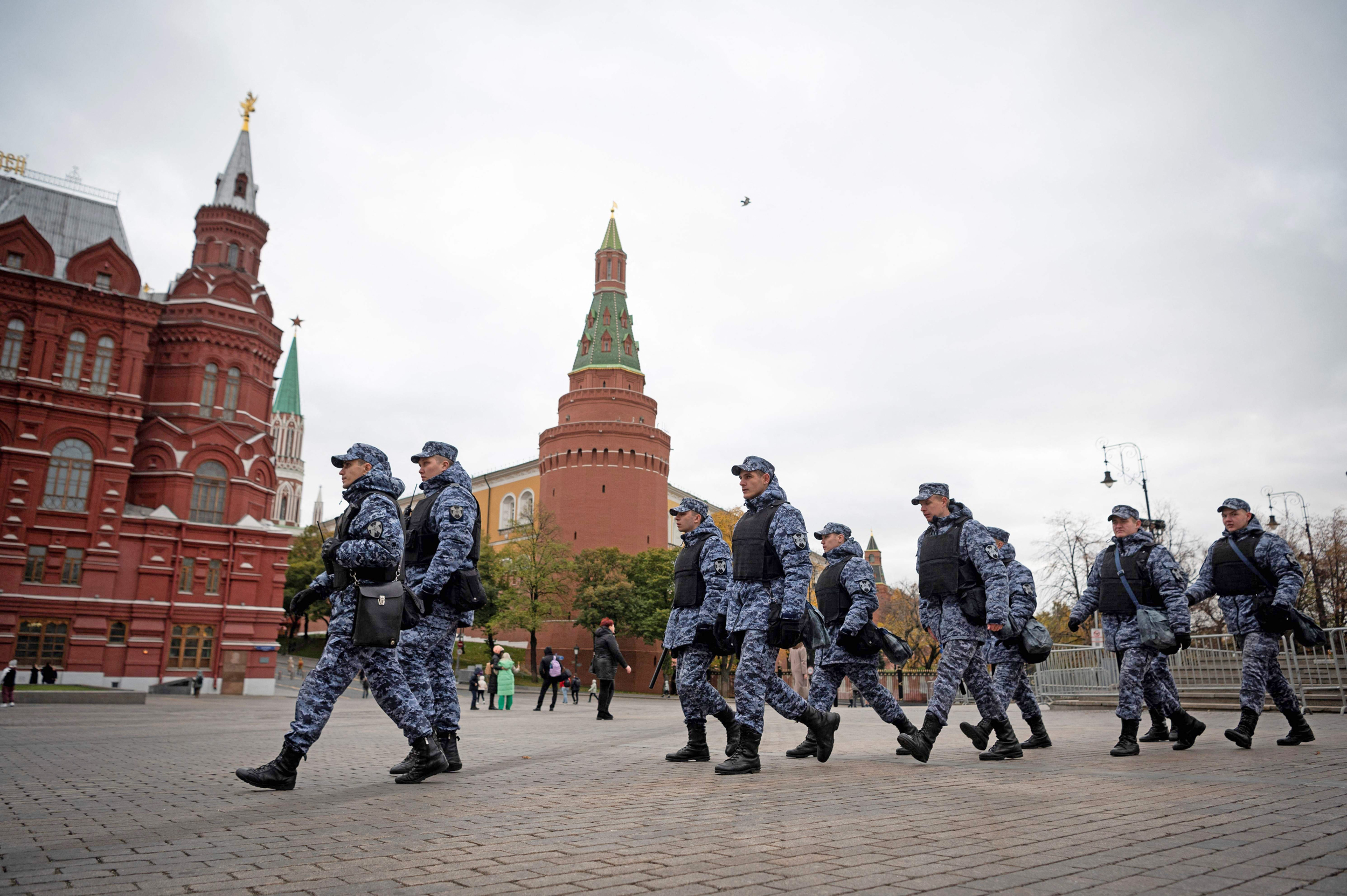
https://t.co/rsLAb6CLu7https://t.co/mOevGAxvVQ#News #Times #NewsAndTimes #NT #TNT #Israel Israel #World World #USA USA #POTUS POTUS #DOJ DOJ #FBI FBI #CIA CIA #DIA DIA #ODNI ODNI Mossad #Mossad Putin #Putin Russia #Russia #GRU GRU Ukraine #Ukraine #SouthCaucasus #NewAbwehr… pic.twitter.com/VLs92PKkNO
— Michael Novakhov (@mikenov) December 16, 2023
Day: December 16, 2023
Charles McGonigal and the October Surprise 2016 – Audio Review (1 Hour 45 min.) of the Selected Articles – 12.16.23 #SoundCloud https://t.co/cfGqcWxOIL
–https://t.co/xxJvAV2ceH pic.twitter.com/3durKu8KCO— Michael Novakhov (@mikenov) December 16, 2023
‘Charles McGonigal and the October Surprise 2016 – Audio Review of the Selected Articles – 12.16.23’ is on #SoundCloud https://t.co/cfGqcWxOIL
— Michael Novakhov (@mikenov) December 16, 2023
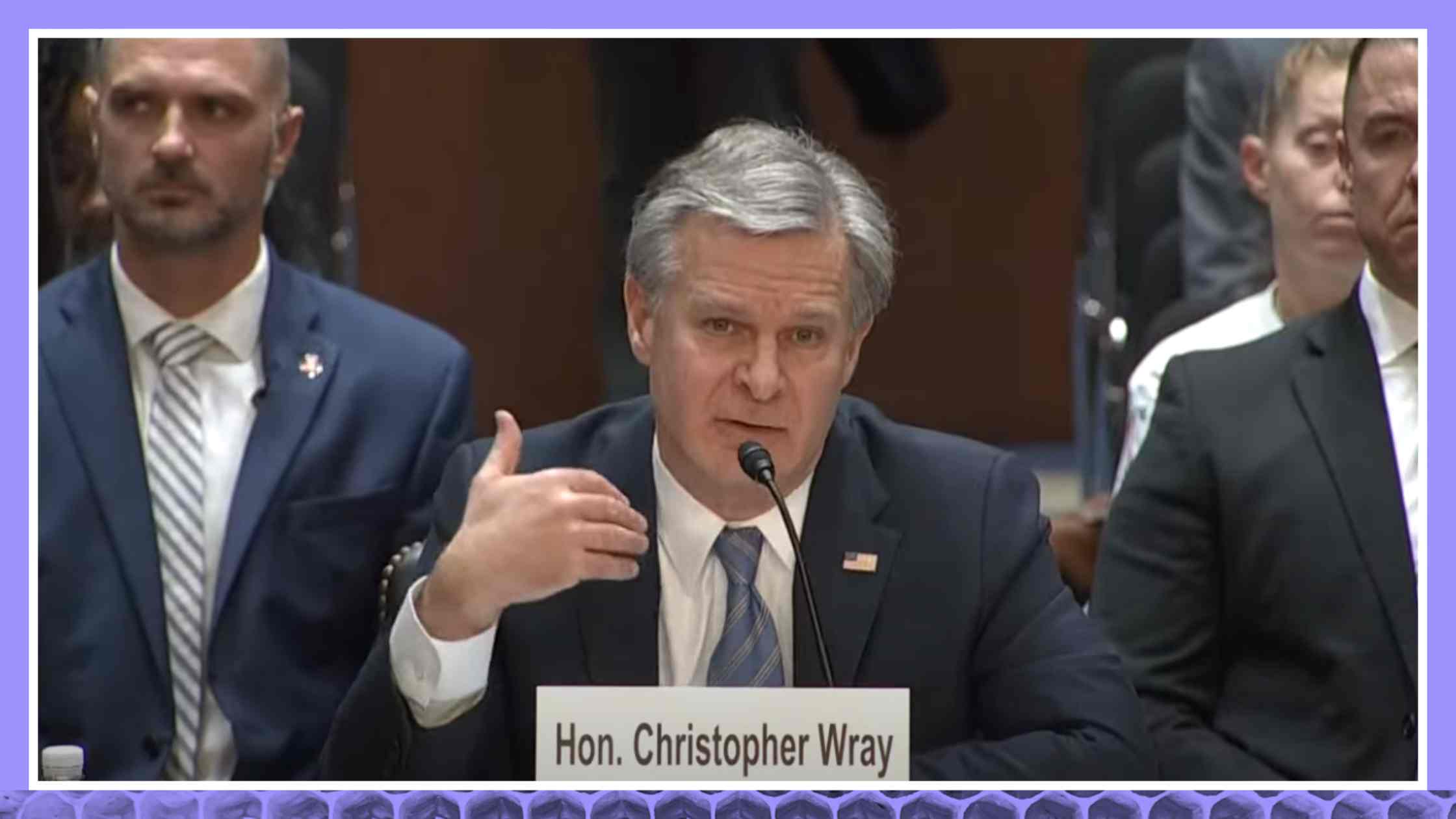
Senator Durbin (00:00):
… constitution. I’m troubled that the FBI is facing baseless claims that you have been weaponized for political purposes and dangerous calls to defund the agency. There are people listening to that sort of rhetoric. This irresponsible charge has real consequences. Just last month, a man from Tennessee pled guilty to a December 2022 plot to attack the Knoxville FBI office and kill the agents involved in the investigation of his co-defendants participation in the January 6th insurrection. This committee plays a critical role in holding the FBI accountable to the American people. But I urge my colleagues to exercise this oversight in a responsible and respectful manner. I urge my colleagues as well not to engage in bullying or conduct unbecoming of a member of this committee.
(00:54)
One of the central concerns that I would like to raise is the troubling increase in hate crimes in America, including anti-Semitic, anti-Arab, and Islamophobic attacks. In the wake of the Middle Eastern conflict, the FBI must continue to respond swiftly to these threats. In Illinois, we are still grieving the horrific murder of a six-year-old Palestinian American Wadea Al-Fayoume and the violent attack on his mother by a man who targeted them simply because of their national origin. And we send our support to Hisham Awartani, Tahseen Ali Ahmad, and Kenan Abdulhamid as they recover from their injuries in Vermont. These three young men of Palestinian descent were shot while walking to dinner. When they were attacked, two were wearing kefiyahs, a traditional Palestinian headdress. The Jewish community has also experienced a historic surge in threats, vandalism, and attacks. For example, a Las Vegas man was recently indicted for making threatening calls to our Jewish colleague, Senator Rosen. I strongly support the FBI’s critical work in combating all of these threats, but there is a need for continued improvement, especially ensuring that more hate crimes are actually reported to law enforcement.
(02:13)
At the same time that the FBI addresses domestic threats, it must also respond to international actors. Just last week, the Justice Department unsealed the indictment of an Indian national accused of conspiring to assassinate a Sikh American on American soil at the direction of an Indian government official. As I’ve said many times in this committee, political violence in all forms is unacceptable. An attack on any individual based on their race, ethnicity, gender, sexuality, nationality, religion, or disability is not consistent with the values of America. Every community deserves to feel safe and the FBI plays an important role in guaranteeing that sense of security. The threat of violent extremism is heightened by the proliferation of guns in America. Since the enactment of the Bipartisan Safer Communities Act, the FBI has conducted more than 100,000 enhanced background checks for gun purchases under 21, keeping firearms out of the hands of prohibited people.
(03:16)
There is more work to be done. Director Wray, I want to thank you for hosting me yesterday at the FBI headquarters for a demonstration of the FBI’s use of Section 702 of FISA. There is no question that Section 702 is a critical tool for collecting foreign intelligence and protecting America. I appreciate the reforms you put in place with the FISA court to address what the FISA Court called widespread and persistent violation of 702 rules. I still remain concerned though about protecting the communications of innocent Americans from warrantless surveillance. I look forward to continuing to work with you to reauthorize 702, with the significant reforms we need to protect the privacy of innocent Americans. I now turn to the Ranking Member Lindsey Graham for his opening remarks.
Senator Graham (04:03):
Thank you, Mr. Chairman. Welcome, Inspector. [inaudible 00:04:07] Inspector. Director. So we really appreciate you coming. Now’s a good time to have an honest talk with the American people through the committee about the dangers we face, what the FBI is doing every day, and how we can make you stronger in the face of a lot of threats. You’ll be asked about the FBI’s role in monitoring religious organizations. The debacle call Crossfire Hurricane hangs in the air in the conservative world. And so we’re going to move forward. You’ll be asked some tough questions and I appreciate you being here today. So Mr. Chairman, one thing that I’ll be talking about among the list of threats is a broken board. Mr. Chairman, since President Biden has taken office, we’ve had 6.6 million encounters with illegal aliens at the southern border. That’s larger than 33 states, and we’re on pace. The last seven days, we’ve been averaging about 9,500 a day.
(05:11)
Play that out, we’re looking at 3.4 million this year at that rate. That puts us at 10 million and that doesn’t count the [inaudible 00:05:21]. So we’re negotiating how to help you Ukraine. Count me in for helping Ukraine. A robust package to help our allies in Ukraine makes sense to me. Upping the ability of Taiwan to defend itself makes sense to me. Helping Israel makes all the sense in the world. Border security is the fourth plank of this supplemental. We’re wildly apart. The negotiations by Senator Lankford and Murphy, I appreciate their efforts. We’ve made great progress, I think on asylum, but the Democratic Party seems to be unwilling to address the key problem. Parole.
(06:08)
This statute is pretty clear. The secretary at DHS has the ability to parole an individual, is supposed to be an individual based on a case-by-case basis for urgent humanitarian reasons or significant public benefit. Mayorkas and people at DHS have used that provision to give parole to over 240,000 people from four countries alone, Cuba, Haiti, Nicaragua, and Venezuela. It is not meant to be used in that fashion. Why are we at an impasse? The Biden administration refuses to follow the law as written, refuses to give up this concept of humanitarian parole because it is their way of managing the border. Why are so many people coming now compared to before? The belief is, Mr. Chairman, if you get to America, you got a really good chance of never leaving. Catch and release is the policy. If you apply for asylum, the initial screening test is way too low and your case is to be heard years from now, you’re released in the United States. You’re paroled in the United States when we run out of bed space or they just want to parole people.
(07:33)
The Democratic governors and mayors of large blue cities are complaining, but their answer is just more resources to process illegal immigration. You will not get a deal from the Republican Party unless we change the policies that are leading to 9,500 on average a day coming to our border. What are we looking for? Not H.R. 2, but we’re looking for policy changes that will spread throughout the world and people will no longer risk their lives, their family lives pay thousands of dollars to human traffickers to show up at our border. That’s what we’re trying to do. You don’t want to do that. You clearly as a party, do not want to change the policies that are attracting so many people.
(08:27)
It’s inhumane, I think to lure people through this journey. It’s not fair to the American people to be overrun in the fashion we are. Given the threats that exist in the world, it’s exceedingly dangerous to have lost control of your border. I’m often asking at home, are they incompetent or they want it this way. The Biden administration. I think there are a lot of smart people in the Biden administration, they want it this way. They want to be able to have the ability to use parole, humanitarian parole, and there’s no such creature that allows for blanket admission into the country as a tool to control the flow. They’re not interested in deterring the flow. They just want to control the flow, manage the flow.
(09:17)
We, on this side, there are some of Republicans that won’t vote for any aid to Ukraine, but they’re an instinct minority in the Senate and I think the house is at least evenly divided. If we had a border security proposal as part of the supplemental that addressed our own national security needs here at home, I think you’d get a very large vote. So I don’t need any more lectures about the need for Ukraine. I got it. I understand. You’re right. I understand why we should help Israel. I understand why we should toughen up Taiwan. What you clearly don’t seem to understand or you’re not going to accept the situation at the border is a national security nightmare in the making. It’s unfair to the border communities to have to live like this. So I have urged Governor Abbott, who’s been on the tip of the spear here, now is moving to Arizona to make it real to senators who seem to object to making the policy changes.
(10:21)
I know Chicago has had a lot of illegal immigrants sent there. There are a lot of senators who are refusing to fix the broken border whose states are pretty much immune from the problem in the sense that they’re not having to deal with hundreds of thousands of people coming across and wreaking havoc on the border towns. Fentanyl is an all-time high coming into the country through a broken southern border made in China for the most part. We’re never going to stop the flow of fentanyl until we regain control of our border. So to those who are following these negotiations, let me tell you where they’re at. They’re stuck. They’re not going forward in a productive fashion until the Biden administration is willing to change the policies that are leading last two days, 10,200. Let me say that again. In the last two days, 10,200 people have shown up at the border. Those are the ones that we know about. The last seven days, almost 9,500 on average, you’re on track to do 3.6 million. There will be no deal until you change the policies that lead to this problem. If that’s too far for you, I’m sorry, it shouldn’t be too far for America. The American people are demanding to regain control of a border where we have lost control. American people want to have Israel, generally speaking, their division on Ukraine, but I think Ukraine would carry the day with border security. There are so many threats that the director will talk about, but people ask me in the hallway all the time, where are we on negotiating the border? We’re stuck and there will be no deal until the policy changes that would lead to people not coming at the levels they’re coming today is enacted. That’s where we’re at.
(12:39)
You seem to be comfortable, my friends on the Democratic side, while making small changes to a big problem, nibbling around the edges of this problem. It’d be like sending guns to Ukraine without any bullets. You’re really robust when it comes to Ukraine and I’m with you. But when it comes to our border, you’re playing a game of doing the least amount possible to pick 10 or 12 of us off. It ain’t happening. And I’ve been involved in this issue for 20 years. This is not about immigration reform and it needs to happen. It is about securing a broken border at a time when the threats to our nation are all time high, and it started with Afghanistan. The world is on fire, multiple fronts and getting worse every day. There will be no assistance to other nations who are deserving until we assist our own nation.
(13:42)
So this attitude of doing the least you can, trying to pick 10 or 12 of us off is not going to work. We’re united over here. We’re divided on Ukraine. But I would say two thirds of our conference would vote for a package including Ukraine aid, if it had real border security. And here’s the problem you got. I know what real border security looks like. So does Senator Tillis, so does Senator Cotton, so does Senator Lankford, and so does everybody else over here. So you’re making a choice. You’re putting your nation at risk, and the consequence of this is going to be devastating to the world.
Senator Durbin (14:21):
Let me lay out the mechanics for today’s hearing. After I swear in Director Wray, he has five minutes to provide an opening statement. Then we’ll turn to members, each will have seven minutes. And please try to remain within your allotted time. Director, would you please stand to be sworn? Do you affirm the testimony you’re about to give before this committee will be the truth, the whole truth, and nothing but the truth so help you God?
Director Wray (14:41):
Senator Durbin (14:44):
Let the record reflect that the director has answered in the affirmative and I now recognize it.
Director Wray (14:52):
Thank you. Good morning, Chairman Durbin, Ranking Member Graham, members of the committee. I’m proud to be here today representing the FBI. The threats, the Bureau’s 38,000 men and women tackle every day are more complex and evolving more quickly than ever before. And we continue to work relentlessly to stay ahead of those threats and to outpace our adversaries. For example, last year we disrupted over 40% more cyber operations and arrested over 60% more cyber criminals than the year before. Over the past two years, we’ve seized enough fentanyl to kill 270 million people. That’s about 80% of all Americans. We’re also focused on other threats that emanate from the border and impact communities all over the country. Things like violent gangs and human traffickers. At the same time, given the steady drumbeat of calls for attacks by foreign terrorist organizations since October 7th, we’re working around the clock to identify and disrupt potential attacks by those inspired by Hamas horrific terrorist attacks in Israel.
(16:10)
And in recent years, we’ve seen an increase in hate crimes investigations including a particularly big chunk involving threats to the Jewish community. That is a troubling trend we were focused on before October 7th that’s only gotten worse in the month since. I could go on and on about the important work the FBI’s dedicated professionals are doing across the entire spectrum of threats each and every day to protect their fellow Americans. But in the time I have here this morning, I want to emphasize the importance of one tool in particular that is indispensable to our efforts to combat threats posed by foreign adversaries. One that will expire in just a few short weeks if Congress does not act. And that is FISA’s 702 authorities for the FBI. As this committee knows, 702 allows us to stay a step ahead of foreign actors located outside the United States who pose a threat to national security. And the expiration of our 702 authorities would be devastating to the FBI’s ability to protect Americans from those threats.
(17:24)
So let me explain just a bit about what I mean by that. When an overseas cyber criminal breaches a transportation hub, a public utility, or even a children’s hospital, 702 is often the tool we use to find victims and get them what they need to get their systems back up and running. And just as important, it helps us identify the next targets so they can defend themselves against an attack. In just one recent cyber case, for instance, 702 allowed the FBI to alert more than 300 victims in every state and countries around the world. And I should add that many of those crucial victim notifications were made possible by our ability to conduct U.S. person queries of our existing 702 collection. When it comes to foreign adversaries like Iran, whose actions across a whole host of threats have grown more brazen seeking to assassinate high level officials, kidnap dissidents and conduct cyber attacks here in the United States or the People’s Republic of China, which poses in my view a generational threat to our economic and national security.
(18:42)
Stripping the FBI of its 702 authorities would be a form of unilateral disarmament or take the elevated threat of international terrorism. 702 is key to our ability to detect a foreign terrorist organization overseas directing an operative here to carry out an attack in our own backyard. And U.S. person queries, in particular, may provide the critical link that allows us to identify the intended target or build out the network of attackers so we can stop them before they strike and kill Americans. Given the critical importance of 702, we are committed to being good stewards of our authorities. And to that end, I have ordered a whole host of changes to address unacceptable compliance incidents. Reforms as you noted, Mr. Chairman, that many members of this committee have seen with their own eyes in live demonstrations of our systems at FBI headquarters. We’ve improved our systems, enhanced training, added oversight and approval requirements, adopted new accountability measures.
(19:58)
On top of that, we stood up a brand new office of internal auditing that’s been focused specifically on FISA compliance. Most of the declassified reports that have come out over the past year or so involve compliance errors that predate those reforms. And I have been encouraged by the more recent data showing the significant positive impact that those reforms, those changes have had. The most recently declassified opinion from the FISA Court, for instance, shows a 98% compliance rate and observes that the reforms are, and I’m quoting the court here, “Having the desired effect.” And the two most recent Department of Justice semi-annual reports, likewise, now show a greater than 98% compliance rate. And we’re proud of the progress we’ve made so far, but we are by no means done.
(20:56)
We recognize that this is an ongoing effort and are determined to work with Congress to get it right, but as we enter this critical phase of the renewal process, it is imperative that we not undercut the effectiveness of this essential tool with a warrant requirement or some other restriction that would paralyze us and our ability to tackle fast-moving threats like the ones I just described. Because crucial to our ability to use this information to actually protect Americans is our ability to review it promptly and efficiently. And to be clear, no court has ever held that a warrant is required for the FBI to query 702 data already lawfully in our holdings.
(21:49)
In fact, every court that has considered 702 in its current form, the FISA court, the FISA Court of review, three different courts of appeals has found 702 to be constitutional. So restricting the FBI’s ability to collect under 702 or to review what’s already in our collection, well, that would be a legislative policy choice. And if that’s the path that’s chosen, what are we going to say to the family whose loved one’s care was sabotaged when a hospital was taken offline by a foreign adversary and the FBI wasn’t able to stop that cyber attack? What’s the justification for not using every lawful tool to stop China from stealing our technology and undermining our freedoms? Because I can assure you the PRC is not holding back and they’re not tying their own hands behind their back. And what if there were a terrorist attack that we had a shot to prevent but couldn’t take it because the FBI was deprived of its ability under 702 to actually look at key information already sitting in our holdings.
(23:05)
Now, I was in FBI headquarters 22 years ago on 911. And over the years, I’ve spoken with families of victims of that horrific attack. Before that attack, well-intentioned policymakers had made the choice to build a wall preventing access to national security information sitting in our and our partners holdings. Well, I bring that up because allowing 702 to lapse or amending it in a way that undermines its effectiveness would be akin to laying bricks to rebuild another pre-911 style wall. What could anybody possibly say to victims’ families if there was another attack that we could have prevented if we hadn’t given away the ability to effectively use a tool that courts have consistently deemed constitutional?
(24:06)
Because let’s not fool ourselves, that’s what’s at stake with the reauthorization of 702. As the threats from foreign adversaries to our homeland continue to evolve, the agility and effectiveness of 702 will be essential to the FBI’s ability, really our mandate from the American people to keep them safe for years to come. And we owe it to them to make sure we’ve got the tools that we need to do that. So thank you for having me and I look forward to your questions.
Senator Durbin (24:44):
Thank you very much, director. I’ll start the questioning. Thank you for the visit yesterday to your headquarters and the demonstration of I think true advancements in terms of 702 to try to avert any concern about constitutional issues. I still have some of those concerns as you might expect. And we have proffered an alternative to the current system that we think is reasonable. It has an emergency exception in it as it should because there are issues of grave national security that can’t wait even for the process to continue. And secondly, when it came to victimization, we allow consent by the victim to go forward with the collection of information in those situations as it should be. Since the enactment of FISA Amendment Reauthorization Act of 2018, the FBI has been required to obtain a court order for U.S. person searches in a narrow subset of cases involving predicated criminal investigations unrelated to national security. Has the FBI ever obtained a court order in order to perform a U.S. person search of 702 data in this context?
Director Wray (25:58):
To the best of my knowledge, we have not. And that’s partly because that’s not the way we use 702.
Senator Durbin (26:05):
That’s correct. The answer is zero. The office of the Director of National Intelligence’s Annual Statistical Transparency Report for 2020 revealed that this statutory requirement has been triggered approximately 100 times. Is that true?
Director Wray (26:21):
That I can’t speak to the number. I think the report in question may involve incidents that it all occur before the reforms that we just were talking about.
Senator Durbin (26:32):
I’d appreciate if you take a look at that and answer for the record. Let me take you to another topic that has been issued, discussed before this committee and voted on several different occasions, and that’s CSAM, Child Sexual Abuse Materials. Recently, the National Association of Attorneys Generals sent a letter to Congress asking lawmakers to study the means and methods of artificial intelligence or AI, being used to exploit children through a generation of Child Sexual Abuse Material or CSAM. In the letter the attorneys general described how AI can be used to create new images of children in sexual positions or otherwise overlay photos of unvictimized children on photos of abused children to create CSAM.
(27:20)
To put this in simple terms, I don’t know of any parent or grandparent who’s knowledgeable in this area who hasn’t warned their children, grandchildren, “Please be careful what you communicate on the internet and who you communicate it with.” You’ve highlighted the FBI’s work to, “Identify, prioritize, investigate, and deter individuals in criminal networks from exploiting children.” And you’ve noted that the proliferation of CSAM on the dark net is threatening. Director Wray, can you elaborate on what the FBI is doing to disrupt technologies used to exploit children? What obstacles are you facing related to this work?
Director Wray (28:00):
I think there is no mission set, no threat that the FBI’s men and women tackle that is more righteous and more at the heart of why we do what we do than protecting kids. And I know that last year we arrested something like 3,000 child predators and rescued something like 2000 kids from exploitation. The vast majority of which is happening heavily online, but then often leads to what’s even worse, which is the actual hands-on abuse. And certainly as you noted, Mr. Chairman, technologies have continued to advance in a way that makes that threat even more pernicious, including AI, including the ability to create synthetic content, for example.
(28:53)
When you ask about challenges that we face, one of the biggest concerns that we have is that the companies, these technology companies are increasingly moving in a direction where they are designing warrant-proof encryption. And what that means to everybody listening at home is that we’re going to be in a situation where the abuse that’s happening on those platforms, law enforcement won’t have any ability, no matter how rock-solid the warrant to get access to the information we need to protect those kids and take down those monsters. And the companies themselves are effectively blinding themselves to abuse that’s happening on their own platforms. So what we really need is for the companies to work with Congress, work with the executive branch, work with law enforcement to design their encryption in a way that makes sure that they maintain the ability to respond to rock solid legal process, respond to warrants.
Senator Durbin (29:53):
So why aren’t they cooperating with us? Why are these companies resisting an effort to engage them in solving the problem?
Director Wray (30:02):
Well, I can’t speak for them in terms of their motivations. Obviously these issues get into balances of privacy and security, and that’s a longstanding debate.
Senator Durbin (30:12):
To children, when it comes to children, for goodness sakes, what is the privacy concern there?
Director Wray (30:17):
You got me. I will tell you that we get from some of these companies millions of tips we’ve had historically about child exploitation, and the idea that we would go into a model where those tips just evaporate. Let’s be clear, when the tips evaporate, the kids are still out there getting abused. The predators are still out there. The only thing that’s changed is our ability to do anything about it because the way in which the companies would be designing their encryption. So it’s a way for them to essentially, and again, I can’t speak to their motivation, but it’s a way for them to essentially blind themselves to what’s happening on their platforms and then indirectly then blind us to our ability to protect kids and go after predators.
Senator Durbin (31:03):
We’re going to be bringing some leaders in the industry before this committee next month. I hope we can ask these questions directly. But I will tell you, we passed overwhelmingly unanimously, five different bills related to this issue and I thought that was going to be an avenue to bring them to the floor. The resistance from big tech to even pursue this issue despite this overwhelming bipartisan vote, troubles me greatly. I want to believe they want to do the right thing. There’s very little evidence of that. Senator Graham.
Senator Graham (31:40):
Thank you, Mr. Chairman. Let’s pick up on that real quickly. Do you agree that social media systems as they’re designed today, present dangers to American families?
Director Wray (31:51):
Senator Graham (31:52):
Thanks. All right. I don’t know where to begin other than is now a good time to fund the FBI below inflation?
Director Wray (00:00):
Director Wray (32:02):
Senator Graham (32:03):
Director Wray (32:03):
No. I was about to say hell no.
Senator Graham (32:07):
Yeah. Well yeah, no, no. You can say hell no, if you want to. I’ll say-
Mr. Chairman (32:09):
Senator Graham (32:13):
That’s right. Yeah, I think that’s pretty dumb, given what you’ve told us. How long have you been associated with the FBI?
Director Wray (32:21):
Well, I’ve been director a little over six years, but I’ve been working with the FBI my whole career, really.
Senator Graham (32:27):
Let’s put a fine point on where we’re at today as America, how would you describe the threat matrix against America today from your point of view? After having been at the FBI most of your adult life?
Director Wray (32:40):
So what I would say that is unique about the environment that we’re in right now in my career is that while there may have been times over the years where individual threats could have been higher here or there than where they might be right now, I’ve never seen a time where all the threats or so many of the threats are all elevated all at exactly the same time. That’s what makes this environment that we’re in now so fraught and why funding our men and women who are working shoulder to shoulder with state and local law enforcement and other partners every day, makes it even more important, not less.
Senator Graham (33:15):
So blinking red lights analogy about 9/11, all the lights were blinking red before 9/11, apparently. Obviously all of us missed it. Would you say that there’s multiple blinking red lights out there?
Director Wray (33:30):
I see blinking lights everywhere I turn.
Senator Graham (33:32):
Okay. All right. Can’t say any better than that. Who’s driving all these problems? Let’s start with Iran. What is Iran trying to do to America?
Director Wray (33:41):
So Iran, which is, of course the world’s biggest state sponsor of terrorism, let’s start there. Iran, just in the last couple of years, if you want to bring it home here to the homeland, in the last couple of years, Iran has tried to assassinate a former US National Security advisor on US soil, has tried to kidnap and then try to kill a journalist, American journalist and human rights activist, right smack in the middle of New York City, has conducted a cyber attack on a children’s hospital in New England and for extra credit as Director Ratcliffe and I announced in the fall of 2020, tried to interfere in the last presidential election. So that’s just a start. So if that’s not enough to convince people-
Senator Graham (34:27):
Other than that, they’ve been pretty good to work with. Right? Okay. Let’s look at, you said we found enough fentanyl to kill 80% of American people?
Director Wray (34:39):
And that’s just in the last two years.
Senator Graham (34:41):
Okay. Do you think we missed some fentanyl?
Director Wray (34:44):
Senator Graham (34:45):
Okay. What role does China play in the fentanyl problems America has?
Director Wray (34:50):
Well, I’d start with China supplies most of the precursors to the cartels in Mexico, which then leads to the fentanyl that comes here and that’s been talked about a fair amount and it’s a huge problem. But in addition to that, China is also responsible for an awful lot of the pill presses, manufacturing of the pill presses, which of course are also used. And in addition to that, a lot of people don’t know this, but China is also responsible for an awful lot of the precursors for the meth that’s manufactured south of the border as well.
Senator Graham (35:27):
Do you see that getting better?
Director Wray (35:30):
Senator Graham (35:31):
Let’s talk about Russia. What are they up to?
Director Wray (35:35):
Well, besides their unconscionable aggression in Ukraine, Russia has one of the most advanced, most widespread cyber, offensive cyber programs in the world. They have invested in it very heavily and have used it in different ways against us and our allies. They have intelligence officers here in the United States, too many by any measure. They also provide safe haven to cyber criminals who, whether they’re working for the Russian government or not, are conducting cyber attacks against us and our allies all over the world. So that’s just a start.
Senator Graham (36:17):
Okay. Let’s go to international terrorist organizations. One of my concerns is after Afghanistan we sort of put international terrorism on steroids. Are you concerned that international terrorism threats to the homeland are rising as the border continues to be broken?
Director Wray (36:37):
I am concerned that we are in an elevated threat environment, a heightened threat environment from foreign terrorist organizations for a whole host of reasons. And obviously their ability to exploit any port of entry including our southwest border is a source of concern. There’s a lot of discussion about numbers and numbers are important, but let’s not forget that it didn’t take a big number of people on 9/11 to kill 3000 people. So while numbers are important, numbers don’t tell the whole story. And we have seen an increase in so-called KSTs, Known or Suspected Terrorists attempting to cross over the last five years.
Senator Graham (37:20):
Would you say, putting a fine point on this topic, that right now is the larger threat we face as a nation from international terrorist organizations since 9/11?
Director Wray (37:35):
Well, it’s certainly higher than it’s been in a long, long time. Let me put it that way because if you just look post October 7th and when I thought the threat was elevated before October 7th, but post October 7th, you’ve seen a veritable rogues gallery of foreign terrorist organizations calling for attacks against us.
Senator Graham (37:54):
Okay, so October the seventh was devastating to our friends in Israel. So your testimony before this committee, since October 7th, the urging of foreign terrorist organization to attack America has gone up. Is that fair to say?
Director Wray (38:09):
Yes. The threat level has gone to a whole nother level since October 7th.
Senator Graham (38:14):
Okay folks, you’re on notice. What are we going to do about it? Finally, what should we be doing differently with all these bad actors? I think it’s fair to say we’ve lost deterrence. Do you have any idea quickly of what we could be doing differently?
Director Wray (38:45):
Well, certainly deterrence requires consequences and so consequences need to be imposed on bad actors in a variety of ways to ensure deterrence. Consequences are also part of disrupting even without deterrence, disrupting and degrading bad actors’ abilities to harm us.
Mr. Chairman (39:10):
Senator Whitehouse (39:11):
Morning Director Wray, how are you?
Director Wray (39:13):
Senator Whitehouse (39:15):
I seem often to have to use our time together to go over old business for which I apologize, but such as the responsiveness of the department. I wanted to talk to you about Charles McGonigal today. He’s an FBI agent who is interesting in two respects. First, he’s pleading guilty or has pled guilty to offenses regarding his undisclosed receipt of $225,000 from a foreign national and he awaits sentencing for the crimes to which he pled coming up in February. The second interesting thing is that he led the New York Counterintelligence Division during the time that it was widely reported that New York FBI agents and former New York US attorney Rudy Giuliani, were pressuring Director Comey to intervene in the Hillary Clinton campaign and do it damage, which as we unfortunately know, Director Comey did with press conferences that violated DOJ rules and procedures.
(40:35)
So my experience is that when somebody is in the pre-sentencing mode of a criminal plea, that’s a very good time to get information from them and cooperation from them. I don’t know what happened in the New York Field office during that period, but there’s a very good chance that McGonigal does. I’ll put into the record three letters. One is me to Attorney General Garland, February 7th, asking about this. The second is Office of Legislative Affairs at DOJ, back to me giving something of an answer to this. And the third is a letter off DOJ’s website reflecting the plea agreement between the Southern District of New York and the attorneys for Charles McGonigal. So at this point what I asked in the letter was that somebody independent of the FBI take a look to see if there were FBI shenanigans during that period in that office and I’ve received no confirmation that anything is going on.
(41:53)
The plea agreement reflects no signal or sign of cooperation, which as you know is often a feature in plea agreements and sentencings. So there’s no sign that he was asked to cooperate outside of the plea. I have been unable to determine whether or not the Inspector General is even eyeballing this to see if somebody independent from the FBI, somebody in the department should take a look. What do you know of the status of this and are you… Would it make sense? Would it not make sense? Let put it that way, to have an independent set of eyeballs have a look at what McGonigal knows about what took place in that office at that time while he is in this helpful position of being subject to sentencing.
Director Wray (42:42):
Well Senator, I appreciate you raising the topic. So a couple things. First, our counterintelligence division of course are the people who identified McGonigal’s wrongdoing, pursued it, arrested him and are very focused on trying to determine in all the ways you would imagine what, if anything, he might’ve impacted through his misconduct. That’s one. Second, there are I think two US Attorney’s Offices involved both New York, [inaudible 00:43:17], New York and I think the District of Columbia as well. So two cases that are pre-sentencing and that his cooperation, if you will, could be potentially relevant to. And we are, I can tell you, I want to be a little bit careful how far I can go on this, but I will tell you we have involved the Inspector General as well because we, like you, I want to make sure we understand the full scope of what Mr. McGonigal did and what he knows.
Senator Whitehouse (43:50):
So the DOJ Inspector General is involved or has been notified?
Director Wray (43:54):
Senator Whitehouse (43:55):
Director Wray (43:56):
Senator Whitehouse (43:58):
Okay, well that’s good to hear. Let’s go back to 702 for a moment. I understand that 702, which was originally designed sort of for a counter-terrorism purpose has also been deployed against the international fentanyl trafficking apparatus. Is that correct? And has 702 been important in combating the international fentanyl trafficking apparatus?
Director Wray (44:28):
702 has been important in the fight against the scourge of fentanyl, more so I would say by our intelligence community partners, the CIA, for example, in their work overseas to pursue some of the foreign dimensions of the fentanyl crisis, which of course then have massive ramifications for communities all over the United States.
Senator Whitehouse (44:58):
So that’s a success of 702?
Director Wray (45:00):
Senator Whitehouse (45:02):
You also mentioned the role of 702 in reaching out to victims of crime of potential foreign intelligence operations. Could you elaborate in our last minute together a little bit more on the role of 702 in supporting the government’s role in letting Americans and American companies find out that they are the victims or have been the victims of criminal and intelligence attacks and helping them work through the consequences as victims?
Director Wray (45:39):
Well, in the short time we have what I would say is 702, especially the ability to run queries on IP addresses, email addresses, things like that is statistically right now the biggest place in which it’s used is cyber attacks. So victims, overwhelmingly victims of Russian, Iranian, Chinese, others, cyber attacks here in the United States, 702 is what allows us to figure out which company is being targeted, maybe what the entry point is, where the bad guys are going, and allows us to then, armed with that information, rush out to those companies and alert them so that they can take steps to mitigate it before it gets potentially exponentially worse. And we find that there are a lot of instances where we’re coming to companies who didn’t even know they’d been breached yet, and if we hadn’t had 702, both they, and we would’ve been unwitting.
Senator Whitehouse (46:34):
If you could share with us some actual instances. Make this a question for the record. Obviously you have to do some scrubbing to make sure that everybody’s comfortable with the information being released, but I think the more we can know about actual ways in which actual individuals, even if they have to be anonymized, were helped and we see the factual circumstances, that would be useful. Thank you. Thanks, chairman.
Mr. Chairman (46:56):
Thanks, Senator Whitehouse. Senator Grassley.
Senator Grassley (46:59):
You testified before the Senate Intelligence Committee that the Richmond Field Office, anti-Catholic memo was, “A product by one field office.” You testified before the House Judiciary Committee that the memo was, “A single product of a single field office.” But the Richmond memo says two other field offices of the FBI were involved and that that information had been redacted in versions provided to the Congress. Why did the FAI redact that critical information and second, did you review the unredacted version before giving your previous testimony?
Director Wray (47:46):
So Senator, I think that this notion that other field offices were involved is a garble. And let me explain why I say that. The only involvement of the two other field offices was the Richmond authors of the product included two sentences or something of thereabouts referencing each of these other offices’ cases and they sent those sentences about the other office’s cases to them, not the whole product, and asked them, “Hey, did we describe your case right?” That’s all the other offices had. So it was a single field office’s product and I stand by that.
Senator Grassley (48:22):
Did you review the unredacted memo before giving your previous testimony?
Director Wray (48:29):
I have reviewed the unredacted memo. Exactly when I reviewed it, I can’t as I sit here right now tell you.
Senator Grassley (48:34):
Okay. In July of this year I made public what’s now known as the Biden Family 1023 FBI document. I’ve also written you several letters that the same, about the same mostly recently, I think October 24th, that letter of October said in part that the confidential human source in the Biden Family 1023 was not connected to known sources of Russian [inaudible 00:49:09] information. That confidential human source is also reportedly a high paid long-term, long-running FBI source that the FBI has used in many investigative matters. According to former Attorney General Bill Barr, Barr said that 1023 was deemed sufficiently credible for further investigation. On May 31st of this year, Chairman Comer and I had a call with you. On that call you told us that the Biden Family 23 is related to an ongoing investigative matter. Now very clearly these data points show indicators of credibility. This question for you, this FBI 1023 was serialized on June 30th, 2020, over three years ago. When were you first made aware of 1023?
Director Wray (50:15):
Well, I don’t know that I could give you the exact date, but I can tell you that I learned of the 1023 much, much, much more recently than anything around 2020. That’s for sure.
Senator Grassley (50:30):
This is a public document. You have an obligation to tell this committee what you knew about it, when you knew about it, and if you can’t give us that information, I guess I better go on. Are there additional FBI-generated 1023s that reference a bribery scheme involving the Biden Family and if so, how many and what are their dates?
Director Wray (50:57):
Well, Senator, now you’re asking questions that relate directly to Special Counsel Weiss’s ongoing investigation and respectfully, I can’t really discuss anything related to that investigation. I would refer you to him for that.
Senator Grassley (51:11):
The 1023 references alleged text, financial records and audio tapes that prove some sort of scheme involving money with Biden people. These are discrete documents that can be obtained if they exist when a high paid, long-used federal confidential human source provides the FBI with evidence that three types, different types of records exist that prove a crime involving a political official, then standard FBI practice is to take steps to obtain that evidence. Would you agree with that, what I’ve said so far about the FBI policy and if not, why not?
Director Wray (52:07):
Well, certainly I would expect people to do appropriate follow-up on anything in a 1023, but obviously every one of those instances is very fact specific and case specific, case dependent.
Senator Grassley (52:18):
That answer’s okay. So then based upon what you just told me, did the FBI seek these records in this matter?
Director Wray (52:27):
Well, let me separate into two different things here. When it comes to the investigation being led by Special Counsel Weiss, which is being supported by our Baltimore Field Office, that one I’m not going to be able to discuss because it’s an ongoing investigation. When it comes to the assessment that occurred in being run out of the office, of our field office in Pittsburgh and the US attorney, Mr. Brady, as selected by Attorney General Barr to look at all of this back in the earlier period you’re talking about, my understanding is that there was agreement among the team about what steps needed to be taken and with the closing of that assessment.
Senator Grassley (53:18):
Have you communicated with White House officials or use the third party to do so about anything relating to the 1023 as it involves people in the Biden family? And if so, who and when?
Director Wray (53:31):
Senator Grassley (53:32):
Okay. I want to go to sexual misconduct by the FBI. On October the fifth, 2022, I sent you a letter and later made FBI records public that showed widespread sexual misconduct in FBI against female. The data also showed that hundreds of FBI personnel retired to avoid discipline and that senior high level officials received reduced punishment, if any at all. On October the sixth, the FBI told the Associated Press that it intended to respond to me first and declined to provide sexual misconduct dated to the press at that time. It’s over one year later and the FBI has failed to provide this data to me. The FBI’s blatant lack of action indicates it isn’t taking misconduct against women in the workplace seriously. Why has the FBI failed to provide that very important data to this committee and when will it finally be produced as you told the, or the FBI told the Associated Press you was going to.
Director Wray (54:48):
Well, first let me say, I could not disagree more strongly that we don’t take it seriously. I can tell you I take misconduct, sexual misconduct against our own employees extremely seriously. And we’ve put in place all sorts of new procedures and policies to deal with that and to communicate in no uncertain terms, how strongly I feel about that. As to the responsiveness to your letter, let me follow up with my team and find out where that stands. But I do want to make sure that there’s not any confusion, none about how seriously I take this topic.
Senator Grassley (55:19):
Okay, then where’s the data? If that’s what you’re going to be willing to take it so seriously.
Director Wray (55:27):
I will follow up with you about your letter.
Senator Grassley (55:30):
Mr. Chairman (55:30):
Thank you, Senator Grassley. Senator Klobuchar.
Senator Klobuchar (55:32):
Thank you very much Mr. Chair. Thank you so much, Director Wray for being here. I want to start out with hate crimes. You and I have talked about them before. I know thank to you and your agents in Minnesota for their work in solving what was a clear hate crime with a prison sentence of a bombing of Dar Al-Farooq Islamic Center in my home state back in 2017. And we know that since that time, we’ve seen increases in hate crimes. Our reports show a 216% increase since October seven in requests for help and reported bias incidents against Muslims. Another report showed a 388% rise in anti-Semitic incidents since this time last year. We know the facts. We know what happened in front of that restaurant in Philadelphia. We know that in Illinois, a six-year-old Muslim boy was targeted and fatally stabbed for being Palestinian American.
(56:40)
In Los Angeles, a criminal broke into the home of a Jewish family, threatened them and screamed about killing Jews. In Vermont, a Palestinian student from Brown University whose parents had him stay in the US rather than returning home for safety reasons was shot along with two of its friends. In New York, a woman was assaulted at Grand Central Terminal and when confronted, the assailant said it was because you are Jewish. In Brooklyn, a father and his 18-year-old son were allegedly assaulted by another parent for being Palestinian. And last week, three suspects were arrested for a 40-minute spree of attacks on Jewish New Yorkers.
(57:23)
This is concerning for everyone, everyone, Democrat, Republican, Jewish, Muslim, Christian, anyone in this country. I know that you care about this very much because I saw the work that your agents did in Minnesota, and I want to get more details on what the FBI is doing and what the Justice Department is doing to detect, deter and investigate these crimes. And then also the effect of social media. And I know there are limitations on what we can do. I have some strong views on this, but could you also talk about that?
Director Wray (58:01):
Well, I appreciate your longstanding interest in this topic and I know how important it is to you and not the least of which because of the attacks that have occurred in your home state. Certainly we have seen an increase in hate crimes and there are lots of different numbers out there, but I’ll just give two for this purpose. One is in 2022, we saw the highest increase I think in hate crimes reported that we’d seen since maybe 2008. And we don’t have full data for 2023 yet, but we expect it to keep going up. Second data point, post October 7th, just since October 7th, of opening, I think 60% more hate crimes investigations post October 7th than compared to the comparable period pre October 7th. And that’s on top of that already escalating increase that I mentioned. As I testified in my opening statement, the biggest chunk of those are threats against the Jewish community, but there are of course attacks and you’ve mentioned several of them against others as well.
(59:11)
What are we doing about it? A few different things. We’ve elevated civil rights, especially hate crimes to national threat priority, and that’s been true for the last couple of years. And so that brings with it more investigative resources of all shapes and sizes. Second, we’re trying to do a lot to engage in outreach both to law enforcement and the communities because the one thing we know about hate crimes is that they’re chronically under-reported. And there are lots of reasons for that. But so trying to get better data, better fidelity of the data allows us to track the trend better, but also to ensure that we’re finding the cases that need to be pursued.
(59:56)
Even when a hate crimes charge, a federal hate crimes charge is not available, the FBI doesn’t just walk away from the case. We provide forensic support, in some cases, even testimony and other things in state prosecutions if state charges are being used. So those are a few of the things. In our outreach efforts I would say, we also have tried to do things that are targeted at specific communities. So for example, in New York, we tried to reach out to parts of the Jewish community in New York with outreach both in Yiddish and Hebrew and not just in English, for example. So that’s just a flavor.
Senator Klobuchar (01:00:40):
Thank you. I wanted to turn to fentanyl. We all know that there are so much work that has to be done in the border and so much work that has to be done in the ports of entry. [inaudible 01:00:54], a bill that Senator Portman and I passed a while back, but we also know that one third of drug cases have direct ties to social media. And we had a kid in Minnesota who died after taking fentanyl laced pill that he thought was Percocet to help his migraines, purchased on Snapchat. And the judiciary committee actually voted with the chairman’s leadership to advance a bipartisan bill with Senator Shaheen and Marshall to require social media companies to report fentanyl and other dangerous drug sales on their platforms. It’s called the Cooper Davis Act. And could you talk about how this could be helpful in taking on these cases?
Director Wray (01:01:42):
Well, I think what you’ve put your finger on is the degree to which online activity is inextricably intertwined with the fentanyl epidemic. And that’s in a variety of ways. And I know Administrator Milgram at DEA, for example, has a number of initiatives focused on this as well. Certainly we on the FBI’s end, are focused on, for example, darknet marketplaces and we have a whole, something called JCODE, which is focused on dismantling darknet marketplaces of fentanyl and other dangerous narcotics.
Senator Klobuchar (01:02:22):
Okay, thank you. And one other kids issue. You noted the importance of protecting kids. You noted in your written testimony that the FBI has recently reported a massive increase in sextortion cases where kids and teens are being coerced into sending explicit photos and videos only to be blackmailed or threatened for financial gain. In 2022 alone, these scams resulted in at least 20 victims committing suicide. And my bill with Senator Cornyn, The SHIELD Act includes a threat provision and other things that would update and modernize our laws when it comes to revenge porn and sextortion cases involving kids.
(01:03:10)
While we are advancing this bill, sadly we have been opposed by some members of this committee, and I found it incredibly frustrating because they won’t meet with me to try to make any changes to it, and I’m trying to change that. What threats do young people receive? How do you think we could make the tools that you have to take on this crime better? Because I’m going to just start going to the floor and taking this on. Our colleagues can object if they would like, and I know Senator Cornyn has been very helpful, but I think it’s just absolutely ridiculous when you look at these numbers. Please answer. Thank you.
Director Wray (01:03:54):
Well, I can’t speak to specific legislative proposals, but what I can tell you is that sextortion
Director Wray (01:04:01):
Is a rapidly escalating threat and as you say, there’ve been way too many teenagers victimized and they don’t know where to turn. And so having this discussion in a forum like this, people like you and Senator Cornyn raising awareness about it, that by itself is hugely valuable. As to what we need, I will tell you, I come back to the answer I gave earlier to Chairman Durbin about the threat, if you will, of the proliferation of warrant-proof encryption. If companies are going to take responsibility for what happens on their platforms, then part of taking responsibility includes the ability to, when presented with a warrant, following all the due process that entails, they will provide the information so that law enforcement, not just FBI, but other agencies can take action to rescue the kids and take down the predators.
Senator Klobuchar (01:05:00):
Thank you, sir. Thank you very much. I’ll ask my remaining questions on carjacking and 702, which I thank you for your work on that. We can’t let it lapse in writing. Thank you.
Chairman Durbin (01:05:11):
Thank you. Senator Klobuchar. Senator Cornyn?
Senator Cornyn (01:05:13):
Director Wray, let me start with some basic concepts. If you walk into the Supreme Court of the United States over the arches, in the entryway, there are inscribed the words, “Equal justice under law.” I think there’s a perception unfortunately, that we are not living up to that ideal in a number of respects.
(01:05:41)
Senator Whitehouse mentioned the shameful treatment of Hillary Clinton, somebody who I do not support from a political standpoint, but who was subjected to the release of derogatory information of an investigation that Director Comey and the FBI conducted involving her, and the fact that he usurped the authority of the Attorney General when it comes to charging decisions and made the statement he did.
(01:06:10)
I think there’s also a perception that President Trump was not treated fairly during his time of office, particularly because of the opposition research, things like the Steele dossier, the Russiagate investigation, all of which ended up in basically amounting to no charges being filed. I want to just say personally, I appreciate your willingness to take on the important task of restoring and rebuilding the reputation of the FBI. I believe the FBI is a indispensable institution in our government, but it’s also a big, unwieldy institution. I think you have about 35,000 people who work at the FBI, somewhere like that. Right?
Director Wray (01:07:05):
It’s actually closer to 38,000.
Senator Cornyn (01:07:08):
38,000, and I’m personally convinced that overwhelmingly, these are good, patriotic, hard-working people sacrificing, putting themselves in harm’s way in order to protect the rest of America. But like any other large organization, there are going to be some bad apples; people who abuse trust and who misbehave. Can you just take a minute and describe what steps that you have undertaken at the FBI to try to restore the FBI’s reputation as an institution that the American people can trust to pursue equal justice under the law?
Director Wray (01:07:51):
Well, I appreciate the question. Let me start with a statement of principle that I hold near and dear, and then explain a little bit more concretely what that means. My message from day one, and probably said every day since I’ve been in the job is that we need to make sure that we’re doing the right thing, in the right way in everything we do. And that means the importance of process and following our rules. That does not mean, and sometimes this is frustrating to people of all shapes and stripes, that does not mean we can guarantee the result or the outcome that somebody would like in a case.
(01:08:27)
So how do I implement that principle? I have directed all sorts of changes in the relation to the crossfire hurricane matter, for example, in that one matter alone, I directed over 40 corrective measures, went above and beyond anything the Inspector General recommended and have implemented dozens of changes since then.
(01:08:48)
You mentioned the Hillary Clinton email matter. There too, I accepted every recommendation by the Inspector General, then went above and beyond in terms of personnel. I’ve installed an entirely new leadership team from when I started. As far as accountability, which is a topic that of course is important to a lot of people, within the tools that we have available to us and the circumstances that are available to us, I have taken action. What can I do? I can in the right circumstances remove somebody from the chain of command, and I have. I can, when the circumstances support it, have somebody’s security clearance revoked, and I have. I can, when the circumstances warrant it, refer somebody to the Inspector General, or the Hatch Act, Office of Special Counsel or others like that, and I have. What I can’t do is prosecute people, and that gets to the heart of what you reference at the very beginning in terms of my predecessors handling of the Hillary Clinton matter.
(01:09:57)
I’m very sensitive to the fact that part of the reason I’m in this job is because of the distinction between the FBI Director’s role and a prosecutor’s role. And a lot of the criticism that the FBI has endured over the last few years has, if you look closely, revolved around frustrations about whether this person was prosecuted or not, and what they were prosecuted for. And that ultimately is not the FBI Director’s or the FBI’s choice.
Senator Cornyn (01:10:26):
If I can ask you about 702, there’s already been some discussion about that. I’ve referred to Section 702 of the Foreign Intelligence Surveillance Act as perhaps one of the most important laws that the American people have never heard of, and I know we have talked a lot about it, but there is a concern that the tools including FISA Foreign Intelligence Surveillance Act, 702 can be abused and that it can be used to target US citizens. Let me just ask you directly, is it possible to lawfully target an American citizen under Section 702?
Director Wray (01:11:12):
Well, I think so-called reverse targeting, targeting of Americans through the end run of 702 is expressly prohibited.
Senator Cornyn (01:11:21):
That’s my understanding of the law as well. And matter of fact, the Foreign Intelligence Surveillance Act is exactly that. It targets foreigners, correct. Outside of the United States.
Director Wray (01:11:33):
Senator Cornyn (01:11:34):
But if a would-be terrorist calls an American citizen in the United States, then you necessarily will know who’s on both ends of that conversation. Correct?
Director Wray (01:11:49):
Well, whether it’s telephony or even just electronic communication, which is more often where we see it.
Senator Cornyn (01:11:55):
It could be an email, it can be a text, it could be-
Director Wray (01:11:59):
Senator Cornyn (01:11:59):
And then if for example, you want to investigate that American citizen, isn’t it true that you have to go to the foreign intelligence Surveillance Court and demonstrate probable cause to conduct a further investigation of that American citizen as a target?
Director Wray (01:12:19):
Yes. At that point, then that’s of course the root that we pursue, which is part of why to your comment at the beginning about how little people have heard of 702, is because unlike the warrant stage, when you’re actually pursuing somebody for prosecution, for example, 702 is most used and most useful at the stage when you’re at the very beginning trying to figure out what the heck do we have here? What direction does this need to go? Is this something we need to pursue? And so that’s why people, including prosecutors don’t even hear about it that much because it’s when it’s most useful to protect Americans from threats,
Senator Cornyn (01:12:57):
I think you’ve called it the, “Crown jewels” or perhaps words to that effect of how would you describe the importance of Section 702 and what would be the consequences of willfully blinding ourselves to the threats of foreign actors?
Director Wray (01:13:14):
I think blinding ourselves, through either allowing 702 to lapse, or amending it in a way that guts its effectiveness would be reckless at best, and dangerous and irresponsible at worst. The reality is the whole reason we have 702, focused on foreign threats from overseas is to protect America from those threats. It’s not to admire foreign threats from afar and study them and think about them. It’s to know what they are and to make sure they don’t hurt Americans. Here, American businesses targeted with cyber attacks, American victims target for assassination or terrorist attacks. That’s why we have it. The FBI’s piece of 702, we are the only intelligence agency with the authority to operate domestically. And so, where the rubber really meets the road, even though our slice of 702 as a percentage is quite narrow, that narrow slice, in some ways is the most important slice, because that’s what protects people here that all of us are sworn to protect.
Senator Cornyn (01:14:24):
Chairman Durbin (01:14:24):
Thanks Senator Cornyn. Senator [inaudible 01:14:26]
Speaker 1 (01:14:26):
Thank you. Chairman Durbin. Thank you, Director Wray. I look forward to continuing that conversation about Section 702, a topic on which I have not firmly made up my mind how to vote, so I’m open to your input. I just wanted to start by thanking you, and the men and women of the FBI for your service to our nation, and the protection of the rule of law, and specifically thank the FBI for your work in my community in the past year. You’ve worked with state and local prosecutors on civil rights violations, on robbery, on cyber stalking, on kidnapping cases, and as someone who had a decade responsible for a local law enforcement entity before coming here to the Senate, I greatly respect and appreciate the role the FBI plays, the academy, the resources you provide, and the professionalism in Wilmington Delaware and throughout our whole country.
(01:15:15)
Let me go to that 702 conversation. The proposal put forward by Senators Warner and Rubio would prohibit the running of us person queries designed to find evidence of a crime without first obtaining a court order, but could still perform warrantless queries where the search is reasonably likely to retrieve foreign intelligence information. What do you think of that compromise? Would it head off the significantly negative consequences you’ve laid out if we failed to reauthorize Section 702?
Director Wray (01:15:49):
I think the bill put forward by Senators Warner and Rubio provides a path that we can work together on. The reality is that pursuing 702 information for evidence of a crime as has been demonstrated, or evidence of a crime only is extremely rare because that’s not the main purpose for which we use it. And many of the instances, the very few instances in which that has been implicated are actually instances where it was used to find Brady information, exculpatory information to turn over to the defense. So it is a path that I think merits further exploration.
Speaker 1 (01:16:36):
I’m aware of specific examples in my home community where FBI agents came and visited a significant company that was unaware that they had been hacked and was able to take prompt action because of that. And I’m familiar with the unique ways in which your domestic authorities complement some of the ability we need as a nation to defend against foreign threats. You also highlighted in your testimony that there were significant past FISA compliance violations at the Bureau and that you’ve been dedicated to taking action to clean house and to address those. Talk to me briefly, if you would, about holding personnel accountable for a past misuse of FISA data and how that has unfolded?
Director Wray (01:17:21):
Well, in addition to a whole host of other reforms we’ve put in place, we rolled out new accountability measures designed to make sure that we are capturing, not just intentional or reckless compliance violations, of which there have been very, very few and none since 2018, but even… Which has been the vast majority of the compliance instance we’ve had even negligent or careless errors. We want to make sure that we have accountability for that too. Now, that’s a different kind of accountability just because the state of mind of the employee’s different, and that’s somebody who is coachable. But we have procedures now that, even for that much more good faith noncompliance, they temporarily at least lose access to FISA information. And there’s a whole host of remedial training and so forth that goes, and then there’s escalating consequences. If they don’t learn their lesson, then it builds from there. That’s a short oversimplification, but that gives you a flavor of the measures that we put in place.
Speaker 1 (01:18:30):
A core concern I have, frankly, is that a future administration or director might still be able to misuse authorities in this section. I have not previously voted to extend the authorization of Section 702, but the reforms proposed in this legislation, the actions you’ve taken have me weighing. What, if any, assurances could you provide that the rules and the system will hold if we reauthorize 7 02, even if the Bureau happened to be led by an appointee who doesn’t share your commitment to reform?
Director Wray (01:19:05):
Well, we’ve put in place a number of things that would be extremely challenging to unwind, for one. I created a whole new Office of Internal Auditing, for example, and brought in a former agent who had gone on to be a Big Four accounting firm partner to try to work with yet another Big Four accounting firm to help us build what I expect to be a world-class internal auditing program focused specifically on FISA compliance. In addition, there are external looks and oversights. Most of the problems that have been identified over the years have been identified by things like the Department of Justice’s reviews. Of course, there’s been Inspector General reviews, the court takes a look.
(01:19:52)
And that’s part of why I understand why people might say, “Well, gee, Director, you talk a good game, but we’ve had problems in the past and why should we think it’s different this time?” And what I would say to you is, don’t just take my word for it. Look at what the court, the same court that’s rightly taken us to task in the past has said. That court, the same judge, in fact that’s been perhaps most scathing, is the one that found 98% compliance and has all sorts of language in the opinion about the reforms actually having the impact that we’re looking for. So why is this time different? Because the court, the department, others taking a look at this and who have been not shy about citing problems in the past, they’ve found this progress.
Speaker 1 (01:20:40):
Thank you. Two other issues, I’m going to raise briefly. First, the importance, the urgency of the nonprofit security grant program. As your testimony highlights, anti-Semitic and anti-Muslim hate crimes have risen sharply in the United States following Hamas October 7th attacks in Israel. And I think it’s urgent that we add several hundred million dollars to the nonprofit security grant program, whether in the supplemental or in our regular appropriations process. And I’m hoping that my colleagues, many of whom co-sponsor the Platform Accountability and Transparency Act will recognize that the huge wave, globally, of views of Hamas circulated social media content in the wake of October 7th deserves a tough look about whether the algorithms used by social media platforms promoted this content, whether it was targeted to certain groups.
(01:21:37)
A last point I’ll make in closing, Director, is that your written testimony says that economic espionage and foreign intelligence gathering by the PRC present, and I think I’m quoting, “The greatest long-term threat to our nation’s ideas, innovation and economic security.” I couldn’t agree more. I think it’s critical that our response to IP theft by the PRC and other players be coordinated. I’m glad to learn the FBI is leading investigations for the DOJ and the Commerce Disruptive Technology Strike Force in collaboration. And I’m urging our caucus leader to take up and confirm the nominee for the Intellectual property enforcement coordinator. Deborah Robinson, a position that has been vacant for far too long. Director, thank you for your testimony today and for your service.
Chairman Durbin (01:22:23):
Thanks, Senator Coons. Senator Lee?
Senator Lee (01:22:25):
Thank you, Mr. Chairman. Thank you, Director Wray for being here. In a report issued declassified in August of 2021, the director of National Intelligence stated, “FBI personnel conducted multiple queries of an individual, who had the same last name as the FBI personnel conducting the query.” And on further investigation, what they learned was that this query was made after this analyst at the FBI had a conversation with his own mother, and his mother expressed suspicions about his father having an affair, cheating on her, having an affair with another woman. And so, as a result of that, they looked into it, and this particular analyst admitted that he ran the queries because of this tip from his mother that his dad was having an affair. And because I’ve got a lot of material to cover, I’d appreciate if you could give me a yes or no answer to this. Was that analyst terminated?
Director Wray (01:23:29):
I’m not sure that I can recall the specific instance that you’re talking about, so I’ll have to go look at that and follow back up with you on that.
Senator Lee (01:23:36):
And do you know whether the analyst’s security clearance would’ve been revoked?
Director Wray (01:23:40):
Again, same answer, but let me check into that and we’ll circle back to whatever we can share.
Senator Lee (01:23:45):
Let me ask it to you this way, yes or no. Would abuse of Section 702 by an FBI employee, would that be something that would warrant the revocation of security clearance?
Director Wray (01:23:58):
Well, certainly abuse. I think we’d have to know what the circumstances were. Sometimes people have used terms like, “Abuse” in this discussion when it’s been something other than what I would call abuse. But that’s why we have this accountability procedures that have cascading-
Senator Lee (01:24:13):
It’s an example that I’ve given you is abuse. I assume you would not disagree with that. Now, the September, 2023 PCLOB Report disclosed two additional intentional incidents, intentional wrong searches from 2022, one instance from 2022 in which two analysts conducted queries seeking information about a person who was a potential tenant of a rental property owned by one of the analysts. And another instance from 2022 in which an NSA analyst conducted queries on two occasions seeking information about two individuals that the analyst himself had met through an online dating service. Were the FBI employees who conducted those two illegal searches, were they terminated?
Director Wray (01:24:54):
Well, you lost me there for minute; you referred to an NSA analyst?
Senator Lee (01:24:58):
Yeah, yeah. So an NSA analyst. Do you know whether anyone at the NSA was disciplined for that? And if they worked at the FBI, would they be subject to discipline?
Director Wray (01:25:09):
Well, I don’t want to get into hypotheticals, but as far as NSA analysts, I think that would be a question for NSA.
Senator Lee (01:25:15):
Now, were FBI employees involved in those? And if they had been, would their security clearances have been terminated?
Director Wray (01:25:24):
Again, I don’t want to get into hypotheticals, but we have both the disciplinary process, which is separate from the security clearance process, and somebody who engages in a compliance violation related to 702, could be relevant to both.
Senator Lee (01:25:41):
I understand. I would hope that the default answer would be, “Yes, they’d be subject to having their security clearance stripped and be subject to dismissal.” Now in an April 20 twenty-two opinion, the Foreign Intelligence Surveillance Court noted the following searches of Americans communications. 19,000 donors to a particular congressional campaign, 133 Americans participating in civil unrest and protests in the summer of 2020, and Americans who were in the vicinity of the Capitol, not necessarily inside the Capitol, but in the vicinity of the Capitol on January 6th, 2021. The DNI’s semiannual assessment of Section 702 disclosed illegal queries conducted in 2019 to 2020, “Using only the name of a US congressman.” The FISA court disclosed two particularly egregious searches from 2022. In June of 2022, an analyst conducted four queries of 702 information using the last names of a US senator and of a state senator without further limitation. On October 25th, 2022, a staff’s operation specialist ran a query using the social security number of a state judge who had, “Complained to FBI about alleged civil rights violations perpetrated by a municipal Chief of Police.” Were the FBI employees who conducted those illegal searches terminated, or did they have their security clearances stripped? Yes or no?
Director Wray (01:27:08):
Again, I don’t know that I can speak to specific instances, but what I can tell you, and I think this is important to this exchange, is that all of the instances you just listed off all involve conduct that occurred before the reforms that we put in place.
Senator Lee (01:27:24):
Before the reforms you put in place? Reforms, the text of which we don’t even have access to. Reforms that you’ve put in place. I’ve been on this committee for 13 years. During the entirety of those 13 years, I’ve expressed concerns to FBI Directors appointed by presidents of both political parties and three different presidential administrations. Every darn one of them has told me the same thing. “Don’t worry about it. We’ve got this taken care of. We’ve got new procedures. It’s going to be different now.” It’s never different. You haven’t changed. And you keep referring to these policies, these new procedures. We haven’t seen that. We’re not even allowed to have access to it, and we have absolutely no reason to trust you, because you haven’t behaved in a manner that’s trustworthy. You can’t, even as we sit here, tell me that people who intentionally knowingly, deliberately violated the civil rights of American citizens, that they were fired or that they had their security clearance stripped.
(01:28:18)
Now in 2022, FBI and other agencies searched American’s communications over 200,000 times. Only 16 of which were evidence of a crime-only searches that returned information. I’d like to ask you to give a yes or a no answer to these questions. Were the three related batch queries consisting of over 23,000 separate queries relating to the events of January 6th? Were those evidence of a crime-only queries yes or no?
Director Wray (01:28:52):
I don’t know the answer to that.
Senator Lee (01:28:54):
The answer is, “No.” I do know the answer. The answer is, “No.” Were the 141 queries for the activists arrested in connection with the George Floyd protests here in Washington, D.C. evidence of a crime-only queries?
Director Wray (01:29:05):
Those were noncompliant queries. And again, they all predate the reforms that we’ve put in place, which before we-
Senator Lee (01:29:11):
Which echo other reforms that other FBI Directors have told me about every darn year.
Director Wray (01:29:15):
Senator Lee (01:29:16):
19,000 donors to a political campaign. The answer there is, “No.” What about the query for a sitting member of Congress? The answer there is, “No.” What about the query involving a US senator, which for all we know, could be any one of us. The answer is, “No.” And so what does that tell me? Well, what I’m hearing, and what these data points I’ll point to is that a warrant requirement or prohibition relating to, “Evidence of a crime-only query” would not have been something that would’ve prevented any of the most egregious examples of the abuse that we’ve seen under Section 702.
(01:29:51)
So the FBI is already required to obtain a court order in some circumstances before accessing the contents of American’s communications in the context of 702. They’re already required for that, in some circumstances. Since 2018, how many times has that requirement been triggered according to government reporting? Do you know?
Director Wray (01:30:13):
You’re talking about the, so-called F-2?
Senator Lee (01:30:15):
Director Wray (01:30:17):
How many times has it been triggered?
Senator Lee (01:30:18):
Director Wray (01:30:21):
I think there’ve been two instances where I think is maybe the number-
Senator Lee (01:30:24):
103. 103 times it’s been triggered. And out of those 103 identified times, the FBI should have obtained a court order. How many times did the FBI actually obtain one? Do you know?
Director Wray (01:30:34):
To that, I think the answer is, none.
Senator Lee (01:30:36):
Zero. So you’re telling me that the FBI has completely ignored the limited court order requirement, that it’s already already subjected to. You have the audacity to come here, and you told us that adding a warrant requirement to 702, even for queries involving US persons on US soil, that that would amount to some sort of unilateral disarmament. You have a lot of gall, sir. This is disgraceful. The Fourth Amendment requires more than that, and you know it. I know every single time, for centuries, even prior to the founding of this country, there were similar protections built into the laws of the United Kingdom before we became a country. Even then, the government was making the same darn argument you’re making today, which is, “It’s too hard. This would make it hard for the government.” It’s why we have a Constitution, sir, and you must comply with it.
Director Wray (01:31:29):
Mr. Chairman, may I respond briefly? When you ask, “Why are things different this time?” I would point you again to the findings of the court and the department themselves, both of which have not been shy about identifying some of the same instances that you cited in our colloquy. They themselves have observed the effectiveness of the reform, which is why the pre versus post date of the reforms becomes very significant. So that’s number one.
(01:31:56)
Second, as to your claims about constitutionality, I would point you back to what the case law actually shows on this subject, which is that no court has found 702 in its current form to be unconstitutional, and every court to have looked at it has found it to be constitutional. And last point-
Senator Lee (01:32:17):
How lucky for you, because no one has standing to do that. No one knows when they’re being surveilled. That is not an argument, sir.
Director Wray (01:32:24):
Last point, Mr. Chairman, is that in some of the instances, and you went through a number in your questions, in some of the instances in particular that I know about, those are instances where the queries were run in order to get to a public official member of Congress to warn them about foreign influences targeting them, and a warrant would not have enabled that.
Senator Lee (01:32:48):
We call those, “Consent searches.” And consent searches do not require a warrant, sir. And you know that. There is nothing that you have done that is not entirely within the FBI’s control and supervision. You’re asking me to believe something that is not believable because your agency has made it unbelievable and I refuse to accept it.
Chairman Durbin (01:33:08):
Senator Blumenthal (01:33:16):
Thanks, Mr. Chairman, thank you for being here today and thank you to you and the thousands of FBI agents who are right now out there trying to keep us safe. I think we’ve often failed to express our gratitude to law enforcement, and I know how dedicated and hardworking they are. So that is something that should go without saying, but it’s worth saying.
(01:33:45)
Mr. Director, I want to focus on election interference, which is, in my view, one of the most pressing and important threats to our democracy that election interference threatens, particularly the presidential election in 2024. There’s a lot of talk about the dire effects, potentially of the outcome in 2024, and the countries of China, Russia, other foreign adversaries, we’re not talking here about Hamas or a terrorist organization; nation states interfering in our election process to pick winners that are more favorable to them. There’s no secret here, no mystery about who would be more favorable to Vladimir Putin, or to Xi in Ukraine or Taiwan. And I’d like to know from you, whether you view election interference by these nations as a potential threat in the coming presidential election.
Director Wray (01:34:56):
We’re keenly focused on the risk that foreign adversaries, whether it’s Russia, whether it’s China, whether it’s Iran or others would seek to interfere in our elections.
Senator Blumenthal (01:35:09):
You’ve said that all threats are elevated at exactly the same time. This one seems to me much more elevated than we’ve seen in any recent election. Am I right?
Director Wray (01:35:20):
I think it’s fair to say that they are elevated from where they were before. And to elaborate just slightly on that point, obviously we saw, and it’s not disputed, that the Russians tried to interfere in the 2016 election and then continued. But what we’ve seen since then is other adversaries attempting to take a page out of the Russians playbook, which is why, for example, I point to the press conference that Director Ratcliffe and I did in the fall of 2020 about the Iranians efforts to interfere in that election. More recently, we’ve had an indictment involving the Chinese government
Director Wray (01:36:00):
… went attempting in a very aggressive way to interfere in a particular congressional candidacy. First trying to dig up dirt on the candidate, then when they couldn’t find it, to make up dirt on the candidate. And then when they couldn’t find that, openly talking about how to inflict physical violence on the candidate. That’s a pretty stark form of election interference.
Senator Blumenthal (01:36:22):
You are focused rightly on this problem as an urgent and exigent one for the United States of America, correct?
Director Wray (01:36:29):
Senator Blumenthal (01:36:31):
What can we do in Congress to support this effort? What additional powers do you need? Do you need more resources? It seems to me that our democracy is on the line here. All of the speechmaking, all rhetoric that we’re expressing today go for naught if we lose our democracy because China, Russia, Iran, these nations states have a free field to interfere with our election.
Director Wray (01:37:01):
Well, I think there’s a couple of things. There’s on the money side. In terms of appropriations, we are not in an environment where any of the threats that we’re seeing, as part of my exchange with Senator Graham, are going backwards. They’re all elevated and increasing. So now is not a time to go backwards in terms of the funding of the FBI across cyber counterintelligence and a whole host of other issues. But second, we’ve talked about 702. 702 is of course focused on foreign adversaries, many of these same intelligence services, and their ability to engage in malicious foreign intelligence operations. That’s why reauthorizing 702 in a forum where it can be used is important to that threat among a whole host of other foreign threats.
Senator Blumenthal (01:37:49):
There are now Fifth Circuit decisions. The courts are making decisions that if upheld would create additional obstacles to your enforcement against foreign interference. Are you concerned about the Fifth Circuit saying in effect that you can’t communicate with social media to alert them to threats?
Director Wray (01:38:11):
Well, of course, as you know, this is the subject of ongoing litigation. The findings of the lower courts in that litigation are things that are hotly contested through the department’s filings. As you know, the department has asked the Supreme Court to not only stay that injunction but to grant cert, and it has done both. I will say, and I think this is important for people to know, it is not seriously disputed that our foreign adversaries have tried and are continuing to try to interfere in our elections and it is not seriously disputed that those foreign adversaries are using social media, including US social media platforms, as part of that effort.
(01:39:00)
Historically, our work in this space has enjoyed widespread bipartisan support. In fact, President Trump himself rightly, in 2018 or ’19, issued an executive order on this very subject, calling it a national emergency. SIC, the Senate Intelligence Committee, on an overwhelmingly bipartisan basis, identified much the same and called for more engagement, more engagement with social media companies, not less. The key, the key, is making sure that it’s done in the right way, and that’s what we’re committed to do: focus on the hidden hand of the foreign actor, not on the content itself posted.
Senator Blumenthal (01:39:40):
But just so everyone is aware, Director Wray, Facebook announced, and I’m quoting, “that the threat sharing by the federal government in the US related to foreign election interference has been paused since July.” That is a profoundly troubling change that threatens our national security. The FBI and other law enforcement and intelligence agencies are in effect handicapped. They are straight jacketed by this ruling and on that score and on so many other areas where election interference is not just imminent, it’s ongoing, it’s real and urgent, a clear and present ongoing threat to our democracy. I hope that my colleagues will heed your warning. It’s expressed in characteristically understated terms, but I think it is a profoundly important warning to this committee and to the country. Let me ask you about, just in the brief time I have left, hate crimes, the rising incidents. I am deeply disturbed, as are many of my colleagues, about what’s happening on college campuses. Free speech has a place obviously on campuses; intimidation, physical threats, violence do not. Are you satisfied that the leadership of our colleges and universities are doing enough to stop violence and physical intimidation?
Director Wray (01:41:27):
Well, it’s hard to paint with a broad brush. I know that we are working more closely than ever with leadership of universities to try to increase their awareness and their resolve on this subject. We now have campus liaison responsibilities assigned to a specific agent in every field office as part of that effort. And certainly, we have seen transnational repression, for example, from some of these same foreign adversaries we were just talking about, occurring on campuses and not just in other parts of America.
Senator Blumenthal (01:42:02):
Have you seen Hamas do that?
Director Wray (01:42:06):
I’d have to think about that one specifically.
Senator Blumenthal (01:42:08):
Maybe you can respond in writing.
Director Wray (01:42:10):
Senator Blumenthal (01:42:10):
Speaker 2 (01:42:11):
Thanks, Senator Blumenthal. Senator Cruz.
Senator Cruz (01:42:14):
Thank you, Mr. Chairman. Director Wray, welcome. As you know, I am deeply concerned about the conduct of both the Department of Justice and the FBI, particularly in the last three years during the Biden administration. I think the Department of Justice has been profoundly politicized under Attorney General Merrick Garland, and I think the FBI has as well. Unfortunately, I think you’ve been unwilling to stand up to senior career officials in the FBI who’s allowed the FBI to be politicized. I’ll tell you, I regularly speak with FBI agents across the country who are unhappy about the integrity of the institutions being weakened because DOJ is being treated as a political weapon. I want to talk in particular about the investigation into multiple allegations of corruption concerning Hunter Biden and Joe Biden, because the Department of Justice has, I think from the outset, tried at every step to stop investigation into corruption from Joe Biden.
(01:43:22)
As you’re aware, a WhatsApp text message was sent to Henry Zhao, a senior Chinese communist, from Hunter Biden that reads as follows: “I’m sitting here with my father and we would like to understand why the commitment made has not been fulfilled. Tell the director that I would like to resolve this now before it gets out of hand, and now means tonight. And, Z, if I get a call or text from anyone involved in this other than you, Zhang, or the chairman, I will make certain that between the man sitting next to me and every person he knows and my ability to hold a grudge that you will regret not following my direction. I am sitting here waiting for the call with my father.” Now, Democrats and those in the media trying to defend the White House repeatedly say there is no direct evidence of Joe Biden’s involvement in his son’s corruption. Well, this is a text that is direct evidence, that is stating that it is his father that is going to retaliate.
(01:44:28)
Now, an IRS whistleblower, Gary Shapley, testified before the House of Representatives that the natural step he wanted to follow was to determine whether Joe Biden was in fact sitting next to his father when this threat was made to extort millions of dollars from a Chinese communist. And what the IRS whistleblower testified is that when he tried to find out whether Joe Biden was sitting next to Hunter, that the DOJ blocked getting the GPS data on Joe Biden’s phone. Did the FBI try to ascertain where Hunter Biden was and where Joe Biden was when this text was sent?
Director Wray (01:45:11):
Well, I think the questions you’re asking go to the ongoing investigation being led by Special Counsel Weiss, and so I’m not going to be able to discuss what is or isn’t in scope on that.
Senator Cruz (01:45:21):
Look, there’s been testimony under oath from the IRS whistleblower that you did not seek the GPS data. And you’re right, David Weiss’ special prosecutor is in charge of it, and it is David Weiss and his underlings, who according to the IRS whistleblowers have alleged that they’re the ones trying to stop the investigation. They allowed the statute of limitations to run on many of the most serious violations. Not only that, IRS whistleblower Shapley testified that on September 3rd, assistant US attorney Lesley Wolf explicitly told investigators that despite having probable cause to search, ” there is no way a search warrant would be approved when the evidence in question was located inside of Vice President Biden’s guest house.” Wolf stated that “the optics prevented such a search.” Is the FBI, do they make a routine practice of allowing partisan political optics to prevent investigating serious evidence of corruption?
Director Wray (01:46:24):
My instructions to our people on this and on every other investigation are that we are to follow the facts wherever they lead, no matter who likes it, no matter what political influence there may be out there.
Senator Cruz (01:46:35):
Then why didn’t you get the GPS data on where Hunter Biden and Joe Biden were?
Director Wray (01:46:37):
Again, Senator, with respect, I can’t discuss an ongoing investigation.
Senator Cruz (01:46:41):
But it’s not with respect. And Director Wray, you and I have gone round and round on this because I understand anytime you’re asked about this, the answer is it’s an ongoing investigation. Of course, the investigation is an ongoing. You’re not doing the work. You got whistleblowers pointing out that you’re not doing the work and you are hiding behind the skirts of the attorney general.
(01:46:58)
Look, the whistleblower also testified that the attorney general when he came before Congress, go to the next chart, came before Congress, lied under oath to this committee. The attorney general testified to this committee in response to my questioning, “I have pledged not to interfere with a Hunter Biden investigation. I have carried through on that pledge.” The IRS whistleblowers have alleged the attorney general lied under oath a felony. Was the attorney general telling the truth when he said this?
Director Wray (01:47:31):
Senator Cruz (01:47:33):
We don’t have the chart. Was the Attorney general telling the truth when he said, “I have pledged not to interfere with a Hunter Biden investigation and I have carried through on my pledge”?
Director Wray (01:47:41):
Again, I can’t speak to the attorney general’s testimony. I can only tell you what my instructions have been to our people, and I expect those to be followed.
Senator Cruz (01:47:47):
Has there been political interference in the investigation into Hunter Biden and Joe Biden?
Director Wray (01:47:52):
Not that I have experienced.
Senator Cruz (01:47:54):
Were the investigators allowed to investigate whether Joe Biden was complicit in the corruption?
Director Wray (01:48:01):
Again, there is an ongoing investigation being led-
Senator Cruz (01:48:04):
I’m asking you about corruption from DOJ. Were they allowed to investigate Joe Biden? Or is the whistleblower telling the truth that DOJ said Joe Biden is off limits, no questions about the big guy?
Director Wray (01:48:18):
And as to what is in scope or not in scope of the ongoing investigation, I would refer you to Special Counsel Weiss. That is not me hiding behind anything, Senator. That is a longstanding policy that has been in place through multiple administrations going back years and years.
Senator Cruz (01:48:33):
Director Wray, you have a responsibility to the FBI not to allow it to be a partisan tool and a partisan weapon. The testimony, and by the way, the FBI has done nothing-
Director Wray (01:48:45):
And I have not and I will not.
Senator Cruz (01:48:47):
Have you opened an investigation into whether the attorney general lied under oath to Congress and whether the attorney general obstructed justice?
Director Wray (01:48:54):
I’m not going to go down that road here.
Senator Cruz (01:48:56):
I know you’re not. That’s the point. Nobody thinks you’ve opened an investigation because you’re not willing to. And the amazing thing is, Director Wray, I’ve known you 30 years, you’re not a partisan democrat. You’re simply sitting blithely by while career partisans in your agency allow it to be weaponized. You are damaging the FBI and you are damaging the Department of Justice. Let me ask you also, the whistleblower testified that investigators wanted to execute a search warrant on a storage unit used by Hunter Biden and instead they tipped off Hunter Biden’s lawyer before the search warrant was carried out. Is it typical FBI practice to tip off the subject of a search warrant before the search warrant so they can remove any evidence that’s incriminating?
Director Wray (01:49:43):
What is typical is that when you’re dealing with an individual who has a protective detail, it is typical for agents to be in contact with the protective detail.
Senator Cruz (01:49:55):
Does the protective detail guard the storage unit?
Director Wray (01:49:56):
Again, I can’t speak to the storage unit specifically, but I can tell you, is that when it comes to-
Senator Cruz (01:50:00):
Why would the FBI tip off the subject of a search warrant about the storage unit that was going to be searched beforehand? Does that not undermine the very essence of an investigation that DOJ is purporting to undertake?
Director Wray (01:50:16):
Again, I’m not going to be able to discuss specific investigative sets that were taken in this-
Senator Cruz (01:50:20):
But who is if you’re not? Nobody answers these questions and it’s why people are furious with a coverup because you don’t believe the FBI is accountable to Congress or to the American people.
Senator Hirono (01:50:29):
Your time is up. Director Wray has requested a five-minute recess. Five minutes.
Director Wray (01:50:35):
Senator, if I might just quickly respond and then go to the break.
Senator Hirono (01:50:37):
Director Wray (01:50:38):
Thank you. I understand why this is frustrating. I do. But it is also the case that these policies that I am referring to about my inability to discuss ongoing investigations and certainly internal deliberations related to ongoing investigations are policies that have not only been in place for many, many years through multiple administrations of both parties. But, but, in fact these were policies that were actually strengthened under the last administration and that my predecessor was faulted in a fairly scathing inspector general report for not following. So I keep that in my mind-
Senator Cruz (01:51:18):
When you see corruption, you have an obligation to call it out.
Director Wray (01:51:19):
… when I engaged in this job. Thank you.
Senator Cruz (01:51:20):
You have an obligation to call out corruption.
Speaker 2 (01:51:21):
Committee will resume. Senator Hirono.
Senator Hirono (01:59:46):
Thank you, Mr. Chairman. All I can say is, phew, good to have you back. Director Wray, you testified that no court has held that the Fourth Amendment applies to 702 searches, but in 2019, the Second Circuit explained that 702 US person inquiries “does have important fourth amendment implications and it remanded that case for further review.” I know that you testified that you have put in place various protections and accountability features to prevent the misuse or abuse of 702, but my understanding is that prior to your putting in place these kinds of protections, there was something in the order of two million US citizen inquiries under 702 and then that has gone down to some 200,000. That’s still a lot of queries.
(02:00:52)
My colleague Chris Coons asked, while you have these protocols in place and courts have said you’re doing a good job with regard to abuse of 702, but really what is to prevent another administration from removing these protocols. In fact, I note that during the Trump years, his administration, they interpreted the words derived from in a very broad way under FISA. So I do think that there are a number of us who are concerned about another administration not paying as much attention to abuses as you have testified. Even now, I also have some concerns relating to the US citizen queries under 702.
(02:01:41)
But let me turn to another matter. You did note that there is a heightened environment for foreign terrorism. In your testimony though, you note that the top domestic tourism threat we face continues to be from racially motivated violent extremists and anti-government or anti-authority violent extremists. Can you explain how the tech companies, and a lot of this is of people who have been typically radicalized online, can you explain how the tech companies could be better partners in rooting out domestic violent extremism?
Director Wray (02:02:25):
Well, some of this goes to the exchanges that we’ve already had about the encryption issue. When individuals we have found historically move to discussing truly operational actual violent activity, they tend to move to encrypted platforms, which if those encrypted platforms are not designed in a way to be responsive to a warrant, then that activity, just like the child exploitation we talked about earlier, would be beyond reach. So we need companies to work with us on that. So that’s one. Second, the companies have their own terms of service and actions that they can take, and on their own platforms are actions that they could take to help reduce abuse. But most importantly, I think on social media platforms, we need people who are on those platforms who are Americans who see threats of violence, again, that’s what this is about, threats of violence, to alert law enforcement if they see them.
Senator Hirono (02:03:32):
Well, certainly we can do that, but as you say, just as with the reporting of hate crimes, et cetera, these are all very under-reported and I think there are concerns about possibly limiting the liability protections under section 230. Would that be another way to get these platforms to pay attention to content on their platforms?
Director Wray (02:03:57):
Well, without weighing on specific legislative proposal, what I would say is that these are gigantic companies now with all kinds of activities, some very positive, some very negative that happens on their platforms. And just like any industry, it makes sense to me that they should take responsibility for what happens on their platforms. Their duties, unlike ours, unlike this committee’s, their duties are to maximize profit for the shareholders. Nothing wrong with that being their duties, but that’s a very different responsibility than all of us have to protect the American people.
Senator Hirono (02:04:38):
It does sound as though that we need to make some changes to section 230 liability protections and I think we need to go there. Let me turn to another important issue. Sex trafficking remains a real issue in Hawaii and to other native peoples. In Hawaii, for example, sex trafficking disproportionately impacts the Native Hawaiian community to the point where Native Hawaiian women and girls represent 67 to 77% of sex trafficking victims and 37% of child trafficking cases in Hawaii. Earlier this year, the FBI launched Operation Not Forgotten to help solve cases of missing and murdered indigenous people. I think that is a really important step for the FBI to take. And prior to that, you also have in place Operation Cross Country which is a 13-year program highlighting some of these issues. Can you tell us a bit more about what these programs do and what you hope to accomplish through these programs?
Director Wray (02:05:45):
Well, so these programs are designed to both rescue victims of human trafficking and to take down the predators who engage in the human trafficking. And we take a very victim-centered, victim-focused approach. So in addition to rescuing the victims and arresting the predators, our victim services personnel try to engage with the victims to connect them up to social services and things like that so that we recognize that it’s a long road of recovery for them even after they’re rescued from the trafficking itself. And we’re trying to help get them on the right path that way. Part of the reason things like Operation Cross Country are kind of combined the way they are is to raise awareness for victims and witnesses and deterrence for predators.
Senator Hirono (02:06:39):
I know that Operation Cross Country resulted in the finding of some six missing children in Hawaii. I’ve asked you this before regarding focusing on Native Hawaiian women and girls who are trafficked. Is operation not forgotten in Hawaii?
Director Wray (02:06:54):
Senator Hirono (02:06:55):
Director Wray (02:06:59):
I think Operation Not forgotten, if I recall the name correctly, there is very specific operations in Hawaii that are Honolulu field office and division are conducting, and they do some great work in the human trafficking space and I’m proud of the work they’ve done for your community, your citizens, your constituents of the State of Hawaii.
Senator Hirono (02:07:22):
Thank you. I appreciate the effort. I’m glad that some of my colleagues have asked you about what more we can do regarding the rise in antisemitism in our country, especially on our college campuses. Thank you for whatever you can do to assist in that regard. Thank you, Mr. Chairman.
Speaker 2 (02:07:42):
Thanks, Senator Hirono. Senator Hawley.
Senator Hawley (02:07:43):
Thank you, Mr. Chairman. Director Wray, thank you for being here. I noticed with interest in your written testimony that you said, and I’m quoting you now, “The FBI uses all tools available at its disposal to combat domestic terrorism, which now apparently includes the crime of being
Speaker 3 (02:08:00):
… and Catholic. Let’s talk a little bit about the FBI’s egregious targeting of Catholic Americans. You have repeatedly been asked about the memo generated by the Richmond field office. We now know, in collaboration with multiple other field offices about recruiting sources in Catholic churches, you have repeatedly said that no human sources were approached. This is you on July the 12th in the house. You were asked directly by Jim Jordan, do you think that priests ought to be approached to give information on parishioners? You said, “No, sir. No, sir.” You went on to say, “We do not recruit open or operate human sources. We do not report on religious organizations.” You went on to say, “This product,” meaning the Richmond memo, “has not resulted in any investigative action.” But now we know that in fact, FBI agents did approach a priest and a choir director to ask them to inform on parishioners. So were you lied to when you gave this testimony, or were you lying to Congress?
Director Wray (02:09:06):
Neither. So your question conflates two different things. There’s the intelligence product itself, which the Richmond field office created. It was written, as our inspection found, by analysts in Richmond, reviewed by people in Richmond, and captioned Richmond field office product. Separately from that, there was an investigation of a specific individual who was amassing Molotov cocktails and posting about killing people. And it does not surprise me that there were people who knew that subject in that investigation, that is the guy building the Molotov cocktails and trying to kill people, the people talked to the witnesses who knew that person. And I think the product, the Richmond intelligence product which cites that investigation, is actually pretty transparent about exactly what I just said.
Speaker 3 (02:09:59):
No, I don’t think so at all. In fact, the only reason we know this is a whistleblower has come forward and told the house under oath that the FBI went and interviewed priests in choir directors in the Richmond area. The house goes on to say that the FBI has repeatedly refused to disclose this information. The only reason we know it is because a whistleblower came forward with it, just like the only reason we know about this memo is because a whistleblower came forward with it. How many other parishes around the country have priests or choir directors been approached? By the way, are Catholic choirs now, are they breeding grounds for domestic terrorism? Is this your latest theory? How many other parishes have FBI agents approached priests and choir directors to ask about parishioners?
Director Wray (02:10:42):
Look, Senator, we do not and will not conduct investigations based on anybody’s exercise of their constitutionally protected religion.
Speaker 3 (02:10:53):
You have done so, and your memo explicitly asks for it. Your memo labels traditional Catholics as racially and ethnically motivated violent extremists in need of investigation. You have a list of churches, a list In the memo. You’ve repeatedly said, “We don’t target churches, we don’t list churches.” They’re listed in the memo. So how many other parishes have you gone to talk to choir directors, for heaven’s sake.
Director Wray (02:11:18):
Speaker 3 (02:11:19):
Do you know the answer to that question.
Director Wray (02:11:22):
No, I don’t know the answer to that question, but I can tell you that we don’t investigate people for their exercise of their constitutionally protected religious expression. That particular intelligent product is something that soon as I saw it, I was aghast. I had it withdrawn.
Speaker 3 (02:11:40):
Director Wray (02:11:40):
Speaker 3 (02:11:40):
Director Wray (02:11:40):
Speaker 3 (02:11:40):
And what have you done about it? Did you fire the people who wrote it?
Director Wray (02:11:42):
Speaker 3 (02:11:44):
Have you fired anybody involved in it?
Director Wray (02:11:46):
Senator, if you’ll give me a chance to answer your question-
Speaker 3 (02:11:48):
That’s a yes or a no. It’s not hard. Have you fired anyone involved in the writing of that outrageous memo about which frankly you’ve repeatedly misled the public? Yes or no?
Director Wray (02:11:57):
The individuals involved in that product were not-
Speaker 3 (02:11:59):
Director Wray (02:12:01):
Just a minute.
(02:12:01)
… were not found to have engaged in any intentional or bad faith conduct. And in fact-
Speaker 3 (02:12:07):
Director Wray (02:12:08):
In fact, Senator, a number of the individuals involved in writing that product in the Richmond office were themselves Catholics. So the notion-
Speaker 3 (02:12:18):
Director Wray (02:12:18):
… that they were targeting their own faith is nonsense.
Speaker 3 (02:12:20):
Oh, so they haven’t to get out of jail free card. I see. I see. So you are immune, and they’re immune, so we shouldn’t ask questions about it. You haven’t done a darn thing. You haven’t fired anybody. In fact, what the house found is, what is it, you admonished them. They were admonished, and their respective supervisors were told to engage with the Human resources division to ensure the deficiencies are addressed. Oh, I feel much better. They’ve been sent to bed without food. Good heavens, director. This is one of the most outrageous targetings. You have mobilized your division, the most powerful law enforcement division in the world against traditionalist Catholics, whatever the heck that means. And you’re just told us you have not fired a single person. Here, it gets worse. Your Richmond field office, they thought there was nothing wrong with this. The house interviewed the head of the Richmond field office. He testified. It’s all here in the public report. I refer you to it. Pages 12, 13, 14, he testified. He saw no problem with this. He said he thought it was fine.
(02:13:22)
In fact, we have internal memoranda of the members of the field office, high-fiving one peer reviewer. Another member of the fuel office wrote, ” I think this is a great product. I really enjoyed the read.” Do you have a problem with systemic bigotry against Catholics in the FBI?
Director Wray (02:13:38):
Speaker 3 (02:13:40):
What are you going to do about this? Are you going to fire these people or not?
Director Wray (02:13:44):
Those individuals have all been admonished and it is all going into their-
Speaker 3 (02:13:47):
Director Wray (02:13:48):
If you would, let me finish my answer, it is all going into their annual performance reviews, which has direct impact on their compensation, among other things.
Speaker 3 (02:13:57):
Oh, I see. Oh, I see. I see. So the 60 million American Catholics who now learn that your FBI has recommended that priests be recruiters, informants, your FBI has gone to priests, choir directors, but we’re to feel better because you’ve admonished them for their wrongdoing.
Director Wray (02:14:16):
You, again, are conflating two different things.
Speaker 3 (02:14:18):
[inaudible 02:14:18] not. I’m taking your testimony where you said you do not. You said categorically, categorically, you said, “We do not. We do not go to priests and ask them about their parishioners.” You said, “We do not.” You didn’t say, ” We haven’t.” You didn’t say, “We Won’t.” You said, “We don’t.” It turns out you do, and you kept it from the public. You deliberately misled Congress about it, and the only reason we know about it’s because a whistleblower came forward.
Director Wray (02:14:42):
I just fundamentally disagree with your characterization.
Speaker 3 (02:14:45):
There’s no characterization. The facts are the facts, and I fundamentally resent the fact that you have violated, if not the spirit, if not the letter, certainly the spirit of the First Amendment, and used your law enforcement agency against Catholics in this nation. Let me ask you about one other thing. Last time you were here, you had to leave early to take a jet to your vacation in the Adirondacks. Now, let me just ask you this. Whistleblower tells us that you also maintain a home in Atlanta to which you fly on a regular basis. I’m told by this whistleblower from the FBI, that you use the FBI jet to make that travel. Is that correct?
Director Wray (02:15:21):
All of my travel, personal or work-related, is required to be done on FBI planes. That is long-standing policy goes back well over a decade.
Speaker 3 (02:15:31):
I’ll take that as a yes. The whistleblower also says that you regularly require the jet, which is based in [inaudible 02:15:38], to be flown to DC because, and I quote now, “Ray doesn’t like to sit in traffic.” Is that accurate?
Director Wray (02:15:44):
Speaker 3 (02:15:45):
He also says that you pay only the lowest cost commercial ticket for that Atlanta-DC trip, which is, I don’t know what, 200 bucks or something, when, of course, it costs 20, 30,000 to operate the jet. Is that correct?
Director Wray (02:15:58):
The reimbursement that I provide is reimbursement that is set by OMB policy, and I follow that policy, which goes back over a decade, and I think has been chronicled in a GSA report from back in 2013. All these issues-
Speaker 3 (02:16:12):
Do you provide all the records to this committee of your travel and relevant use of the FBI jet?
Director Wray (02:16:15):
I’ll provide whatever information is appropriate, absolutely.
Speaker 3 (02:16:17):
Well, appropriate. Everything that we ask for?
Director Wray (02:16:21):
We will follow up with you about providing information.
Speaker 3 (02:16:23):
Speaker 4 (02:16:24):
Speaker 5 (02:16:27):
Thank you, Mr. Chair. Thank you, Director Wray for returning. I associate myself with the comments of my colleagues in appreciating you for your service and those who serve under your leadership for doing the work to protect the country. I have a couple different topics I’d like to talk with you a little bit about. One is concerning what it is that your team might be learning and/or seeing trends now post the Dobbs decision, where after 50 years of precedence set by Roe versus Wade, we got a Dobbs decision where the preliminary data has been showing that there’s been an increase in attacks against medical clinics that provide abortion-related healthcare. In my own state of California, this dangerous behavior has reared its head as of late, where there are three men who were involved in conspiring to firebomb a reproductive health clinic. Talk to me a little bit, Director Wray, and share with the American public, what the FBI and your agencies have been doing post Dobbs decision. What trends are you seeing relative to the threats facing reproductive health clinics?
Director Wray (02:17:44):
Sure, happy to take that on. Some things, you’ll probably expect. Some things, you might not expect. In the category of things that you might expect, certainly we continue to see violence against a variety of establishments motivated by views on abortion, and you’ve mentioned a few cases in your question. And we pursue those cases through on the criminal side through the FACE Act. And in some instances, if there’s more of a terrorism angle, we might be pursuing explosive charges or what have you through our Joint Terrorism Task Force. That part, you would probably expect, and that continues apace. What you might not expect though is that of the investigations that have been opened based on tips and leads and activity that we’ve seen since the leak of the Dobbs decision is that actually, we’ve seen a huge uptick in violence against pro-life facilities, not just abortion clinics and so forth.
(02:18:50)
And we just recently had a case where we had an individual who had tried to fire bomb a pro-life facility in Madison, Wisconsin. And our folks did some great work with DNA off of a burrito to be able to apprehend the suspect. And so we’ve seen violence on both sides of the issue. And the reason I bring that up is because it’s important for Americans to understand that I don’t care, we don’t care what side of the abortion issue you’re on, you don’t get to engage in violence to express your views. That’s where we get involved, and that’s where the line gets crossed.
Speaker 5 (02:19:35):
Let me move to a different topic. There has been a lot of conversation, a lot of questions asked of you today that you’ve responded to relative to the increase in hate crimes directed towards the Jewish community, directed towards the Muslim community, and I too join my colleagues in the concern and appreciate the work of the FBI in those areas. And the last time you were before this committee, I asked you specifically about hate crimes directed towards the LGBT plus community. There’s data that continues to illuminate the fact that there’s increased hate crimes directed towards the AAPI community in the country, and it has continues to be noted and documented, the rise in hate crimes directed toward black Americans in the country. Here’s my question. What is the work the FBI is doing directed towards hate crimes generally? What can you do, and what can we do as a congress, as a committee to better equip you to help to increase both the reporting, as well as the prevention of these crimes directed, motivated by hate?
Director Wray (02:20:56):
Well, I can speak more to what we can do and what we are doing. Both on the investigative side, we’re making a conscious point of trying to work with our law enforcement partners to find the cases, to pursue them, even if federal charges… Because of the particularities of what the federal statute requires, even if federal charges are not easily prosecutable, if state charges are brought, then we don’t just check out. We, FBI, continue to help our state and local partners to ensure that there’s accountability and justice brought through state charges. We have elevated civil rights crimes, including specifically hate crimes is the highest priority within those, to a national threat priority over the last couple of years, and that has increased the amount of resources we can devote to it. In addition, you mentioned reporting and prevention. One of the things we know about hate crimes really across the whole spectrum of victims is that they’re under reported.
(02:21:59)
And so one of the things that we’re doing and other public figures could do is to try to reach out to individual communities to educate them about hate crimes and where they can go to report it. So if they’re a witness, a victim, they know where to go and what to do about it. We also engage with local law enforcement because sometimes they don’t necessarily recognize what to do with individual fact patterns that might become a hate crime. So those are some of the things that we’re doing to try to increase the fidelity of the statistics on this because that helps us identify trends and figure out how to allocate resources and investigate a priority. So it’s investigative, it’s support, it’s outreach, it’s education, raising awareness.
Speaker 5 (02:22:50):
Last question last question that I have, Director Wray… Thank you for that. Since I’ve been a member of this body, this is the second time that I’ve got the opportunity to talk with you. And each time, each instance, you have raised your concern and heightened awareness about the potential threat of violence directed towards this country from other nation states. I want to talk a little bit about attacks on our electric grid. Particularly in the past few years, the US has seen a record surge in the number of attacks on the electric grid, and physical attacks, including two bombings in my state in San Jose, California last winter that left thousands of residents without power. I know you know the details, and so I’ll skip the storytelling, but Director Wray, what updates can you share about the FBI’s investigation into the recent string of physical attacks on our electric grid? And what steps have you taken to improve and coordinate the data collection relative to protecting our physical infrastructure?
Director Wray (02:24:02):
Well, of course you’re asking about the physical attacks on the electric grid. Obviously, there are also a whole range of cyber attacks on electric grid as well. But just focusing on the physical attacks, we have seen an increasing number of attacks on substations and things like that for a variety of motivations. So for example, in Baltimore, we had a fairly well-known case not that long ago of a couple of individuals who were attempting to cause chaos. These were racially motivated violent extremists who wanted to essentially cause this cascading power failure attacking five substations in the Baltimore area. And thankfully, we were able to disrupt that attack. But we’ve also seen people attacking substations for non-ideological reasons, including… I think out in the Pacific Northwest somewhere, there was a case that individuals were trying to facilitate a robbery, and they wanted to bring down the power grid to essentially enhance their ability to conduct a robbery.
(02:25:07)
So there was a financial motive in that instance. And we’ve also had just straight out vandalism. So there’s a bunch of different motivations, but what they have in common is a targeting of the electric grid, of the substations. And so we are working more and more closely, not just with DHS, but Department of Energy and other regulatory partners to try to give them better information so that they can figure out how to better harden their infrastructure.
Speaker 4 (02:25:40):
Thank you. Senator Butler. Senator Cotton.
Speaker 6 (02:25:44):
Director Wray, in your written statement, you mentioned anti-Semitic attacks. In your opening statement this morning, you said that the FBI seeks to mitigate them quickly. Has there been an increase in anti-Semitic attacks since the October 7th atrocity against Israel?
Director Wray (02:26:02):
Yes. And what’s striking about that is that that’s coming on the heels of what we were already seeing even before October 7th as a significant uptick, not just of hate-fueled attacks, but specifically anti-Semitic hate-fueled attacks as a portion of those. And by far and away, the biggest chunk of the tips and leads, which are coming in fast and constantly to us post October 7th, the biggest chunk by far involve threats to the Jewish community. We’ve seen bomb threats to synagogues, threats to attack the Jewish community on campuses and other places. We’ve had multiple arrests. And so it is a real problem. And as I think I testified maybe recently, what’s so jarring about those attacks is that the Jewish community in this country is like two and a half percent of the American public, and yet they represent something close to 60% of all religiously based hate crimes. And they have the unique distinction of being targeted by Sunni terrorists, Shia terrorists, domestic terrorists, inspired terrorists. And so we are acutely focused on the threats to Jewish community, which very much needs our help.
Speaker 6 (02:27:23):
Thank you. I share your concerns about those threats and the disproportionate nature of the threats to Jews in America. Federal civil rights laws do protect Jews from these anti-Semitic hate crimes and racist acts of violence to include their criminal provisions. Is that right?
Director Wray (02:27:37):
Speaker 6 (02:27:39):
I want to focus on one particularly egregious incident of such anti-Semitism. On Thanksgiving Day, a pro-Palestinian mob showed up at the home of Michael Tuchin in Los Angeles. Mr. Tuchin is no random private citizen. He’s the president of the American Israel Public Affairs Committee, also known as AIPAC, one of the strongest supporters of the American Israel Alliance, an organization with brought bipartisan support in Congress. This mob was there for no other reason that Mr. Tuchin is Jewish and that he is the president of AIPAC and a supporter of Israel. The mob set off smoke bombs with dense black smoke to make him and his family think their house was on fire. They blared sirens. They dumped fake blood and infant-sized body bags in his driveway. They vandalized cars that were parked in the driveway. They distributed flyers around the neighborhood with Mr. Tuchin’s photo and a message there would be no peace for him as long as AIPAC supports Israel.
(02:28:38)
When a neighbor tried to intervene during a lengthy wait for the police to arrive, one member of this mob attacked the neighbor with a metal pole. Director Wray, has the FBI made any arrests in these hate crimes in Los Angeles that have been so widely publicized in the media?
Director Wray (02:28:54):
Well, I don’t know if it’s part of the same investigation, but I know, for example, post October 7th, we have had arrests of individuals in LA, in the LA area, specifically individuals who were threatening, for example, the ADL CEO and a number of people in the LA leadership. And a lot of the cases that we’ve been advancing post October 7th involve threats that sound very similar to the one you’re describing.
Speaker 6 (02:29:20):
These go beyond threats. They showed up at his home on Thanksgiving Day and vandalized his home and attacked a neighbor. The organization is known as the People City Council of Los Angeles who post videos and photos up on their account along with the message quote, “No peace for these baby killers. F AIPAC #FreePalestine.” To be clear, they didn’t use the PG version of the four-letter expletive starting with F in their social media post. So are you aware of the FBI either conducting arrests against this mob [inaudible 02:29:53] Tuchin’s house, or even investigating?
Director Wray (02:29:55):
As I sit here right now, I don’t know specifically. We’ve had so many investigations, as I said in our earlier exchange, that are focused on threats or more than threats against the Jewish community all around the country. Let me follow up and see if we can get more information on that specific case.
Speaker 6 (02:30:11):
I would very much appreciate that because it is the case that the history of our federal civil rights laws, especially the criminal provisions of them go back to a time when local authorities refused to protect the civil rights of their people. This is paradigmatically in the post-Civil war era when local democratic officials in the South wouldn’t protect the rights of freed black slaves. But color me very skeptical that notorious Democrat George Gascon, the prosecuting attorney for the county of Los Angeles, is going to zealously pursue criminal charges against this mob that showed up at Mr. Tuchin’s home and assaulted one of his neighbors. So I would very much appreciate you following up with me personally to know that the FBI is at a minimum investigating this mob and the violent attack on one of Mr. Tuchin’s neighbors.
(02:31:04)
And I hope they’ll do so zealously using some of the many techniques that have been used in, for example, the prosecutions of Donald Trump, where the Department of Justice has gone so far as to subpoena people who retweeted or liked Donald Trump’s social media posts, or the investigations into the January 6th rioters where facial recognition technology and cell phone location data has been used. If these are good enough for those investigations, I think they should be good enough for this investigation as well, which, again, I don’t think that George Gascon is going to zealously pursue.
Director Wray (02:31:38):
Well, as I said, we will follow up with you directly about this particular matter. I will tell you, in the meantime, that my instructions to our people are very much along the lines of my comments here today, which is the Jewish community needs us, and we need to be leaning forward.
Speaker 6 (02:31:55):
Well, thank you for that. And as I said, in citing their social media accounts where they post photos and videos of it, these are not criminal masterminds. This should not be a tough case for anyone to crack. I’m sure the LAPD would be happy to investigate an arrest if they thought Mr. Gascon would actually pursue charges. Absent that, I hope that the FBI and the Department of Justice uses the full extent of federal criminal civil rights laws to make sure that this pro-Hamas mob faces legal consequences. Thank you.
Speaker 4 (02:32:26):
Speaker 7 (02:32:26):
Thank you, Mr. Chairman. And Director Wray, good to see you again. And you know I never fail to mention that Georgia is proud of you, and we love seeing you when you come back home. Hope you will again soon. You and I have spoken before about the dangerous increase in the frequency of sextortion crimes targeting children, young children who are lured or targeted to share compromising or explicit photos and then blackmailed or bullied, or worse, on the basis of that content. Senator Blackburn and Senator Grassley and I have together moved legislation through this committee aimed at helping prevent the sexual abuse of children online. At your field office in Atlanta recently, again, highlighted sextortion as a particular concern in Georgia. The Atlanta field office said that these schemes have increased in frequency by 700% since 2021. Can you please provide an update on the FBI’s overall efforts to investigate and prevent these crimes targeting children online?
Director Wray (02:33:35):
So this is a rapidly emerging threat to the Youth of America. When I say rapidly emerging, it’s not that it’s brand new. As you and I have discussed, it’s been emerging for some time. But what’s newer is that it’s really bursting into prominence in the last, let’s say, year and a half in particular. And that’s mostly a bad thing because of how prevalent it is, but it is also a reflection of potentially a little bit of a good thing, which is growing awareness. And we need more awareness of this. What is the FBI doing? We’re aggressively investigating these cases. We just had recently had a case, for example, a very tragic case in Michigan where a young teenager male committed suicide because he was basically in exactly one of these kinds of cases, was essentially egged on when he couldn’t pay the money, and he was explaining he didn’t have the money, egged on to kill himself, and he did.
(02:34:40)
And we pursued, in that case, the wrongdoers who were all the way over in Nigeria. We worked with our Nigerian partners and got the individuals involved, arrested, had them brought back, extradited back to the US to face trial here as a way of demonstrating that you were never beyond our reach, and that we’re going to pursue these cases really to the far corners of the globe. But the second thing, and part of the reason I bring up that case as an example is that it’s very important to raise awareness because I think a lot of the kids that are falling victim to this, when they get targeted, they don’t think they have a choice. They feel like they’re trapped and stuck, and then turn to tragic consequences like suicide. So raising awareness is not just raising awareness for parents, but it’s raising awareness for teenagers so that they know there’s something they can do.
(02:35:35)
So we’re working with NCMEC, for example. But in that Michigan case, to their great credit, the young man’s parents sort of embraced the idea of using his case, his tragic death as a way to try to prevent other kids from falling victim to the same thing. And it’s really deeply moving that they would try to find some good that they can achieve through the just heartbreaking loss of their son.
Speaker 7 (02:36:06):
Thank you, Director Wray. And that is obviously a top concern for parents in Georgia, and so is the opioid crisis and how it impacts high school students. Several news outlets reported recently that multiple students overdosed on fentanyl in one Gwinnett County high school, that none of the students knew they were consuming fentanyl. One was reportedly using a vape pen. Earlier this year, students in Lee County in southwest Georgia reportedly hospitalized, again, after using a vape that was reportedly laced, not just with THC but also with fentanyl. Thankfully, all of the students survived. Can you lay out, for my constituents back in Georgia, what the FBI is doing to protect children and adolescents from opioids, from fentanyl, and increasingly, as we see the inadvertent overdose by students who are either vaping, or perhaps think they’re taking some other drug or a counterfeit prescription drug?
Director Wray (02:37:09):
Well, of course you’re rightly flagging that one of the really pernicious parts of the crisis, the fentanyl scourge that we’re dealing with right now is that it’s getting pressed into or incorporated into all sorts of other things. So it’s bad enough for the people taking it intentionally because they’re addicted, but the people who are unwittingly taking it, whether it’s in their prescriptions or something else, is a huge problem. So what is the FBI doing? Well, I’d start with what I said in my opening, which is just in the last two years, the last two years, the FBI has seized enough fentanyl to kill 270 million Americans. That’s essentially 80% of the American public. That’s just our work. Obviously, we have lots of partners doing great work too in just the last two years, that’s a start. A few other things we’re doing, we are targeting the cartels.
(02:38:04)
We have over 300 investigations focused on the cartel leadership and them as the source of supply. We are focusing on the distribution side of it here in the US. Violent gangs, our safe streets task forces are focused on those. We are targeting the professionals, in effect, the healthcare profession where they become part of it, pill mills and things like that that are also part of the problem through our prescription drug initiative. We are also targeting the dark net marketplaces where an awful lot of this stuff is being trafficked. We have a whole thing called J-Code with lots of other agencies that we lead that is dismantling dark net marketplaces of opioids. And then from an awareness perspective, we are doing things like we worked with DEA to create a movie called Chasing the Dragon that was shown in schools. And we’ve got other sort of outreach awareness raising that’s focused on schools and youth and educators to try to get at it on the demand side too.
Speaker 7 (02:39:06):
Thank you, Director Wray. With my remaining time, you’ve touched on this in response to a number of members, but Georgia’s Jewish community, Georgia’s Muslim community both expressing to me their deep anxiety at this moment, the increased level of threat, the increased explicit threats, the increased perception of threat and fear. Can you please provide some reassurance to my Jewish and Muslim constituents about how seriously the FBI is taking community protection? And by the way, thank you to your field office in Atlanta and special agent Farley for the work that they’ve done to help reassure my constituents as well.
Director Wray (02:39:45):
So we are working those cases both through our Joint Terrorism Task Forces, but also on the criminal side, through our civil rights program as hate crimes. So we’ve got both engines,
Director Wray (02:40:00):
…if you will, and the FBI focused on it. We also have created… I created in 2019 a domestic terrorism hate crimes fusion cell, which brings together expertise to try to anticipate where the threats are going. We have opened, I think, 60% more hate crimes investigations post-October 7th than we had before October 7th, and it was escalating pretty fast before October 7th too. We’ve got all of our field offices, as you mentioned with SAC Farley in Atlanta, not just pushing the investigations but engaging in a lot of outreach to affected communities in their areas.
(02:40:43)
Both to reassure them as you say, but also to raise awareness like, “Hey, we’re here. If you see something, we want to know about it because there are things we can do to help.”
Speaker 8 (02:40:54):
Senator Durbin (02:40:54):
Thank you. Senator Ossoff. Senator Kennedy.
Senator Kennedy (02:41:02):
Thank you Mr. Chairman. Mr. Director, it seems to me that some people should not have power. I don’t care how smart they are, I don’t care how experienced they are. They just don’t have enough maturity or morality or ethics to exercise power. And I am talking of course about your predecessor. You have been a significant improvement, unlike my experience with you and what I’ve observed is, and unlike your predecessor, you’re not egomaniacal and you’re not egocentric and you’re not a self aggrandizer.
(02:42:08)
You don’t run around like your predecessor going, “Look at me, look at me.” You don’t leak to the press like the Titanic. And I know that’s a low bar, but I appreciate it. You talk a lot about 38,000 women and men in the FBI, the vast majority of whom do an extraordinary job, and I agree with that. Most of those women and men that you’re talking about are in your field offices. I’m not saying there aren’t some in the Washington office, but the problems we’ve had with the FBI over the past decade, you’ve alluded to them, have come primarily out of the Washington office. I listened carefully to your recitation of your efforts to clean that up, but I think most fair-minded Americans still wonder if there has been real accountability in all cases. And that’s the spirit in which I’m going to ask you these questions. Who made the decision at the FBI to raid Mar-a-Lago for those documents?
Director Wray (02:43:38):
I’m not sure there’s a specific person that made the decision. It was the investigative team that was on that investigation, working with the prosecutors on the case.
Senator Kennedy (02:43:50):
Why didn’t you just do a consent to search and avoid all the drama?
Director Wray (02:43:57):
Senator Kennedy (02:43:58):
But whoever made the decision.
Director Wray (02:44:00):
Well, let me try it this way because obviously we are talking now about not just an ongoing investigation that’s being led by a special counsel, but an ongoing investigation being led by special counsel that’s in front of a court with likely very strong views about what it is I can say publicly, which gets at some of your gracious comments about public commentary about cases. But I think in that particular instance, if you look at the affidavit in support of the search warrant and more importantly the pleadings that were filed by the prosecutors in the case.
(02:44:40)
They lay out in a very detailed way all the efforts that were made to ensure compliance short of proceeding to a search as well as now has been charged actual obstruction of justice. And so in my experience, again, speaking more generally now both as a line prosecutor and now as FBI director, when it comes to obtaining classified information, retrieving it, we typically pursue the least intrusive means possible. But if those don’t work, and certainly if there’s obstruction of justice, which in this case has found by a probable cause standard by the judge, then it’s pretty typical to resort to a search warrant.
Senator Kennedy (02:45:29):
Of course, as you know as well as I do that the FBI cannot censor American speech, talks about abridging speech that our First Amendment does. At one time, I think it was during your tenure, the FBI had 80 FBI agents working with social media. Encouraging social media to take down accounts and remove “disinformation and election interference.” A district court found that the FBI and other agencies asked social media platforms to remove content and to change their moderation policies in a way that violated the First Amendment.
(02:46:22)
And it went up to the Fifth Circuit. Fifth Circuit limited the injunction, but here’s what the Fifth Circuit said. The FBI, “likely coerced the platforms into moderating content and encouraged them to do so by affecting changes in their moderation policies.” In violation of the First Amendment. The FBI agreed with the plaintiffs that, I’m quoting the Fifth Circuit.
(02:46:51)
“Federal agents ran afoul of the First Amendment by coercing and significantly encouraging social media platforms to censor disfavored speech, including by threats of adverse government action like antitrust enforcement and legal reforms.” That’s serious. Is the fifth circuit wrong?
Director Wray (02:47:22):
Well, as you may know, first off let me just say the opinions talk about a whole bunch of other executive agencies besides the FBI. And I’m not going to speak to what the other agencies did or didn’t do, but [inaudible 02:47:34]
Senator Kennedy (02:47:33):
Well, you weren’t the only one. It was the White House, it was Homeland Security, but your folks were there too. All 80 of them, 80 agents. Combing social media every day, combing Twitter, combing Facebook. “Take that down. Get rid of that account.” And it wasn’t just on election interference, it was on COVID vaccines, it was on lockdowns.
Director Wray (02:47:59):
So a couple of things, and I appreciate the opportunity to clarify this. So first on things like COVID vaccines and stuff like that, the FBI had no role in telling anybody to take anything down. In fact, as you may know, the FBI was back at that time are the only agency in the entire intelligence community to reach the conclusion to moderate confidence that the origins of the pandemic were most likely a lab leak in China. We were the only agency, so we most certainly were not encouraging anybody to communicate differently on that.
(02:48:38)
Second, even on the topics we did communicate with social media companies about, from everything I’ve seen, we in fact did not instruct anybody to take that information down. As to the Fifth Circuit’s opinion, as you may also know, we actually hotly contest a lot of the findings and not just the legal conclusions, but the actual factual findings. The department has sought Supreme Court review, asked them to vacate the injunctions. Supreme Court’s not only vacated the injunction but granted cert, so I probably should leave it on that.
Senator Kennedy (02:49:15):
Let me stop you a second. I’ve gone way over. I want to ask you one last question. We had a controversy during the election about Mr. Hunter Biden’s laptop. And at that time you had 80 agents interfacing with social media, doing whatever they were doing. The FBI had the Hunter Biden laptop, got it on December 9th, 2019. The New York Post story, which a lot of the social media companies at the suggestion of government took down…
(02:49:59)
The story came out on 10/14/2020. Why didn’t the FBI just say, “Hey, the laptop’s real.” Why didn’t you just tell everybody the laptop’s real? We’re not vouching for what’s on it, but it’s real. This isn’t fiction.
Director Wray (02:50:23):
Well, as you might imagine, the FBI cannot, especially in a time like that, be talking about an ongoing investigation. Second, I would tell you that at least my understanding is that both the FBI folks involved in the conversations and the Twitter folks involved in the conversations both say that the FBI did not direct Twitter to suppress [inaudible 02:50:45]
Senator Kennedy (02:50:44):
But others were in government.
Director Wray (02:50:47):
Again, I can’t speak to others in government. That’s part of the point that I was trying to make because the Fifth Circuit’s opinion…
Senator Kennedy (02:50:51):
That’s true but you’re the FBI, you’re not part of the White House and part of Homeland Security. You’re not supposed to be political. You see all this controversy going on. Why didn’t the FBI say, “Time out, folks. We’re not getting in the middle of this, but the laptop’s real.”
Director Wray (02:51:08):
Again, we have to be very careful about what we can say, especially in the middle of an election season because that’s precisely some of the problems that led to my predecessors negative findings from the Inspector General.
Senator Kennedy (02:51:20):
Senator Durbin (02:51:20):
Thank you, Senator Kennedy.
Senator Kennedy (02:51:20):
Senator Durbin (02:51:22):
Thank you, Senator Kennedy. Senator Booker.
Senator Booker (02:51:25):
Chairman, I just want to say that Senator Kennedy is Santa Claus of spirit, but he’s the Grinch when it comes to stealing my time. But it’s good to see him as always.
Senator Kennedy (02:51:35):
Senator Booker (02:51:38):
Director Wray, it’s good to see you again. I just want to say at the top is often… I don’t get off enough to say it to you, but having years and years of working with FBI agents, especially in New Jersey. I just know that you represent an organization of extraordinarily noble people who do things on a daily basis to protect us and to keep us safe that most Americans don’t know about. And in this time of year, especially just that heroism, I just want to recognize it at the top.
(02:52:06)
I listened in my office to a lot of the earlier questioning and I am just really grateful for how much of an emphasis you’ve been putting on the safety and security of Americans to racist and religious hate. It was literally hours after the October 7th attacks, I was in Israel that I reached out to my colleagues in the Democratic caucus and said that we have to get more money for the nonprofit security grants. And I’m glad that there seems to be bipartisan movement to that.
(02:52:39)
I appreciate the comments of a lot of my colleagues, especially Tom Cotton, Michael [inaudible 02:52:44]. I know him well and what happened at his house is galling, but as you said, it’s indicative of a lot of the violence. When it comes to antisemitism, it’s the top form of religious hate and hate violence that we see. I want to drill down a little bit about the violence that we’re seeing and the threats on the Muslim community because there’s a lot of issues with trust when it comes to the FBI and the Muslim community.
(02:53:08)
And having seen when I was mayor of the city of Newark, unjust surveillance and the erosion of a lot of that trust, not of the FBI in particular, but of law enforcement in general. I just want to know from you, what are you doing? What steps are you taking to try to be restorative of trust to make sure at a time of vulnerability where Muslims are being targeted with hate, an Arab community in larger context is what are you doing to especially build that trust to know that you as an agency can be relied upon for their safety?
Director Wray (02:53:42):
Well, I appreciate your comments and your focus on the issue. Certainly we through every one of our field offices have as a point of emphasis community outreach and within community outreach there are specific communities. That they make a conscious point of trying to build bridges with the Muslim community, the Arab-American community are specific parts of that. The good news is that it didn’t take October 7th and the aftermath for us to start doing that. I’ve been to all 56 field offices twice each of them. Many of them three times.
(02:54:19)
And I’ve seen with my own two eyes the relationships that they’ve built with the Muslim and Arab-American communities in their areas. And so we’ve just continued to double down on that post-October 7th to make sure that they know we’re there for them if they experience threats or violence. There have been tips and leads, reports of threats that have come in. The chairman mentioned the unconscionable attack against the six-year-old boy in his area, but we’ve had other attacks as well. So we’re trying to make sure that they know we’re there for them.
(02:54:58)
I will tell you on a personal level, as somebody who was in FBI headquarters on 9-11, I have never forgotten as a young leader in the Justice Department at the time, couldn’t have been more than four days maybe after 9-11. President Bush, in the middle of all the tension that existed at the time, making a conscious point of speaking, I believe it was at a mosque. And making clear that we’re at war with terrorism, we’re not at war with Islam. And that really always kind of moved me that he had made that step at that time because it would’ve been the easy thing to do not to do that.
Senator Booker (02:55:40):
No, I’m grateful for that as well. And grateful for your visits. I imagine Newark was a three visit place, not a two visit place.
Director Wray (02:55:48):
I think my third visit is imminent.
Senator Booker (02:55:52):
That’s good to know. The Executive Order 14110 directed federal law enforcement agencies to produce a report on the use of AI in the criminal justice system and recommend best practices for law enforcement. The report bills on Executive Order 14074, which directed the attorney general to issue best practices, policy changes and procurement guidelines for advanced law enforcement technologies including facial recognition, other biometric technology and predictive algorithms.
(02:56:22)
Can you provide the committee with an update on the reporting requirements including an estimate for when you expect to release the guidance on advanced law enforcement technologies in light of the fact that the deadline set in the EO has passed?
Director Wray (02:56:37):
Let me circle back with you on that. I know we have an entire team of people working very closely with the department and others on this issue, and I wasn’t aware that there was a deadline that we’d missed. So let me see if there’s some garble in the process. I will make sure we circle back to you on it.
Senator Booker (02:56:55):
And finally, I’ve found every interaction I’ve had with you directly or your office on 702 really compelling from sitting in classified briefings to talking to administration officials and your comments at the top of the hearing were again very, very compelling. I think you heard that this is an issue that is… In both parties, there are a lot of concerns. And when Mike Lee was speaking, he talked about a lot of the violations of what we would both agree is just egregious violations of what 702 should be about.
(02:57:37)
The reforms that have been put forward and the work that’s been done to correct for them. But I’m concerned, I trust you, but I learned when it comes to leadership, there’s a difference between time tellers and clock builders. Time tellers are those people that their leadership is so powerful, everybody knows the time and goes accordingly, but the best leaders are those that help to build mechanisms that no matter who’s the leader, the protections, the security, the knowledge is there.
(02:58:03)
And so when you hear some of these egregious mistakes, can you tell us in testimony now that you’re pretty confident that the abuses that were talked about so openly here in this hearing that those abuses cannot and will not happen going forward?
Director Wray (02:58:20):
I can pledge to you and to this committee that we have put in place new measures that exceed anything that’s ever been in place before that we are focused on a goal of getting to 100% compliance. But I can also tell you that… And I understand why we’ve… We’ve brought this on ourselves to some extent, and I hear that. I hear that in Senator Lee’s comments, I understand why that is there, but that’s why I point to the court itself and the department itself looking hard at our compliance post all these reforms.
(02:58:55)
Because these are the same people and the same kinds of documents that have discussed all these problems of the past. They’re the ones now saying they’re seeing 98% compliance and these are reforms that we’ve had in place since really only just the middle of 2021. So it’s not just take my word for it, I get that. Trust but verify and there’s a verification piece that’s occurred here, and we think that to the extent that there’s a desire to cement those reforms for the long run, that’s what legislation could do.
Senator Booker (02:59:33):
My time has expired, and I’ll just say in conclusion, and I know you know this intellectually, but I actually know you feel this in your heart. My lived tradition is the African-American experience and clearly the FBI has a very bad history with the Black community in the fifties, sixties, before that. The assurances are critical and I still have, like the chairman said in his opening remarks, some concerns about how do we ensure that the most sacred ideals of our country aren’t violated by law enforcement, especially for communities that have seen historic targeting. So thank you, Mr. Chairman.
Senator Durbin (03:00:05):
Thank you, Senator Booker. Senator Blackburn.
Senator Blackburn (03:00:07):
Thank you Mr. Chairman, and thank you for being here. The last few weeks I’ve been demanding some answers on Jeffrey Epstein’s crimes and trying to get these flight records. I’ve offered amendments to a subpoena trying to get that and kind of been stonewalled on it. But I think having transparency around Jeffrey Epstein’s conduct and this massive sex trafficking ring that he built is important. And of course you’ve had the chairman, Senator Hirono, Senator Ossoff, all who have mentioned our concerns with what is happening with CSAM, what is happening with sex trafficking.
(03:00:51)
But in light of this, in looking at some of the survivors from the Epstein issues, there are disturbing allegations that the FBI failed to investigate the sex trafficking allegations. And indeed one survivor says that the FBI, even after she brought forward repeatedly content about his conduct. That the FBI refused to investigate her claims even though she said the allegations were there on both the sex trafficking and the child sexual abuse material.
(03:01:33)
And I want to know why or what awareness you have of the FBI’s failure to investigate these claims. And I want to get you on the record, since numerous survivors have said the FBI did not show up to help them. What specifically has the FBI done to investigate the claims that Epstein’s and others participated in, produced, possessed and distributed CSAM?
Director Wray (03:02:11):
Well, first let me say I recall very well that you have a very specific and longstanding interest, not just in child sexual exploitation but in human trafficking as a cousin of that. And we appreciate your focus on it and your support of the importance of that part of our mission. As to the Epstein case specifically, I will tell you it’s been a while since I looked at that case. Obviously we worked together with prosecutors to bring charges before he…
Senator Booker (03:02:41):
I realize that, but what we need from you is a complete investigation of why the FBI did not take this up. And then getting to the bottom of what is appearing to be an enormous sex trafficking ring and listening to these survivors. And as I said, I’ve tried to get a subpoena on the flight logs, which I think is important to this. I think people need to know who was on those planes and how often they were on those planes.
(03:03:20)
I think people who invest in companies would want to know if there are people from their C-suite. And as we go through this, should those logs be made public? They’ve been heavily redacted.
Director Wray (03:03:34):
Well, as I said, it’s been a while since I looked at the specific case. I can tell you that we’ve been increasing year over year, both the number of agents focused on these kinds of cases, the number of victims we’ve rescued.
Senator Booker (03:03:46):
Well, we need to look at this, yes.
Director Wray (03:03:47):
And so onto this specific case, let me offer to have my… Let me get with my team and figure out if there’s more information we can provide to…
Senator Booker (03:03:56):
That would be great. We have never, even through the Ghislaine Maxwell trial, we never got to the bottom of this. And we have these survivors who say, “Oh, there is so much more. They swept it under the rug.” And that is wrong, and you need to right that wrong. Let me ask you about some of the disturbing allegations that have come out of special counsel, Jack Smith’s political crusade against President Trump. And we’ve seen a heavily redacted search warrant. Here you go with the first page.
(03:04:32)
Here, you’ve got a page that’s in print, another in print, another in print, attachment B in print, all about the subject account. Page three that I’m going to come back to in a minute and then look at the rest. Redactions, redactions, redacted, fully redacted, fully redacted, fully redacted, there and there. So that’s very helpful. When things are so heavily redacted, you can’t get to the information. Now, Tennesseans are very concerned about two tiers of justice and weaponizing of the government. But what we see from this search warrant, and here it is on page…
(03:05:19)
Let me go to page two first. That gives you what they’re getting from the subject account, which is Trump’s account. You’re going to see that on page one and page two and the information that is there. They’re wanting to get at his Twitter account, everybody that had access to it and all the information. Well, then when you go to page three, they are going to subpoena all data and information that is associated with this.
(03:05:52)
And anybody that reposted information on this, that favorited or retweeted post by the account, as well as all tweets that include the username associated, all synced, all contacts, and this covers October 2020 to January 2021. Are you aware of this?
Director Wray (03:06:20):
I’ve seen some of the media reporting about it, but obviously this is a matter…
Senator Booker (03:06:23):
Director Wray (03:06:24):
It’s being led by this… Well, again, this is an ongoing investigation being led by a special counsel and there are all kinds of court restrictions that apply.
Senator Booker (03:06:33):
Somebody approved a search warrant for everybody that was retweeting or reposting from the ayatollahs’ account. Have they gone to his account prior to October 7th and looked at that? This is such an invasion of free speech and as we talk with you about social media and what is going on with social media, we are concerned about this.
(03:07:03)
If I liked a tweet from President Trump, if anybody on this side of the dais retweeted a tweet from President Trump, according to this, Jack Smith could go pull everything affiliated with our Twitter account. If anything that came from that Real Donald Trump showed up in our feed, do you think that this is an infringement of my free speech?
Director Wray (03:07:33):
Let me say this. I certainly understand the concern, but what I would tell you…
Senator Booker (03:07:39):
Director Wray (03:07:39):
But what I would tell you is that this investigation being led by the special counsel, it’s not appropriate for me to comment on that ongoing investigation. It’s also under the supervision of a court, which includes includes the search warrant.
Senator Booker (03:07:53):
Ongoing investigation is code word for we are stonewalling and we hear this from you all repeatedly and it’s really quite frustrating.
Director Wray (03:08:01):
No, ma’am, and I understand why it’s frustrating, but that policy about not commenting on ongoing investigations is one that goes back decades, republican and democratic administrations. It’s not something that’s just invented.
Senator Booker (03:08:13):
These investigations are not coming to completion. Thank you.
Senator Durbin (03:08:18):
Senator Blackburn, before you leave, I want to make a point for the record, since I understand you made some statements about the Jeffrey Epstein flight logs. There’s a Fox reporter in the hallway who asked me about this and I said, “I had not spoken to you one time about this issue.” I think you’ll back me up on that, I’m not mistaken. I didn’t know that this was even a subject of your amendments, if you’ll recall, you were the first on the list until the two-hour rule was invoked.
(03:08:48)
I don’t know anything about this request on your part. I’ll be happy to discuss it with you, but I haven’t done any discussion with you to this point, correct?
Senator Booker (03:08:56):
Mr. Chairman. I know, and I think you’re fully aware that I had two amendments, one dealing with Epstein and Sotomayor. I brought it up previously. We have such an issue in this nation with the sex trafficking, human trafficking rings that have proliferated across this country and it is damaging the lives of women and girls. We have got to step up and help them getting to the bottom of what happened with this Jeffrey Epstein case is going to be an important thing to do and it should be at the top of this committee’s to-do list as we fight some of this proliferation of CSAM.
Senator Durbin (03:09:45):
There were 122 amendments I believe filed. I did not know that you would have a problem.
Senator Booker (03:09:51):
Senator Durbin (03:09:51):
177 amendments filed, so I have to confess, I didn’t know that you’d offered that amendment. Happy to discuss it with you, but I want to point on the record. You and I have never personally discussed this, have we?
Senator Booker (03:10:03):
We talked briefly on the floor as a conclusion.
Senator Durbin (03:10:06):
You never mentioned what the subject matter your amendment was. You said you wanted to offer your [inaudible 03:10:10]
Senator Booker (03:10:10):
In committee. I brought up the subject matter of my amendments.
Senator Durbin (03:10:15):
Senator Booker (03:10:15):
Three weeks prior. Yes, sir. It was. I’ll pull the transcript for you.
Senator Durbin (03:10:19):
Senator Booker (03:10:20):
Senator Durbin (03:10:20):
I wish you would. Thank you, Mr. Wray, for being with us today, and you have perhaps some questions in writing coming your way very shortly. Hope you can respond to them promptly. Thank you again.
Trump Clinton
By Charlie Gerow
The term “October surprise” has been part of American political lingo for at least half a century.

Republican strategist Charlie Gerow (PennLive file)
The phrase refers to a last-minute occurrence that potentially changes the course of the presidential election.
“October surprise” was a major item of discussion in 1968 when Hubert Humphrey faced off against Richard Nixon and George Wallace.
The Vietnam war was at its height with more than half a million American soldiers in the war zone and more than 30,000 already killed.
Lyndon Johnson was the sitting president. He had dropped out of the race earlier in the year and paved the way for his Vice President, Hubert Humphrey, to capture the Democratic nomination.
Johnson believed that he was about to achieve a major breakthrough in peace talks with the North Vietnamese.
Any peace treaty would have benefitted Humphrey. But the deal never materialized, with some conspiracy theorists asserting that Nixon and the Republicans had sabotaged the talks.
A dozen years later Jimmy Carter and Ronald Reagan were locked in an increasingly close contest.
Republicans feared that Carter would somehow manage to get the 52 American who’d been held hostage by the Iranians freed on the eve of the election, thus catapulting Carter to hero status and denying Reagan the presidency.
It never happened. Reagan won in a landslide, at least in part due to the view that Carter had been weak and inept in handling the hostage crisis. On the day Reagan was inaugurated the Americans came home.
Every four years there’s talk in the media and among the political chatter class about the possibility of an October surprise.
In 1992, when incumbent George H.W. Bush was defeated by Bill Clinton, some Republicans saw the indictment of Reagan’s Secretary of Defense, Caspar Weinberger, just days before the election as deliberately timed by Independent Counsel Lawrence Walsh to hurt Bush.
In 2000, his son, George W. Bush had drunk driving charges brought against him decades earlier publicly revealed for the first time just days before the November 7 election.
Although the phrase has generally been used to describe news events deliberately timed to influence the election, sometimes these events occur spontaneously or without human intervention.
In 2012 President Obama’s handling of Hurricane Sandy and especially laudatory comments from political rivals like Governor Chris Christie helped him get past Mitt Romney.
It’s no surprise that, before either party has officially nominated their candidate, there’s already speculation about an October surprise in 2016.
This has been a year of more surprises than any cycle should allow, so it’s a pretty safe bet that there will be a few unforeseen occurrences late in the campaign.
Will there be an additional terrorist attack in the days leading up to the election? Will some other international incident boil over into American electoral politics?
Will there be a stock market crash like the one in 2008 or some other major economic upheaval? How will the candidates respond and how will voters react to their responses?
If there were a foreign policy crisis would it be more likely to tip the scales towards Hillary Clinton, who promotes her foreign policy experience as a major distinction between herself and Mr. Trump?
If there’s a domestic economic upheaval will it inure to Trump’s benefit given that most Americans currently view him as better able to handle the economy?
Current survey data suggests that a foreign policy crisis that didn’t involve terrorism would advantage Clinton.
The June 23 Wall Street Journal poll gives her a whopping 54-30 lead over Trump on who would be better able to handle foreign policy. However, a terrorist inspired or led incident would help Trump who is seen as tougher on terrorism by most Americans. When asked who would better handle terrorism and national security, Trump had a 44-39 margin.
If the economy were in upheaval Trump would hold a significant advantage as the Wall Street Journal survey suggests that Trump is viewed as better able to handle economic affairs by a wide 47-37 percent lead.
Any of those scenarios is possible, and some sort of “surprise” is likely given the course of this election year.
The most likely “surprise” (and maybe no surprise at all) would be yet another revelation about Hillary Clinton that would highlight her already mounting trouble with the electorate on the issues of trustworthiness and integrity.
The possibilities are boundless; certainly the last has not been heard about the several public scandals that continue to haunt her and there’s always the chance that something not already discussed comes rolling out of her closet.
For the Trump campaign there has to be concern about revelations in the ongoing fraud trial over Trump University.
While the matter won’t get to trial before Election Day, there will no doubt be additional depositions and evidence leaking out and floating around.
The more probable “surprise” will be some spontaneous utterance by Trump himself that proves to be the proverbial “straw that broke the camel’s back.”
While some argue that his litany of offensive remarks haven’t seemed to hurt him all that badly thus far, there is a cumulative effect that hasn’t yet been fully realized. There’s an equilibrium point or tipping point that Trump hasn’t yet reached and needs to do all he can to avoid.
In a year already chock full of surprises, expect at least one in October.
A onetime colleague of accused FBI turncoat Charles McGonigal says the former top counterintelligence official was an “egotistical narcissist” who frequently “screamed at subordinates,” resented the successes of underlings and may well have been part of an anti-Hillary Clinton clique in the New York office who helped pressure FBI Director James Comey to reopen the bureau’s investigation of her wayward emails only days before the 2016 election.
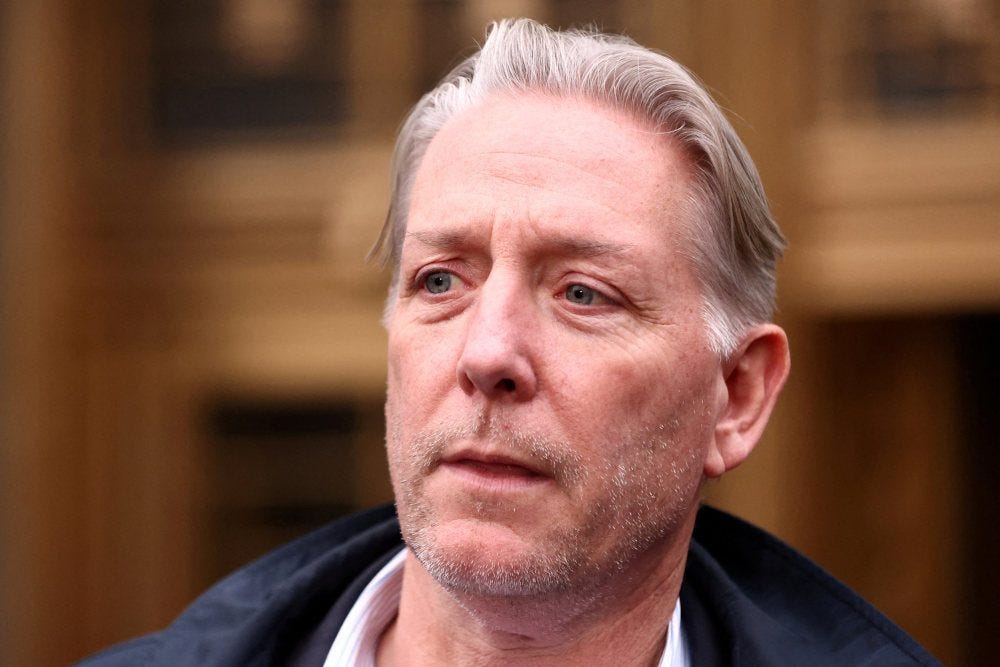
“His peers thought highly of him, and his managers did,” said the decorated former FBI agent, asking for anonymity in order to speak freely about the indictment that has rocked the close knit world of counterintelligence. “But a lot of people that worked for him couldn’t stand him because he was such a dickhead. He just treated people really bad.”
“With Charlie, it was just ego and ambition,” he maintained.
If true, such a personality defect could help unlock the mystery of why such a high ranking and successful FBI official would risk falling under the spell of foreign agents. The news of McGonigal’s arrest certainly stunned a former top FBI official who in 2010 put McGonigal in charge of a “very sensitive” project (that he would not name because of security constraints). The New York Times reported years later, in 2018, that he’d been assigned back then to lead an FBI-CIA task force looking into the loss of CIA spies in China. Former agency officer Jerry Chun Shing Lee was arrested, but a complete answer to all the losses remains unsolved. In 2016, McGonigal was named Special Agent in Charge of the Counterintelligence Division for the New York Field Office.
The former FBI official says there was no reason not to promote McGonigal. “I did my own homework and checked on Charlie, who also was at the Washington Field Office, and everybody said, yeah, he is your guy,” he told SpyTalk. If there were complaints about McGonigal’s management style, they never bubbled up to him, he said. He recalled McGonigal as “extremely professional and businesslike.”
McGonigal was charged Monday in two separate corruption cases involving illegal cash receipts and money laundering —the first for allegedly taking secret payments of more than $225,000 from a former Albanian intelligence agent on behalf of a political party there, the other for trying to get Russian oligarch Oleg Deripaska removed from U.S. sanctions. In that scheme, according to the Justice Department, McGonigal was paid $25,000 monthly via an account held by a former Russian diplomat who worked as an interpreter for the U.S. government named Sergey Shestakov.
McGonigal pleaded not guilty in New York Monday and had nothing to say as he exited the courthouse with his attorney.
Before his retirement in 2018, McGonigal had been in charge of investigating Deripaska, a billionaire crony of Vladimir Putin who has been implicated in several criminal acts over the years, including playing a role in covert Russian efforts to influence the 2016 presidential election in favor of Donald Trump.
The FBI’s New York office (officially, a division) was “Trumpland,” the source said. Per FBI tradition, McGonigal didn’t wear his politics, if any, on his sleeve, in Washington. But when he landed in New York on Oct. 4, 2016 he was suddenly thrust into an environment where a number of agents openly expressed their disdain for the Clintons and Democrats in general.
McGonigal was a New Yorker through and through. At the start of his career 20 years earlier, McGonigal had worked on the investigation into the TWA Flight 800 crash headed by the boss of the New York office, James Kallstrom, who was close to both then-Mayor Rudy Giuliani and the flamboyant real estate developer and tabloid newspaper staple Trump. In the last weeks of the 2016 campaign, Giuliani, a Trump adviser and lawyer, repeatedly went on Fox News hinting that the FBI was sitting on a “big surprise” regarding Hillary Clinton that would propel Trump to victory. That turned out to be the FBI’s discovery of the former secretary of state’s emails on the laptop of her close adviser Huma Abedin, whose husband Anthony Weiner used it to send lewd pictures of himself to underage women. On Sept. 21, just two days after the FBI had taken possession of the infamous “Steele Dossier” on connections between Trump and the Russians , the London tabloid Daily Mail had run a front-page “exclusive” on Weiner’s emails with a 15-year-old girl. FBI Director James Comey, fearing that he could be accused of covering for Clinton, announced that he was re-opening the bureau’s email investigation, a heavy blow to her campaign.
McGonigal would’ve had a front row seat—at least—on all these developments, as well as the troubled surveillance warrants on Trump foreign policy aide Carter Page and information received from an Australian diplomat that another Trump campaign aide, George Papadopoulos, had bragged about the Russians having “dirt” on Clinton.
Maybe McGonigal even touched the balls in play. The topics are already getting renewed —and overheated—according to the former FBI official—attention from right wing media as a result of the FBI man’s arrest.
“When he got to New York, he had a piece of the Carter Page case as a high level SAC,” he said. But just “briefly.”
“This stuff that’s out there about how he ran Crossfire Hurricane,” code name for the FBI’s investigation into links between Trump’s associates and the Russians and whether Moscow interfered in the campaign, is wrong, the former official said. ”No, he didn’t touch it. That’s all bullshit. Carter page, yes, because he was a boss in New York for a period.” But only that.
“The other thing that is interesting, and this is worth looking at,” the former official continued, “is he was one of—there were many, but he was one of— the original people to say to the bureau, ‘Hey, this guy George Papadopoulos told the Australian ambassador in London that the Russians had dirt on Hillary.’ Now that, arguably, was one of the factors that caused headquarters to open the original early CI case on whether Russia was messing with the election…Now why, why did Charlie have knowledge of George Papadopoulos talking to this? I, I have no freaking idea. And somebody I’m sure is looking at that,” the former official said.
Tip of an Iceberg
“I think there’s more to this,” says McGonigal’s former colleague “He’s involved in all that. I think somebody’s gotta really look at what his role was and all that. Now, was he a decision-maker? No, but he was the SAC [for counterintelligence] in New York…”
In a provocative thread of tweets Monday night, the eminent presidential historian Michael Bechloss drew a dotted line between McGonigal’s arrival in New York, the Clinton leaks and the odd (and inaccurate) New York Times story only days before the election that was headlined, “Investigating Donald Trump, F.B.I. Sees No Clear Link to Russia.”
Quoting anonymous “law enforcement sources,” the Times reported that “none of the investigations so far have found any conclusive or direct link between Mr. Trump and the Russian government.” It added that “even the hacking into Democratic emails, F.B.I. and intelligence officials now believe, was aimed at disrupting the presidential election rather than electing Mr. Trump.”
Had McGonigal leaked to the tabloid and/orGiuliani? He was ambitious to a fault, his former colleague told SpyTalk. He might have done it to please his anti-Clinton bosses and Giuliani.
“I wouldn’t put it past Charlie to have been one of those sources,” he said. And as the office’s counterintelligence boss, he would have been an authoritative source to reporters on both the Weiner laptop issue and “Russiagate.”
“I would not doubt that Charlie played a role in” the leaks, the source maintained. “Wouldn’t surprise me. It just wouldn’t surprise me.”
Together, the stories originating in the New York FBI went viral across in social media, where they were pushed by Russian bots and effectively doomed Clinton’s campaign.
The Democratic leader in the Senate, Harry Reid, was outraged by the FBI’s “double standard.” He fired off a letter to Comey saying “it has become clear that you possess explosive information about close ties and coordination between Donald Trump, his top advisors, and the Russian government—a foreign interest openly hostile to the United States, which Trump praises at every opportunity.” But “you continue to resist calls to inform the public of this critical information” about the Russian subversion (which would be affirmed after the election in a U.S. intelligence report.
Incalculable Losses
McGonigal has not been charged with espionage, but intelligence sources are shivering at the prospect that he could be found to have leaked secrets to Russia, China or others.
“If the SAC for counterintelligence in New York went bad, truly bad, meaning espionage, the losses would be almost insurmountable,” said a former top FBI official, asking for anonymity to discuss such a sensitive matter. “If I had to pick the top four or five roles in the FBI to be recruited by a foreign service, that would be the worst case scenario…”
Like other senior intelligence agency veterans, former career CIA case officer Douglas London said it was impossible to say what McGonigal was really up to from the bare bones Justice Department announcements. Based on “absolutely nothing but my speculation and instinct,” London said that, “in working as a lobbyist for Deripaska and the Albanians, respectively, McGonigal might have been commercially recruited under a false flag business pretext or otherwise run in cooperation with the Russians, who would have worked over time to get the FBI agent to divulge his counterintelligence knowledge.” London added that, “it would have been an amazingly amateurish mistake for a guy with his experience, perhaps believing he could spy ‘in plain sight’ based on the business pretext.” Whatever, London said he was “hoping [McGonigal] had not spilled everything,” particularly the names of Russians or other foreign nationals working as spies for the FBI or CIA.
Other odd facets of McGonigal’s post-FBI work stood out to intelligence veterans. As a former chief of counterintelligence, McGonigal “could name his job in the corporate sector,” as the former official put it, fielding offers in the $200,000 range to head up a company’s security operation. But McGonigal, perhaps feeling slighted by failing to land one of the top three slots in the FBI, such as special agent in charge of New York, Los Angeles or the Washington Field Office, might’ve dismissed that as chicken feed.
“It’s almost like, ‘I’ll beat all of you,’” the former official said. Instead, McGonigal took gigs from Deripaska and the Albanians—and God knows who else—paying him $75,000 a month. Plus international travel. The FBI arrested McGonigal after he stepped off a plane returning from a trip to Sri Lanka. Where else did he go? Who else might he have been working for? How might he have been compromised?
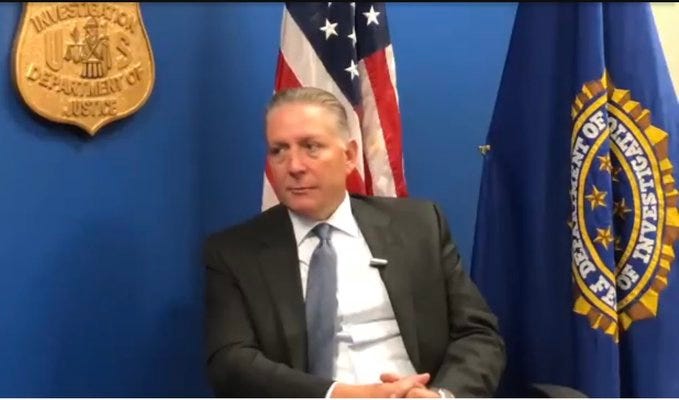
The security world uses an acronym, MICE, to sum up the principal motivations behind officials who turn coat. It stands for “Money, Ideology, Compromise, and Ego.” For Cold War Soviets, a principal drive was hatred of the communist system. Today, in places like Russia, China, Iran, Cuba, Venezuela and North Korea, it’s systematic corruption and repression. Postwar Americans, on the other hand, spied for money, or were compromised by hostile services, or both. But in either case, personal animus—resentment toward bosses or colleagues—has almost always been a key factor.
What was McGonigal thinking? Consorting with the likes of Deripaska was the incredibly reckless act of a person who must have thought himself untouchable—or driven by private demons, fellow former spies speculate.
“It’s not sure if it was ‘just’ a corrupt end of his career [heading] into retirement, or [whether he was] a true spy who committed espionage,” said a former senior CIA operations official, who cautioned that he was merely speculating as an outside observer. “Also, he seems to have played fast and loose [with his illicit associations] so I’d be surprised if warning signs of corruption were not out there” long before an investigation was opened on him. “Regardless, it’s pretty shocking,” he said.
McGonigal always thought he was “the smartest guy in the room,” his former colleague averred. “And I think you can see that in the charges. There’s an underlying theme there of ambition and just thinking you’re smarter than everybody else.
“I mean, how do you think you’re gonna get away with this—unless there’s a narcissism there and [him thinking], ‘I can beat the FBI. I’m smarter than them. And I’m untouchable.’

Allison Guerriero still remembers the day her ex-boyfriend, Charlie McGonigal, bought a second phone.
The FBI had just ordered its staff to delete WhatsApp from their bureau-issued phones, and McGonigal was panicking. No longer could he, one of the FBI’s top New York dons, send encrypted messages to whomever he was texting with. That was a problem. Guerriero didn’t know exactly what McGonigal was using WhatsApp for — he never used it to communicate with her — but he was on there a lot.
So McGonigal went out and bought a second iPhone to use on the side. He used it almost exclusively for WhatsApp. He took the two phones with him everywhere.
Guerriero would tease McGonigal about it. “What are you, a drug dealer now? With a burner phone?” she said. But she never found out who McGonigal was messaging.
“He said he needed the iPhone to contact his sources,” Guerriero said. “For some reason he couldn’t do it through his FBI phone.”
At the time, Guerriero thought she was McGonigal’s biggest secret. The two of them would often spend the night at his one-room garden apartment in Brooklyn’s tony Park Slope neighborhood. He still had a family back in suburban Maryland, but he’d been spending almost all his time in New York City since October 2016, when he was promoted to head up counterintelligence at the FBI’s field office. McGonigal had promised Guerriero his marriage would soon be over.
The iPhone wasn’t the only curious thing she saw during her time with McGonigal. There were the sealed envelopes he’d be handed when they had dinner with a friend of his, an older man named Sergey Shestakov.
Shestakov had once been a senior Soviet diplomat in New York, stationed at the United Nations. Guerriero wasn’t sure exactly how they had met, but she said the two acted like they had known each other for years. Shestakov was a naturalized US citizen who worked as an interpreter for the federal courts.
Guerriero and McGonigal would sometimes join Shestakov and his wife at pro hockey games. They would party with a group in a private box. Guerriero didn’t know whose box it was, or who was picking up the bill. She never saw McGonigal pay.
On other nights, Shestakov would take McGonigal and Guerriero out to dinner. The two men would make small talk about traffic and the weather. Shestakov would ask McGonigal about his kids. Then, Guerriero said, in the middle of the dinner, Shestakov would casually hand McGonigal a manila envelope.
It happened three or four times while Guerriero and McGonigal dated, from mid-2017 to late 2018. The envelopes always passed from Shestakov to McGonigal, not the other way around. And Shestakov, Guerriero recalls, would always pick up the bill.
What was inside the envelopes? Guerriero never saw. “I just assumed that it was something Sergey had translated from Russian in court,” she said. “Or something from a source. It could have been totally legitimate.”
Or it could have been something else. McGonigal is now facing two federal indictments. He is charged with lying to the FBI on his official paperwork and illicitly taking money to work for Oleg Deripaska, a sanctioned Russian oligarch. The indictments are the culmination of a grand-jury investigation that Insider exclusively reported on last year, and they lay out breathtaking allegations of subterfuge and corruption. Prosecutors accuse McGonigal of cultivating a relationship with Deripaska while still working for the FBI, by doing a favor for the daughter of one of Deripaska’s subordinates. “McGonigal traveled to meet Deripaska and others at Deripaska’s residence in London, and in Vienna,” one indictment says, though it does not specify when. Shestakov is said to have introduced McGonigal to Deripaska’s circle. He is also alleged to have violated US sanctions by partnering with McGonigal on a project to investigate one of Deripaska’s rivals, a contract that paid $41,790 a month. In Albania and elsewhere, McGonigal is accused of engaging in the classic Beltway exchange of cash for favors, leaning on his relationships with US officials and the Albanian prime minister to deliver the results his patrons wanted. Much of this under-the-table lobbying activity, the government says, occurred while he was still at the FBI.
Russian oligarch Oleg Deripaska has been allegedly linked to Vladimir Putin, Paul Manafort, and Russian influence operations in other countries. Prosecutors say he hired Charlie McGonigal, one of the FBI agents who had worked on the bureau’s Trump-Russia investigation, to do research on a rival. Olga Maltseva/AFP/Getty Images
But the question of what McGonigal was accepting in a manila envelope from a former Soviet diplomat raises concerns that go beyond the indictments and is one of the strangest twists yet in the unfolding scandal. The FBI is racing to discover how deep the alleged deceits by an ex-agent who’d held one of its most sensitive posts might run. Was McGonigal working for the Russians while he was still running the bureau’s New York counterintelligence efforts? Or did the FBI succeed in putting a stop to Deripaska’s courtship of McGonigal while it was still in its early stages?
“The access you get in that job is extraordinary,” one senior law-enforcement insider said. “It’s almost bottomless. If you’re running FBI counterintelligence in New York, you can get your hands on almost anything you want — and you don’t always have to make excuses for why you’re asking for it.”
The Trump-aligned right has used the McGonigal allegations as ammunition for its campaign to discredit the dossier-wielding, Mar-a-Lago-raiding FBI. Prominent voices on the left have theorized that McGonigal was a double agent, paid off by the Russians to throw the FBI off the Trump-Russia trail. Still others speculate that McGonigal just got greedy, as top-level officials sometimes do, accepting cash in return for favors and access and being just a little sloppier about it than most.
But to write McGonigal off as a case of greed and not espionage is to misunderstand how foreign influence works. It doesn’t have to be greed or espionage. It can be both.
New York City, the senior law-enforcement insider said, is “a global center for espionage and counterespionage.” “You have visits from foreign business elites,” they added. “You have the United Nations. You have ethnic populations.”
On this contested urban terrain, where foreign intelligence services quietly battle to surveil, recruit, and control, McGonigal was America’s head defensive coach. But a former FBI executive said that under almost no circumstances would an FBI official of McGonigal’s rank be the one to go out on the field and play the game himself. As the special agent in charge of the New York field office’s counterintelligence division, McGonigal had roughly 150 agents to manage. He was in charge of people who were in charge of other people who were in charge of squads of agents who did the block-and-tackle work of tracking and flipping players for the other teams. McGonigal was supposed to be sitting at his desk in lower Manhattan, calling the plays.
Guerriero was unaware of such bureaucratic intricacies. She figured McGonigal was a hands-on agent, just like the ones you see in the movies. He was often out at night “running an op,” as he’d put it. That might explain the envelopes from Shestakov, as well as the plastic bag full of cash she saw one night on the floor by the futon at McGonigal’s apartment in Brooklyn. McGonigal said he’d won it betting on a baseball game. Guerriero was skeptical, but she figured it was “buy money” for a sting operation, or a payoff for an informant. It was all part of McGonigal’s work.
So was the time he spent hanging out with a mysterious man named Agron, whom Guerriero never met.
Agron Neza had immigrated to New Jersey from Albania, where, one indictment says, “he had been an employee of an Albanian intelligence agency several decades earlier.” A federal indictment against McGonigal says Neza gave him $225,000 in cash, including an $80,000 payment that coincided with the date when Guerriero says she saw the bag full of bundled bills in McGonigal’s apartment. Neza, who is identified in an indictment only as Person A, has not been accused of any wrongdoing.
McGonigal and Shestakov are alleged to have been part of an effort by Deripaska to reverse sanctions imposed in 2018 by the Treasury Department, which found that Deripaska had acted as an agent of the Kremlin. Deripaska’s name appears in the special counsel Robert Mueller’s report 63 times. A bipartisan report by the Senate Intelligence Committee found that Deripaska conducted “influence operations” and that he took direction on some of those operations from the Russian government.
“The notion that Mr. Deripaska is some proxy for the Russian state is a blatant lie,” Ruben Bunyatyan, a spokesperson for Deripaska, told Insider by email. Deripaska, he said, “never hired Mr. McGonigal (or Mr. Shestakov) for either business or personal purposes.” Bunyatyan did not respond to the question of whether Deripaska and McGonigal had ever met.
Attorneys representing McGonigal and Shestakov did not respond to requests to comment. “I do not have any comment,” Neza told Insider. The FBI declined to comment.
McGonigal’s early career as special agent in New York gave him exposure to some storied cases. He investigated the crash of TWA Flight 800, the “illegals program” that rounded up Russian sleeper agents, and the September 11 attacks. In Washington, he ran the FBI’s WikiLeaks task force that tracked down and convicted Chelsea Manning, as well as a joint CIA-FBI secret task force dedicated to hunting for Chinese moles inside US intelligence agencies. In New York, he was beginning to establish himself on the foreign-policy luncheon circuit, appearing on panels about Russian election meddling and links between Russia’s intelligence agencies and its oligarchs, like the one he now stands accused of going to work for.
“In a 22-year career with the FBI, I had, uh, quite the opportunity to work with — and against, in some situations — the FSB,” McGonigal said in a remote panel hosted by the Atlantic Council in October 2020. He described the FSB as Russia’s “preeminent security service” and said its ties to oligarchs made it “an agency for hire.”
The number of big investigations McGonigal was involved with, combined with the lack of clarity around how far back his relationship with Deripaska might go, is part of the reason his indictment is a nightmare for the FBI. While the indictments do not allege that McGonigal was disloyal while he was still at the FBI, McGonigal’s lifestyle could have made him an appealing target for recruitment.
In a storied FBI career, McGonigal investigated terrorist threats, organized crime, Russian sleeper agents, Chinese moles and WikiLeaks. When he was charged with taking illicit money from a Russian oligarch, his colleagues were shocked. Michael M. Santiago/Getty Images
For someone with McGonigal’s level of access, having an extramarital affair is not a private matter. It is exactly the kind of vulnerability that McGonigal’s foreign counterparts, the people he was supposed to be working against, might pounce on and exploit.
“People having extramarital relationships are typically involved in some kind of deception,” said Michael German, a former FBI special agent who is now a fellow at the Brennan Center for Justice. “The FBI polygraphs job applicants to uncover exactly that kind of personal foible in order to disqualify them from becoming the lowest-level agent in the office.”
The McGonigal case is already a bad look for those charged with protecting US secrets; there is a chance it could get much worse. McGonigal was not charged with espionage, and although there is currently no evidence that McGonigal committed espionage, an FBI source told Insider that the investigation is ongoing. A second person familiar with the investigation said the FBI’s counterintelligence division appeared confident that the McGonigal case is about corruption and nothing more. The fact that prosecutors agreed to release McGonigal on a $500,000 bond also suggests the government doesn’t think he engaged in espionage, which would make him a flight risk.
But ruling out the worst-case scenario — that McGonigal was sharing US secrets with his foreign contacts — could take months or years. And Guerriero’s recollections — the bag of cash, the late nights, the mysterious friends, the free meals, the second phone — only raise more concerns about the scale of the fallout from McGonigal’s double life.
Charles Franklin McGonigal Jr. was born in a suburb of Cleveland, one of four children from a working-class family. Guerriero remembers him confiding in her about his rough childhood. His parents, he told her, were alcoholics. When McGonigal was still very young, his parents would sometimes fight with such intensity that he had to leave, jump on his bike, and venture out to try to find some friends.
Life got easier in high school. His parents stayed together. His father got a better job. Finally there was enough money. McGonigal stayed in Ohio and got a degree in business administration. He married Pamela Fox in the mid-1990s.
After stints in New York and Cleveland, McGonigal was posted to Washington, DC. The McGonigals put down roots in suburban Maryland. They bought a middle-class house in a middle-class neighborhood. They sent their kids to public schools. At the FBI, McGonigal racked up a string of big cases and promotions. His colleagues saw a side of McGonigal that Guerriero did not see. He was ambitious and driven.
“Charlie would just scream at many of his subordinates,” recalls Pete Lapp, who reported to McGonigal at FBI headquarters in Washington, DC. Lapp, who retired in 2020, said McGonigal played favorites and engaged in “kiss up, kick down” behavior as he scaled the FBI’s ladder. Lapp remembers trying to organize an after-work happy hour; McGonigal ordered him to cancel it. “I was trying to boost morale,” Lapp said. “He saw it as a risk to his career.”
Tracy Walder, a former special agent at the Los Angeles bureau who sometimes interacted with McGonigal, agreed that he could sometimes be difficult. But in her view, his behavior was not so unusual. “It’s the FBI,” she said. “What do you expect? We don’t hold hands and sing kumbaya. People are going to yell sometimes.”
McGonigal was out of his element in New York. He wasn’t prepared for all this money, all these power players. He should have stayed in his cute little suburb, mowing his lawn.
McGonigal worked hard to win the promotions that lifted him to the pinnacle of the bureau hierarchy. In New York, he was welcomed into a select circle of New York law-enforcement dons who dined out at Sparks, Peter Luger, and, in the old days, Elaine’s. One steakhouse on the circuit had a framed photo of McGonigal hanging on the wall.
Those restaurant tables were connected to a darker, more mysterious world inhabited by the spies and oligarchs who gather in the shadows of New York to do business, trade secrets, and purchase loyalties. It was McGonigal’s job to dominate this world, to be the head shark in one of the world’s murkiest and most dangerous tanks.
“He was out of his element here,” Guerriero said of their year together in New York. “He wasn’t prepared for all this money, all these power players. He should have stayed in his cute little suburb, mowing his lawn, playing his softball games.”
That view is harsh, but it is largely shared by Aneta Georgievska-Shine, a lecturer at the University of Maryland who was one of McGonigal’s suburban neighbors. “He was modest,” she told Insider. “They were Catholic, middle-class people who lived in a nice little house. Nothing fancy or ostentatious. Part of me feels sorry for him. He didn’t strike us as an evil person. I wonder what happened to Charlie, what happened to this guy when he moved to New York.”
McGonigal’s Maryland neighbors and New York colleagues found him to be smart and likable. “He was charming, laid-back, and erudite,” one New York acquaintance said. “There was nothing to suggest that he wasn’t the consummate professional.” But in New York, the rapid immersion in a new world of money and power seems to have overwhelmed his middle-class sensibilities. The transformation began on his regular commute from Maryland up to New York, where, according to Guerriero, McGonigal would park his minivan at a New Jersey State Police barracks and get into his “G-car” or government car: a black Ford Explorer. Like many FBI special agents, McGonigal had a placard on the front window that let him park wherever he wanted.
The minivan-Explorer changeover was more than material. With his new job, McGonigal’s stock in the law-enforcement world was high, and the Big Apple quickly got its hooks into him. He augmented his Brooks Brothers wardrobe with a couple of silk Hermès ties. He sometimes sported two tiny replicas of the iconic “We Are Happy to Serve You” Greek coffee cup as his cuff links. He golfed. He went out with friends to Sparks, where he’d order his steak well done. He’d come back from late nights out and tell Guerriero he had been with Agron. Who was Agron? She knew better than to ask.
McGonigal returned home to see his wife and two children once or twice a month. Georgievska-Shine remembers asking McGonigal’s wife at the grocery store how he was doing. She says Pamela used the importance of her husband’s New York City job to explain his long absences.
After McGonigal’s double life was revealed in January, he became the latest screen upon which a divided country could project its partisan fantasies. Many on the right, including Donald Trump, have tried to use McGonigal to discredit the FBI’s investigation into Trump’s Russia ties. On the left, there has been speculation that McGonigal was responsible for a series of leaks that boosted Trump’s chances in 2016. There is evidence to suggest that the FBI director James Comey’s preelection announcements about the Hillary Clinton email investigation were motivated, at least in part, by fears that the FBI’s New York field office would step forward with more leaks if he did nothing. And within the FBI, the New York field office is known for doing what it wants, sometimes even in defiance of orders from headquarters.
Timothy Snyder, the Yale historian, has gone further, floating the unlikely possibility that McGonigal was used by pro-Russia interests to sabotage FBI investigations in ways that could once again call the legitimacy of Trump’s victory into question. The FBI, meanwhile, appears to be pushing back on the idea that the McGonigal case is anything bigger than a case of one corrupt individual. “It’s the FBI that initiated this investigation, it’s the FBI and our agents that painstakingly and methodically put the case together against him, and it’s the FBI that arrested him,” Chris Wray, the FBI director, said at a news conference last week. “We’re the ones who put him in handcuffs,” a senior FBI official told Insider. The FBI’s position seems to be that while it got McGonigal’s training and vetting wrong, it can still be trusted to handle the cleanup.
For the Deripaskas of the world, this is like shopping at Walmart. They laugh at how cheap Americans are to buy.
If the allegations in the indictments are true, it’s possible that Russian interests were still cultivating McGonigal, gradually pushing his limits. To the extent that the FBI can demonstrate that it nipped this process in the bud, it deserves credit. Three sources familiar with the investigation told Insider that the bureau had already been looking into McGonigal by November 2019, which is when Guerriero says she wrote an angry email to William Sweeney, McGonigal’s boss. According to Guerriero, that email, which Insider was unable to obtain or confirm, told Sweeney to look into McGonigal’s Albania work and his personal life. Guerriero acknowledged that she later harassed McGonigal’s family members in apparent violation of a court order, which led to her arrest and a separate restraining order. A 2019 police report filed by McGonigal’s wife said that McGonigal and Guerriero “had a relationship” and that Guerriero repeatedly emailed and called her despite her asking Guerriero to stop.
Given the raging intensity of US politics, it’s not a surprise that some have tried to use McGonigal to prove partisan bias within the FBI. But the notion that McGonigal was knowingly carrying out a covert political agenda is not supported by the facts. To friends and neighbors, he came off as an ordinary executive-level FBI agent — a centrist Republican who drove neighborhood kids to school events in his minivan. A neighbor saw copies of The Economist around his house in Maryland. In New York, Guerriero occasionally saw him watching Fox News. When Trump fired his nemesis Comey, McGonigal said publicly that Comey was “one of the most loved leaders that we’ve had in a number of years,” though later, after Comey began leaking his notes about his meetings with Trump, McGonigal told Guerriero, “I wish he would just shut up.” He told her he did not vote in the 2016 election because he did not like either candidate. One day Guerriero would hear him bragging about playing on one of Trump’s luxury golf courses; on another he would talk with bitter sarcasm about Trump’s promise to “drain the swamp.”
An indifference to politics seems to have been one area in which McGonigal was the model of an FBI professional. If he had no ax to grind, could his motive for the conduct alleged in the indictments have been money? Was McGonigal a greedy white-collar professional who got in too deep?
And if the allegations in the indictments are true, did McGonigal even know he was doing anything out of the ordinary? Or was he another working stiff who saw old colleagues pass through the revolving door to make three times their old government salaries, paid out by the same bad guys they had spent their careers investigating? Perhaps McGonigal’s salary from his post-FBI job as a vice president of Brookfield Properties wasn’t enough to support a girlfriend and a family and have a bit left over for those Hermès ties.
“He said he needed to make more money,” Guerriero told Insider. “He had two kids to put through college.”
A Washington insider with decades of experience in international finance said that the issue raised by the McGonigal case is bigger than the FBI. The revolving-door problem, they said, poses major risks to the entire federal government.
“What McGonigal and all these other chuckleheads don’t understand is that for the Deripaskas of the world, this is like shopping at Walmart,” they said. “They laugh at how cheap Americans are to buy.”
There was one thing McGonigal did that struck Guerriero as weird at the time. It involved vodka.
He had just picked her up in the G-car at her father’s house in New Jersey. They were headed to the Park Slope apartment. On their way to Brooklyn, they planned to stop at the Short Hills Mall. In a few days McGonigal would be flying to Vienna for some meetings. It was cold in Vienna. McGonigal needed to buy a winter coat.
A few days earlier, McGonigal had asked Guerriero to join him for the trip. An all-expenses-paid vacation, he said, would help take her mind off pressing health issues. She had a cancer diagnosis and a double mastectomy scheduled in a few weeks.
McGonigal did not say that Agron would be coming along and that someone else would be paying for their flights and hotels. Guerriero would learn about that later, from the indictments.
That night, driving in the G-car, Guerriero found McGonigal to be quiet, a bundle of nervous energy. On their way to the mall, Guerriero asked him to make a quick stop at a strip mall. She had to pick up a print job at Staples. She went in, picked it up, and returned to the car, where McGonigal was waiting.
“I ran into the liquor store,” she recalled him saying. He took out a tiny bottle of vodka, the size that’s offered on airplanes, and took a sip. Then he screwed the top back on, dropped the bottle in the cupholder, and pulled out into traffic.
Guerriero was surprised. McGonigal liked to have a drink — martinis, sometimes the better part of a bottle of wine with dinner — but rarely to excess and never while driving.
“What are you doing?” she shouted. “You can’t drink and drive in a G-car!”
“It’s fine,” McGonigal replied. “I’ve had a long day. I needed something to calm my nerves.” By the time they got to the mall, he had finished it off.
Guerriero did not know it at the time, but McGonigal had good reason to be nervous. The Vienna trip would be a mix of official and personal business. The indictments indicate the personal side had not been disclosed, as is required, on the advance paperwork McGonigal filed with the FBI. McGonigal, the indictments say, had not informed the FBI that someone else was paying his way or that he would be having off-the-books meetings to drum up private business, even as he continued to hold down his job at the bureau.
Guerriero still doesn’t understand why McGonigal invited her to Vienna. Maybe he wanted someone he trusted to come along for the ride.
But she said no.
“I can’t go to Vienna,” Guerriero told him. “I got too much shit to do. I don’t even have a valid passport. Mine’s expired.”
Now he was alone.
Update: February 8, 2023 — This story has been updated to remove an assertion that Deripaska’s charity did not respond to questions; as the story noted, a spokesperson for Deripaska did provide comment. The story has also been updated to reflect the spokesperson’s additional claim that Deripaska never hired McGonigal or Shestakov.
Mattathias Schwartz is a senior correspondent at Insider and a contributing writer at the New York Times Magazine. He can be reached at mschwartz@insider.com and schwartz79@protonmail.com.
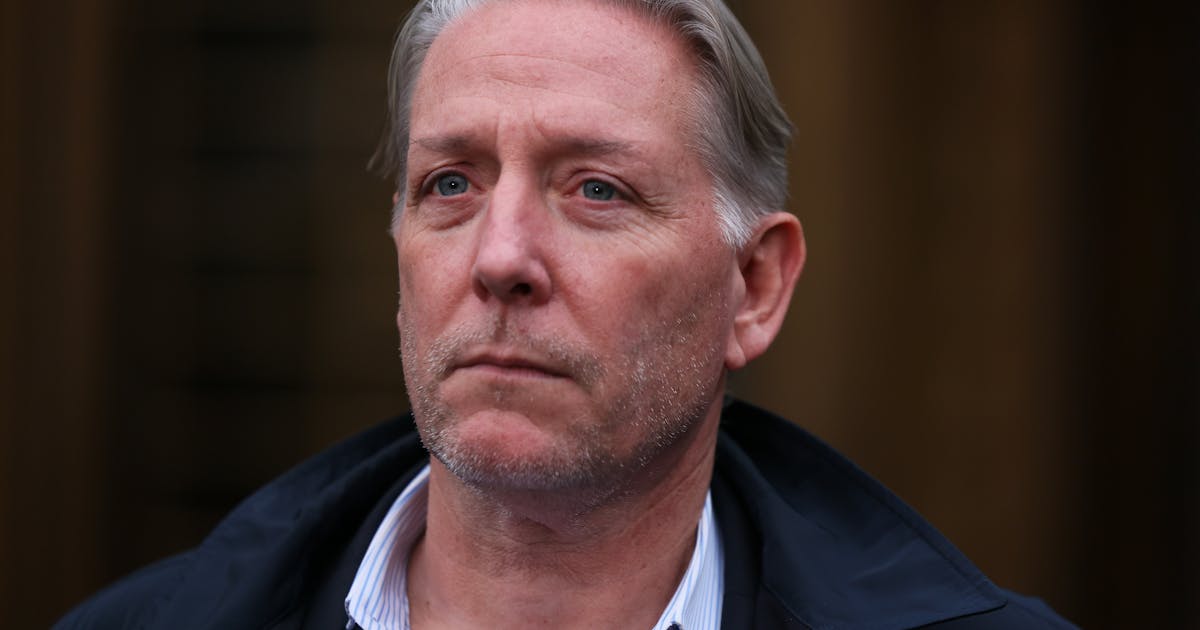
In the course of writing two books on Donald Trump’s ties to Russia, the same question occurred to me again and again: How is it possible that I knew all sorts of stuff about Donald Trump, and the FBI didn’t seem to have a clue? Or if they did, why weren’t they doing anything with it?
Specifically, I knew that:
- Starting in 1980, an alleged “spotter agent” for the KGB began cultivating Trump as a new asset for Soviet intelligence.
- The Russian mafia laundered millions of dollars through Donald Trump’s real estate by purchasing condos in all-cash transactions through anonymous corporations that did not disclose real ownership.
- Trump Tower was a home away from home for Vyacheslav Ivankov, one of the most brutal leaders of the Russian mafia, and at least 13 people with known or alleged links to the mafia held the deeds to, lived in, or ran alleged criminal operations out of Trump Tower in New York or other Trump properties.
- Trump was some $4 billion in debt when the Russians came to bail him out via the Bayrock Group, a real estate firm that was largely staffed, owned, and financed by Soviet émigrés who had ties to Russian intelligence and/or organized crime.
Much of my material came from FBI documents. A lot came from open-source databases. It made no sense. There was an astounding amount of data on the public record. The FBI had launched enormous investigations of the Russian mafia in the 1980s. They had staked out a New York electronics store that was a haven for KGB officers. They knew that’s where the Trump Organization bought hundreds of TV sets. They had their eyes on Ivankov and other Russian mobsters who were denizens of Trump’s casinos and bought and sold his condos through shell companies. They had to know that Trump laundered money for and provided a base of operations for the Russian mafia, which was, after all, a de facto state actor tied to Russian intelligence. They had to know that the Russians repeatedly bailed Trump out when he was bankrupt. They had to know that Russia owned him.
I’m well aware of the strict secrecy that accompanies ongoing investigations as a matter of procedure. But once the Mueller Report was finally released, it became crystal clear that Robert Mueller’s investigation dealt only with criminal matters, not counterintelligence. Trump had been thoroughly compromised by Russia and was a grave threat to national security. But the FBI wasn’t doing anything about it!
One reason for that may have been that on far too many occasions, FBI men in sensitive positions ended up on the take from the very people they were supposed to be investigating. And on January 23, a bomb dropped: We learned that the latest of these is Charles McGonigal, the former head of counterintelligence for the FBI in New York, who ended up working for billionaire oligarch Oleg Deripaska, a major target in the Trump Russia investigation. McGonigal was indicted in Manhattan on charges of money laundering, violating U.S. sanctions, and other counts relating to his alleged ties to Deripaska. He was also indicted in Washington, where he was accused of concealing $225,000 he allegedly received from a New Jersey man employed long ago by Albanian intelligence.
McGonigal has pleaded not guilty to all charges.
McGonigal’s troubles began in late 2018, after his wife found out about his girlfriend, Allison Guerriero, who did not know that he was still married. “I was shocked,” Guerriero said, in an interview with Mattathias Schwartz for Business Insider. “I was very much in love with him, and I was so hurt.”
A few months later, Guerriero wrote an angry email about McGonigal to the man who had introduced them as a couple—William Sweeney, who just happened to be assistant director in charge of the FBI’s New York City office. On a number of occasions, Guerriero had seen McGonigal leave huge amounts of cash around the house. At first, she thought it must be “buy money” for a sting operation or some other FBI procedure. Then she became suspicious. Among other things, she told Sweeney to look into McGonigal’s dealings in Albania, where McGonigal had traveled extensively and participated in transactions that later appeared in his indictments.
McGonigal had a stellar resume, including working on the Chelsea Manning–WikiLeaks investigation and on Operation Crossfire Hurricane, the bureau’s probe into the Trump campaign’s contacts with Russia.* Though he was not assigned to that operation when he moved to New York, running FBI counterintelligence in New York is a very special, highly sensitive position that affords unquestioned access to a spectacular array of international elites as well as highly sought-after information.
Similarly, Oleg Deripaska is not just another oligarch. Having emerged victorious from the brutal Aluminum Wars as a vital functionary of the Kremlin, he played a key role in financing Putin’s efforts to take over Ukraine from within via a political operation directed by Paul Manafort that put Putin surrogate Viktor Yanukovych in the Ukraine presidency in 2010. Manafort is alleged to have funneled $75 million into offshore accounts in return for his efforts.
What could be more perfect? Having installed a Putin surrogate in the Ukrainian presidency, in 2016, Manafort repeated that feat on a much bigger stage, as campaign manager guiding Trump into the White House. As Yale professor Timothy Snyder, a close observer of Ukraine, points out, “Russia was backing Trump in much the way that it had once backed Ukrainian president Viktor Yanukovych.”
Which brings us back to McGonigal. After assuming his new job in October 2016, just a month before the election, he would have been in a position to undermine the bureau’s investigation into Deripaska and Manafort and to sabotage those investigations with disinformation. Similarly, he would have been in a position to leak the information about Anthony Weiner’s laptop that led to the reopening of the FBI probe into Hillary Clinton’s emails 11 days before the election. Finally, he was in a position to have been a source behind the false exculpatory news published by The New York Times on October 31, 2016, a week before the election, with the headline that seemed give to Trump a clean bill of health: “Investigating Donald Trump, F.B.I. Sees No Clear Link to Russia.”
Of course, McGonigal wasn’t the only FBI official who went over to the dark side. In 1997, four years after he had retired and returned to private practice, FBI Director William Sessions traveled to Moscow and alerted the world to the horrifying dangers of the brutal Russian mafia. A decade later, however, Sessions had no qualms about taking on as a client Ukrainian-born Semion Mogilevich, the so-called “Brainy Don” behind the Russian mafia, whom the FBI had put on its “Ten Most Wanted” list.
Sessions’s successor as FBI director, Louis Freeh, followed a similar path. His pro-Putin benefactor was Prevezon Holdings, the giant real estate firm that won international attention in 2008 when Russian tax lawyer Sergei Magnitsky investigated a tax fraud case involving Prevezon. For his efforts on behalf of Bill Browder’s Hermitage Capital Management, Magnitsky was arrested, imprisoned, assaulted repeatedly, and beaten to death.
As FBI director, Freeh had warned that Russian organized crime posed a grave threat to the United States that far transcended mere criminality. It is not clear how much he was paid by Prevezon after he switched sides, but Freeh later bought a $9.38 million mansion in Palm Beach, Florida, just a 10-minute drive from Trump’s Mar-a-Lago.
Then there was the late James Kallstrom, who ran the FBI’s New York office in the mid-’90s and oversaw successful investigations into both the Italian Mafia and later the Russian mob. Kallstrom had developed close friendships with two key players in the Trump-Russia saga. He worked closely with then–U.S. Attorney for the Southern District of New York Rudy Giuliani in the investigation of the Cosa Nostra network that led to the famed Mafia Commission Trial of 1985–1986. Going even further back, Kallstrom had also been friends with Donald Trump since around 1973, when Kallstrom was putting together a Trump-funded parade in New York to honor Vietnam veterans.
“We just got to be friends,” said Kallstrom in a 2020 interview as the Trump reelection campaign was gearing up. (The interview was done for a 2020 documentary by David Carr-Brown about Trump and the FBI called An American Affair: Donald Trump and the FBI.)
“I went to a few dinners with him, we talked quite often. He was very, very supportive of the bureau. We lose an agent, or somebody gets shot up, he was always there to pay for the food or whatever it took.”
According to The New York Times, Kallstrom had founded the Marine Corps–Law Enforcement Foundation, a nonprofit that got more than $1.3 million from Trump, a strikingly generous offering from the usually parsimonious real estate magnate. Under Kallstrom’s aegis, the New York office became known as Trumpland. “I would say we were associates who liked each other,” Kallstrom added in the film. “He [Trump] would call me periodically and try to boost my morale, and then I’d call him when he was in the news and try to boost his morale. But he’s basically a very, very good person and with a big heart that does a lot of things, 90 percent of which nobody knows about. I mean, we stay in touch even today.”
But Trump being Trump, loyalty and generosity came with strings attached. “He [Trump] cultivated FBI people,” says Jeff Stein, editor of the intelligence newsletter SpyTalk, in An American Affair. “And that’s well-known behavior by people who swim in dangerous waters. They want to have a get-out-of-jail card, and that get-out-of-jail is having friendships or being a good source for the FBI.”
Kallstrom insisted that Trump was not an FBI informant, but another agent told Stein that Trump was known within the bureau as a “hip pocket” source—that is, someone who was not officially a source and therefore not in the FBI’s files.
Nevertheless, Trump appears to have gotten exactly what he sought. As it happens, Kallstrom worked closely with McGonigal and cultivated friendships not just with Trump but also with Rudy Giuliani. Together, they are suspected of being party to an internal campaign just before the 2016 election that spurred FBI Director James Comey to publicly announce he was reopening his investigation into Clinton’s emails.
Ultimately, of course, America found out that none of Hillary’s emails were classified. The Times story on the subject was misleading at best. The “reopened” investigation was short-lived and appeared to reflect the wishful thinking of the pro-Trump leaker in the bureau, whether it was McGonigal or someone else. Likewise, the Times headline declaring “no link” between Trump and Russia seemed to reflect wishful thinking on the parts of Kallstrom, Giuliani, and McGonigal—not reality.
But the damage had already been done. When voters cast their ballots on November 8, they thought that the FBI had given Trump a clean bill of health but was still investigating Hillary. McGonigal and company may well have made the difference in tipping the election to Trump.
So in the end, the FBI failed miserably at documenting Trump’s four-decade relationship with the Russian mafia and Russian intelligence, and all the financial transactions between them. The bureau failed miserably when it came to assessing how the former president might be compromised.
As Adam Schiff, then chairman of the House Intelligence Committee, told The Washington Post in 2019, “Just as a reminder, this all began as an FBI counterintelligence investigation into whether people around then-candidate Trump were acting as witting or unwitting agents of a foreign power. So it began as a counterintelligence investigation, not as a criminal investigation.”
Which is a vital distinction. “It may not be a crime for a candidate for president to seek to make money from a hostile foreign power during an election and mislead the country about it,” Schiff added. “But the counterintelligence concerns go beyond mere violation of criminal law.
“They’re at one time not necessarily a criminal activity and at the same time potentially far more serious than criminal activity because you have the capacity to warp U.S. policy owing to some form of compromise.”
In other words, as the KGB and its successor agencies know all too well, intelligence operations are designed to operate within the law while exploiting the latitude afforded by lax regulations and lax enforcement.
A serious counterintelligence investigation, then, would presumably have asked how the KGB began its relationship with Trump and whether Trump had been compromised first by the Soviets and later by Russia. It would have asked how deeply Trump was indebted to the Russian mafia, because he had made a fortune by at the very least turning a blind eye as former Soviet officials laundered millions of dollars through his real estate. How much business had he done with operatives of Russian intelligence and/or the Russian mafia? Did Russia have kompromat on Trump? Was he a Russian asset? How far back did his relationship go? How much did he make laundering money for them? What about other members of his family, the Trump administration and campaign, other politicians?
All unanswered questions, leading to perhaps the biggest question of all: If the FBI won’t ask those questions, who will? It will be interesting to see whether they are answered when McGonigal come to trial or, perhaps, if he is the string that, when pulled, will unravel all sorts of unimaginable secrets.
* This article has been updated.