Day: December 16, 2023
Allison Guerriero still remembers the day her ex-boyfriend, Charlie McGonigal, bought a second phone.
The FBI had just ordered its staff to delete WhatsApp from their bureau-issued phones, and McGonigal was panicking. No longer could he, one of the FBI’s top New York dons, send encrypted messages to whomever he was texting with. That was a problem. Guerriero didn’t know exactly what McGonigal was using WhatsApp for — he never used it to communicate with her — but he was on there a lot.
So McGonigal went out and bought a second iPhone to use on the side. He used it almost exclusively for WhatsApp. He took the two phones with him everywhere.
Guerriero would tease McGonigal about it. “What are you, a drug dealer now? With a burner phone?” she said. But she never found out who McGonigal was messaging.
“He said he needed the iPhone to contact his sources,” Guerriero said. “For some reason he couldn’t do it through his FBI phone.”
At the time, Guerriero thought she was McGonigal’s biggest secret. The two of them would often spend the night at his one-room garden apartment in Brooklyn’s tony Park Slope neighborhood. He still had a family back in suburban Maryland, but he’d been spending almost all his time in New York City since October 2016, when he was promoted to head up counterintelligence at the FBI’s field office. McGonigal had promised Guerriero his marriage would soon be over.
The iPhone wasn’t the only curious thing she saw during her time with McGonigal. There were the sealed envelopes he’d be handed when they had dinner with a friend of his, an older man named Sergey Shestakov.
Shestakov had once been a senior Soviet diplomat in New York, stationed at the United Nations. Guerriero wasn’t sure exactly how they had met, but she said the two acted like they had known each other for years. Shestakov was a naturalized US citizen who worked as an interpreter for the federal courts.
Guerriero and McGonigal would sometimes join Shestakov and his wife at pro hockey games. They would party with a group in a private box. Guerriero didn’t know whose box it was, or who was picking up the bill. She never saw McGonigal pay.
On other nights, Shestakov would take McGonigal and Guerriero out to dinner. The two men would make small talk about traffic and the weather. Shestakov would ask McGonigal about his kids. Then, Guerriero said, in the middle of the dinner, Shestakov would casually hand McGonigal a manila envelope.
It happened three or four times while Guerriero and McGonigal dated, from mid-2017 to late 2018. The envelopes always passed from Shestakov to McGonigal, not the other way around. And Shestakov, Guerriero recalls, would always pick up the bill.
What was inside the envelopes? Guerriero never saw. “I just assumed that it was something Sergey had translated from Russian in court,” she said. “Or something from a source. It could have been totally legitimate.”
Or it could have been something else. McGonigal is now facing two federal indictments. He is charged with lying to the FBI on his official paperwork and illicitly taking money to work for Oleg Deripaska, a sanctioned Russian oligarch. The indictments are the culmination of a grand-jury investigation that Insider exclusively reported on last year, and they lay out breathtaking allegations of subterfuge and corruption. Prosecutors accuse McGonigal of cultivating a relationship with Deripaska while still working for the FBI, by doing a favor for the daughter of one of Deripaska’s subordinates. “McGonigal traveled to meet Deripaska and others at Deripaska’s residence in London, and in Vienna,” one indictment says, though it does not specify when. Shestakov is said to have introduced McGonigal to Deripaska’s circle. He is also alleged to have violated US sanctions by partnering with McGonigal on a project to investigate one of Deripaska’s rivals, a contract that paid $41,790 a month. In Albania and elsewhere, McGonigal is accused of engaging in the classic Beltway exchange of cash for favors, leaning on his relationships with US officials and the Albanian prime minister to deliver the results his patrons wanted. Much of this under-the-table lobbying activity, the government says, occurred while he was still at the FBI.
Russian oligarch Oleg Deripaska has been allegedly linked to Vladimir Putin, Paul Manafort, and Russian influence operations in other countries. Prosecutors say he hired Charlie McGonigal, one of the FBI agents who had worked on the bureau’s Trump-Russia investigation, to do research on a rival. Olga Maltseva/AFP/Getty Images
But the question of what McGonigal was accepting in a manila envelope from a former Soviet diplomat raises concerns that go beyond the indictments and is one of the strangest twists yet in the unfolding scandal. The FBI is racing to discover how deep the alleged deceits by an ex-agent who’d held one of its most sensitive posts might run. Was McGonigal working for the Russians while he was still running the bureau’s New York counterintelligence efforts? Or did the FBI succeed in putting a stop to Deripaska’s courtship of McGonigal while it was still in its early stages?
“The access you get in that job is extraordinary,” one senior law-enforcement insider said. “It’s almost bottomless. If you’re running FBI counterintelligence in New York, you can get your hands on almost anything you want — and you don’t always have to make excuses for why you’re asking for it.”
The Trump-aligned right has used the McGonigal allegations as ammunition for its campaign to discredit the dossier-wielding, Mar-a-Lago-raiding FBI. Prominent voices on the left have theorized that McGonigal was a double agent, paid off by the Russians to throw the FBI off the Trump-Russia trail. Still others speculate that McGonigal just got greedy, as top-level officials sometimes do, accepting cash in return for favors and access and being just a little sloppier about it than most.
But to write McGonigal off as a case of greed and not espionage is to misunderstand how foreign influence works. It doesn’t have to be greed or espionage. It can be both.
New York City, the senior law-enforcement insider said, is “a global center for espionage and counterespionage.” “You have visits from foreign business elites,” they added. “You have the United Nations. You have ethnic populations.”
On this contested urban terrain, where foreign intelligence services quietly battle to surveil, recruit, and control, McGonigal was America’s head defensive coach. But a former FBI executive said that under almost no circumstances would an FBI official of McGonigal’s rank be the one to go out on the field and play the game himself. As the special agent in charge of the New York field office’s counterintelligence division, McGonigal had roughly 150 agents to manage. He was in charge of people who were in charge of other people who were in charge of squads of agents who did the block-and-tackle work of tracking and flipping players for the other teams. McGonigal was supposed to be sitting at his desk in lower Manhattan, calling the plays.
Guerriero was unaware of such bureaucratic intricacies. She figured McGonigal was a hands-on agent, just like the ones you see in the movies. He was often out at night “running an op,” as he’d put it. That might explain the envelopes from Shestakov, as well as the plastic bag full of cash she saw one night on the floor by the futon at McGonigal’s apartment in Brooklyn. McGonigal said he’d won it betting on a baseball game. Guerriero was skeptical, but she figured it was “buy money” for a sting operation, or a payoff for an informant. It was all part of McGonigal’s work.
So was the time he spent hanging out with a mysterious man named Agron, whom Guerriero never met.
Agron Neza had immigrated to New Jersey from Albania, where, one indictment says, “he had been an employee of an Albanian intelligence agency several decades earlier.” A federal indictment against McGonigal says Neza gave him $225,000 in cash, including an $80,000 payment that coincided with the date when Guerriero says she saw the bag full of bundled bills in McGonigal’s apartment. Neza, who is identified in an indictment only as Person A, has not been accused of any wrongdoing.
McGonigal and Shestakov are alleged to have been part of an effort by Deripaska to reverse sanctions imposed in 2018 by the Treasury Department, which found that Deripaska had acted as an agent of the Kremlin. Deripaska’s name appears in the special counsel Robert Mueller’s report 63 times. A bipartisan report by the Senate Intelligence Committee found that Deripaska conducted “influence operations” and that he took direction on some of those operations from the Russian government.
“The notion that Mr. Deripaska is some proxy for the Russian state is a blatant lie,” Ruben Bunyatyan, a spokesperson for Deripaska, told Insider by email. Deripaska, he said, “never hired Mr. McGonigal (or Mr. Shestakov) for either business or personal purposes.” Bunyatyan did not respond to the question of whether Deripaska and McGonigal had ever met.
Attorneys representing McGonigal and Shestakov did not respond to requests to comment. “I do not have any comment,” Neza told Insider. The FBI declined to comment.
McGonigal’s early career as special agent in New York gave him exposure to some storied cases. He investigated the crash of TWA Flight 800, the “illegals program” that rounded up Russian sleeper agents, and the September 11 attacks. In Washington, he ran the FBI’s WikiLeaks task force that tracked down and convicted Chelsea Manning, as well as a joint CIA-FBI secret task force dedicated to hunting for Chinese moles inside US intelligence agencies. In New York, he was beginning to establish himself on the foreign-policy luncheon circuit, appearing on panels about Russian election meddling and links between Russia’s intelligence agencies and its oligarchs, like the one he now stands accused of going to work for.
“In a 22-year career with the FBI, I had, uh, quite the opportunity to work with — and against, in some situations — the FSB,” McGonigal said in a remote panel hosted by the Atlantic Council in October 2020. He described the FSB as Russia’s “preeminent security service” and said its ties to oligarchs made it “an agency for hire.”
The number of big investigations McGonigal was involved with, combined with the lack of clarity around how far back his relationship with Deripaska might go, is part of the reason his indictment is a nightmare for the FBI. While the indictments do not allege that McGonigal was disloyal while he was still at the FBI, McGonigal’s lifestyle could have made him an appealing target for recruitment.
In a storied FBI career, McGonigal investigated terrorist threats, organized crime, Russian sleeper agents, Chinese moles and WikiLeaks. When he was charged with taking illicit money from a Russian oligarch, his colleagues were shocked. Michael M. Santiago/Getty Images
For someone with McGonigal’s level of access, having an extramarital affair is not a private matter. It is exactly the kind of vulnerability that McGonigal’s foreign counterparts, the people he was supposed to be working against, might pounce on and exploit.
“People having extramarital relationships are typically involved in some kind of deception,” said Michael German, a former FBI special agent who is now a fellow at the Brennan Center for Justice. “The FBI polygraphs job applicants to uncover exactly that kind of personal foible in order to disqualify them from becoming the lowest-level agent in the office.”
The McGonigal case is already a bad look for those charged with protecting US secrets; there is a chance it could get much worse. McGonigal was not charged with espionage, and although there is currently no evidence that McGonigal committed espionage, an FBI source told Insider that the investigation is ongoing. A second person familiar with the investigation said the FBI’s counterintelligence division appeared confident that the McGonigal case is about corruption and nothing more. The fact that prosecutors agreed to release McGonigal on a $500,000 bond also suggests the government doesn’t think he engaged in espionage, which would make him a flight risk.
But ruling out the worst-case scenario — that McGonigal was sharing US secrets with his foreign contacts — could take months or years. And Guerriero’s recollections — the bag of cash, the late nights, the mysterious friends, the free meals, the second phone — only raise more concerns about the scale of the fallout from McGonigal’s double life.
Charles Franklin McGonigal Jr. was born in a suburb of Cleveland, one of four children from a working-class family. Guerriero remembers him confiding in her about his rough childhood. His parents, he told her, were alcoholics. When McGonigal was still very young, his parents would sometimes fight with such intensity that he had to leave, jump on his bike, and venture out to try to find some friends.
Life got easier in high school. His parents stayed together. His father got a better job. Finally there was enough money. McGonigal stayed in Ohio and got a degree in business administration. He married Pamela Fox in the mid-1990s.
After stints in New York and Cleveland, McGonigal was posted to Washington, DC. The McGonigals put down roots in suburban Maryland. They bought a middle-class house in a middle-class neighborhood. They sent their kids to public schools. At the FBI, McGonigal racked up a string of big cases and promotions. His colleagues saw a side of McGonigal that Guerriero did not see. He was ambitious and driven.
“Charlie would just scream at many of his subordinates,” recalls Pete Lapp, who reported to McGonigal at FBI headquarters in Washington, DC. Lapp, who retired in 2020, said McGonigal played favorites and engaged in “kiss up, kick down” behavior as he scaled the FBI’s ladder. Lapp remembers trying to organize an after-work happy hour; McGonigal ordered him to cancel it. “I was trying to boost morale,” Lapp said. “He saw it as a risk to his career.”
Tracy Walder, a former special agent at the Los Angeles bureau who sometimes interacted with McGonigal, agreed that he could sometimes be difficult. But in her view, his behavior was not so unusual. “It’s the FBI,” she said. “What do you expect? We don’t hold hands and sing kumbaya. People are going to yell sometimes.”
McGonigal was out of his element in New York. He wasn’t prepared for all this money, all these power players. He should have stayed in his cute little suburb, mowing his lawn.
McGonigal worked hard to win the promotions that lifted him to the pinnacle of the bureau hierarchy. In New York, he was welcomed into a select circle of New York law-enforcement dons who dined out at Sparks, Peter Luger, and, in the old days, Elaine’s. One steakhouse on the circuit had a framed photo of McGonigal hanging on the wall.
Those restaurant tables were connected to a darker, more mysterious world inhabited by the spies and oligarchs who gather in the shadows of New York to do business, trade secrets, and purchase loyalties. It was McGonigal’s job to dominate this world, to be the head shark in one of the world’s murkiest and most dangerous tanks.
“He was out of his element here,” Guerriero said of their year together in New York. “He wasn’t prepared for all this money, all these power players. He should have stayed in his cute little suburb, mowing his lawn, playing his softball games.”
That view is harsh, but it is largely shared by Aneta Georgievska-Shine, a lecturer at the University of Maryland who was one of McGonigal’s suburban neighbors. “He was modest,” she told Insider. “They were Catholic, middle-class people who lived in a nice little house. Nothing fancy or ostentatious. Part of me feels sorry for him. He didn’t strike us as an evil person. I wonder what happened to Charlie, what happened to this guy when he moved to New York.”
McGonigal’s Maryland neighbors and New York colleagues found him to be smart and likable. “He was charming, laid-back, and erudite,” one New York acquaintance said. “There was nothing to suggest that he wasn’t the consummate professional.” But in New York, the rapid immersion in a new world of money and power seems to have overwhelmed his middle-class sensibilities. The transformation began on his regular commute from Maryland up to New York, where, according to Guerriero, McGonigal would park his minivan at a New Jersey State Police barracks and get into his “G-car” or government car: a black Ford Explorer. Like many FBI special agents, McGonigal had a placard on the front window that let him park wherever he wanted.
The minivan-Explorer changeover was more than material. With his new job, McGonigal’s stock in the law-enforcement world was high, and the Big Apple quickly got its hooks into him. He augmented his Brooks Brothers wardrobe with a couple of silk Hermès ties. He sometimes sported two tiny replicas of the iconic “We Are Happy to Serve You” Greek coffee cup as his cuff links. He golfed. He went out with friends to Sparks, where he’d order his steak well done. He’d come back from late nights out and tell Guerriero he had been with Agron. Who was Agron? She knew better than to ask.
McGonigal returned home to see his wife and two children once or twice a month. Georgievska-Shine remembers asking McGonigal’s wife at the grocery store how he was doing. She says Pamela used the importance of her husband’s New York City job to explain his long absences.
After McGonigal’s double life was revealed in January, he became the latest screen upon which a divided country could project its partisan fantasies. Many on the right, including Donald Trump, have tried to use McGonigal to discredit the FBI’s investigation into Trump’s Russia ties. On the left, there has been speculation that McGonigal was responsible for a series of leaks that boosted Trump’s chances in 2016. There is evidence to suggest that the FBI director James Comey’s preelection announcements about the Hillary Clinton email investigation were motivated, at least in part, by fears that the FBI’s New York field office would step forward with more leaks if he did nothing. And within the FBI, the New York field office is known for doing what it wants, sometimes even in defiance of orders from headquarters.
Timothy Snyder, the Yale historian, has gone further, floating the unlikely possibility that McGonigal was used by pro-Russia interests to sabotage FBI investigations in ways that could once again call the legitimacy of Trump’s victory into question. The FBI, meanwhile, appears to be pushing back on the idea that the McGonigal case is anything bigger than a case of one corrupt individual. “It’s the FBI that initiated this investigation, it’s the FBI and our agents that painstakingly and methodically put the case together against him, and it’s the FBI that arrested him,” Chris Wray, the FBI director, said at a news conference last week. “We’re the ones who put him in handcuffs,” a senior FBI official told Insider. The FBI’s position seems to be that while it got McGonigal’s training and vetting wrong, it can still be trusted to handle the cleanup.
For the Deripaskas of the world, this is like shopping at Walmart. They laugh at how cheap Americans are to buy.
If the allegations in the indictments are true, it’s possible that Russian interests were still cultivating McGonigal, gradually pushing his limits. To the extent that the FBI can demonstrate that it nipped this process in the bud, it deserves credit. Three sources familiar with the investigation told Insider that the bureau had already been looking into McGonigal by November 2019, which is when Guerriero says she wrote an angry email to William Sweeney, McGonigal’s boss. According to Guerriero, that email, which Insider was unable to obtain or confirm, told Sweeney to look into McGonigal’s Albania work and his personal life. Guerriero acknowledged that she later harassed McGonigal’s family members in apparent violation of a court order, which led to her arrest and a separate restraining order. A 2019 police report filed by McGonigal’s wife said that McGonigal and Guerriero “had a relationship” and that Guerriero repeatedly emailed and called her despite her asking Guerriero to stop.
Given the raging intensity of US politics, it’s not a surprise that some have tried to use McGonigal to prove partisan bias within the FBI. But the notion that McGonigal was knowingly carrying out a covert political agenda is not supported by the facts. To friends and neighbors, he came off as an ordinary executive-level FBI agent — a centrist Republican who drove neighborhood kids to school events in his minivan. A neighbor saw copies of The Economist around his house in Maryland. In New York, Guerriero occasionally saw him watching Fox News. When Trump fired his nemesis Comey, McGonigal said publicly that Comey was “one of the most loved leaders that we’ve had in a number of years,” though later, after Comey began leaking his notes about his meetings with Trump, McGonigal told Guerriero, “I wish he would just shut up.” He told her he did not vote in the 2016 election because he did not like either candidate. One day Guerriero would hear him bragging about playing on one of Trump’s luxury golf courses; on another he would talk with bitter sarcasm about Trump’s promise to “drain the swamp.”
An indifference to politics seems to have been one area in which McGonigal was the model of an FBI professional. If he had no ax to grind, could his motive for the conduct alleged in the indictments have been money? Was McGonigal a greedy white-collar professional who got in too deep?
And if the allegations in the indictments are true, did McGonigal even know he was doing anything out of the ordinary? Or was he another working stiff who saw old colleagues pass through the revolving door to make three times their old government salaries, paid out by the same bad guys they had spent their careers investigating? Perhaps McGonigal’s salary from his post-FBI job as a vice president of Brookfield Properties wasn’t enough to support a girlfriend and a family and have a bit left over for those Hermès ties.
“He said he needed to make more money,” Guerriero told Insider. “He had two kids to put through college.”
A Washington insider with decades of experience in international finance said that the issue raised by the McGonigal case is bigger than the FBI. The revolving-door problem, they said, poses major risks to the entire federal government.
“What McGonigal and all these other chuckleheads don’t understand is that for the Deripaskas of the world, this is like shopping at Walmart,” they said. “They laugh at how cheap Americans are to buy.”
There was one thing McGonigal did that struck Guerriero as weird at the time. It involved vodka.
He had just picked her up in the G-car at her father’s house in New Jersey. They were headed to the Park Slope apartment. On their way to Brooklyn, they planned to stop at the Short Hills Mall. In a few days McGonigal would be flying to Vienna for some meetings. It was cold in Vienna. McGonigal needed to buy a winter coat.
A few days earlier, McGonigal had asked Guerriero to join him for the trip. An all-expenses-paid vacation, he said, would help take her mind off pressing health issues. She had a cancer diagnosis and a double mastectomy scheduled in a few weeks.
McGonigal did not say that Agron would be coming along and that someone else would be paying for their flights and hotels. Guerriero would learn about that later, from the indictments.
That night, driving in the G-car, Guerriero found McGonigal to be quiet, a bundle of nervous energy. On their way to the mall, Guerriero asked him to make a quick stop at a strip mall. She had to pick up a print job at Staples. She went in, picked it up, and returned to the car, where McGonigal was waiting.
“I ran into the liquor store,” she recalled him saying. He took out a tiny bottle of vodka, the size that’s offered on airplanes, and took a sip. Then he screwed the top back on, dropped the bottle in the cupholder, and pulled out into traffic.
Guerriero was surprised. McGonigal liked to have a drink — martinis, sometimes the better part of a bottle of wine with dinner — but rarely to excess and never while driving.
“What are you doing?” she shouted. “You can’t drink and drive in a G-car!”
“It’s fine,” McGonigal replied. “I’ve had a long day. I needed something to calm my nerves.” By the time they got to the mall, he had finished it off.
Guerriero did not know it at the time, but McGonigal had good reason to be nervous. The Vienna trip would be a mix of official and personal business. The indictments indicate the personal side had not been disclosed, as is required, on the advance paperwork McGonigal filed with the FBI. McGonigal, the indictments say, had not informed the FBI that someone else was paying his way or that he would be having off-the-books meetings to drum up private business, even as he continued to hold down his job at the bureau.
Guerriero still doesn’t understand why McGonigal invited her to Vienna. Maybe he wanted someone he trusted to come along for the ride.
But she said no.
“I can’t go to Vienna,” Guerriero told him. “I got too much shit to do. I don’t even have a valid passport. Mine’s expired.”
Now he was alone.
Update: February 8, 2023 — This story has been updated to remove an assertion that Deripaska’s charity did not respond to questions; as the story noted, a spokesperson for Deripaska did provide comment. The story has also been updated to reflect the spokesperson’s additional claim that Deripaska never hired McGonigal or Shestakov.
Mattathias Schwartz is a senior correspondent at Insider and a contributing writer at the New York Times Magazine. He can be reached at mschwartz@insider.com and schwartz79@protonmail.com.
In the course of writing two books on Donald Trump’s ties to Russia, the same question occurred to me again and again: How is it possible that I knew all sorts of stuff about Donald Trump, and the FBI didn’t seem to have a clue? Or if they did, why weren’t they doing anything with it?
Specifically, I knew that:
- Starting in 1980, an alleged “spotter agent” for the KGB began cultivating Trump as a new asset for Soviet intelligence.
- The Russian mafia laundered millions of dollars through Donald Trump’s real estate by purchasing condos in all-cash transactions through anonymous corporations that did not disclose real ownership.
- Trump Tower was a home away from home for Vyacheslav Ivankov, one of the most brutal leaders of the Russian mafia, and at least 13 people with known or alleged links to the mafia held the deeds to, lived in, or ran alleged criminal operations out of Trump Tower in New York or other Trump properties.
- Trump was some $4 billion in debt when the Russians came to bail him out via the Bayrock Group, a real estate firm that was largely staffed, owned, and financed by Soviet émigrés who had ties to Russian intelligence and/or organized crime.
Much of my material came from FBI documents. A lot came from open-source databases. It made no sense. There was an astounding amount of data on the public record. The FBI had launched enormous investigations of the Russian mafia in the 1980s. They had staked out a New York electronics store that was a haven for KGB officers. They knew that’s where the Trump Organization bought hundreds of TV sets. They had their eyes on Ivankov and other Russian mobsters who were denizens of Trump’s casinos and bought and sold his condos through shell companies. They had to know that Trump laundered money for and provided a base of operations for the Russian mafia, which was, after all, a de facto state actor tied to Russian intelligence. They had to know that the Russians repeatedly bailed Trump out when he was bankrupt. They had to know that Russia owned him.
I’m well aware of the strict secrecy that accompanies ongoing investigations as a matter of procedure. But once the Mueller Report was finally released, it became crystal clear that Robert Mueller’s investigation dealt only with criminal matters, not counterintelligence. Trump had been thoroughly compromised by Russia and was a grave threat to national security. But the FBI wasn’t doing anything about it!
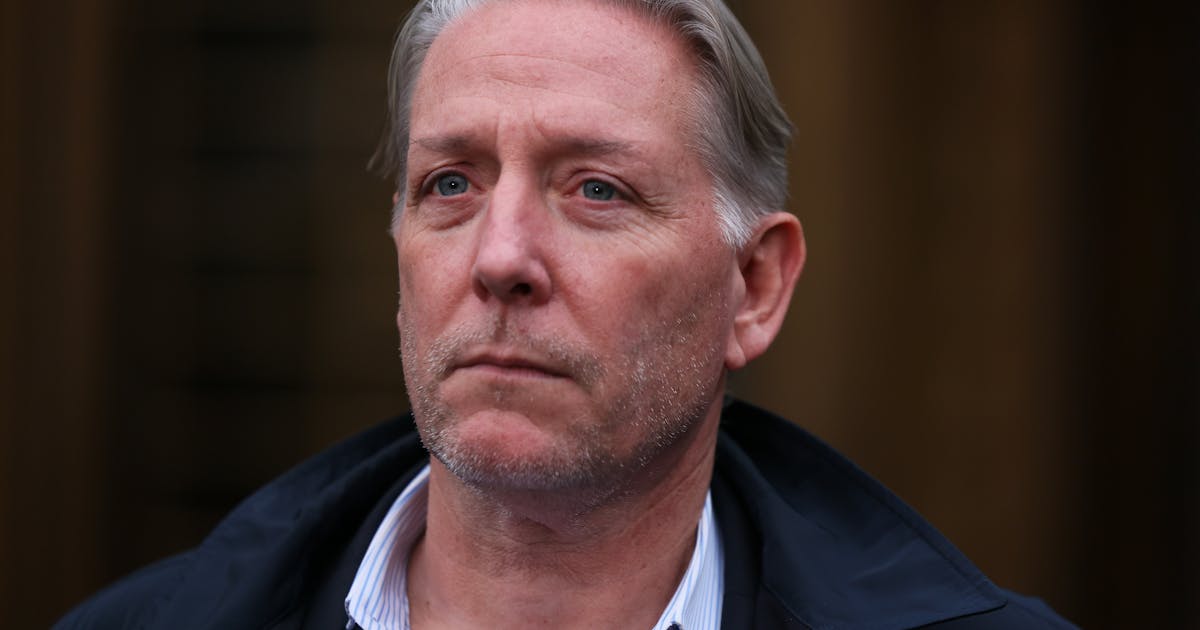
One reason for that may have been that on far too many occasions, FBI men in sensitive positions ended up on the take from the very people they were supposed to be investigating. And on January 23, a bomb dropped: We learned that the latest of these is Charles McGonigal, the former head of counterintelligence for the FBI in New York, who ended up working for billionaire oligarch Oleg Deripaska, a major target in the Trump Russia investigation. McGonigal was indicted in Manhattan on charges of money laundering, violating U.S. sanctions, and other counts relating to his alleged ties to Deripaska. He was also indicted in Washington, where he was accused of concealing $225,000 he allegedly received from a New Jersey man employed long ago by Albanian intelligence.
McGonigal has pleaded not guilty to all charges.
McGonigal’s troubles began in late 2018, after his wife found out about his girlfriend, Allison Guerriero, who did not know that he was still married. “I was shocked,” Guerriero said, in an interview with Mattathias Schwartz for Business Insider. “I was very much in love with him, and I was so hurt.”
A few months later, Guerriero wrote an angry email about McGonigal to the man who had introduced them as a couple—William Sweeney, who just happened to be assistant director in charge of the FBI’s New York City office. On a number of occasions, Guerriero had seen McGonigal leave huge amounts of cash around the house. At first, she thought it must be “buy money” for a sting operation or some other FBI procedure. Then she became suspicious. Among other things, she told Sweeney to look into McGonigal’s dealings in Albania, where McGonigal had traveled extensively and participated in transactions that later appeared in his indictments.
McGonigal had a stellar resume, including working on the Chelsea Manning–WikiLeaks investigation and on Operation Crossfire Hurricane, the bureau’s probe into the Trump campaign’s contacts with Russia.* Though he was not assigned to that operation when he moved to New York, running FBI counterintelligence in New York is a very special, highly sensitive position that affords unquestioned access to a spectacular array of international elites as well as highly sought-after information.
Similarly, Oleg Deripaska is not just another oligarch. Having emerged victorious from the brutal Aluminum Wars as a vital functionary of the Kremlin, he played a key role in financing Putin’s efforts to take over Ukraine from within via a political operation directed by Paul Manafort that put Putin surrogate Viktor Yanukovych in the Ukraine presidency in 2010. Manafort is alleged to have funneled $75 million into offshore accounts in return for his efforts.
What could be more perfect? Having installed a Putin surrogate in the Ukrainian presidency, in 2016, Manafort repeated that feat on a much bigger stage, as campaign manager guiding Trump into the White House. As Yale professor Timothy Snyder, a close observer of Ukraine, points out, “Russia was backing Trump in much the way that it had once backed Ukrainian president Viktor Yanukovych.”
Which brings us back to McGonigal. After assuming his new job in October 2016, just a month before the election, he would have been in a position to undermine the bureau’s investigation into Deripaska and Manafort and to sabotage those investigations with disinformation. Similarly, he would have been in a position to leak the information about Anthony Weiner’s laptop that led to the reopening of the FBI probe into Hillary Clinton’s emails 11 days before the election. Finally, he was in a position to have been a source behind the false exculpatory news published by The New York Times on October 31, 2016, a week before the election, with the headline that seemed give to Trump a clean bill of health: “Investigating Donald Trump, F.B.I. Sees No Clear Link to Russia.”
Of course, McGonigal wasn’t the only FBI official who went over to the dark side. In 1997, four years after he had retired and returned to private practice, FBI Director William Sessions traveled to Moscow and alerted the world to the horrifying dangers of the brutal Russian mafia. A decade later, however, Sessions had no qualms about taking on as a client Ukrainian-born Semion Mogilevich, the so-called “Brainy Don” behind the Russian mafia, whom the FBI had put on its “Ten Most Wanted” list.
Sessions’s successor as FBI director, Louis Freeh, followed a similar path. His pro-Putin benefactor was Prevezon Holdings, the giant real estate firm that won international attention in 2008 when Russian tax lawyer Sergei Magnitsky investigated a tax fraud case involving Prevezon. For his efforts on behalf of Bill Browder’s Hermitage Capital Management, Magnitsky was arrested, imprisoned, assaulted repeatedly, and beaten to death.
As FBI director, Freeh had warned that Russian organized crime posed a grave threat to the United States that far transcended mere criminality. It is not clear how much he was paid by Prevezon after he switched sides, but Freeh later bought a $9.38 million mansion in Palm Beach, Florida, just a 10-minute drive from Trump’s Mar-a-Lago.
Then there was the late James Kallstrom, who ran the FBI’s New York office in the mid-’90s and oversaw successful investigations into both the Italian Mafia and later the Russian mob. Kallstrom had developed close friendships with two key players in the Trump-Russia saga. He worked closely with then–U.S. Attorney for the Southern District of New York Rudy Giuliani in the investigation of the Cosa Nostra network that led to the famed Mafia Commission Trial of 1985–1986. Going even further back, Kallstrom had also been friends with Donald Trump since around 1973, when Kallstrom was putting together a Trump-funded parade in New York to honor Vietnam veterans.
“We just got to be friends,” said Kallstrom in a 2020 interview as the Trump reelection campaign was gearing up. (The interview was done for a 2020 documentary by David Carr-Brown about Trump and the FBI called An American Affair: Donald Trump and the FBI.)
“I went to a few dinners with him, we talked quite often. He was very, very supportive of the bureau. We lose an agent, or somebody gets shot up, he was always there to pay for the food or whatever it took.”
According to The New York Times, Kallstrom had founded the Marine Corps–Law Enforcement Foundation, a nonprofit that got more than $1.3 million from Trump, a strikingly generous offering from the usually parsimonious real estate magnate. Under Kallstrom’s aegis, the New York office became known as Trumpland. “I would say we were associates who liked each other,” Kallstrom added in the film. “He [Trump] would call me periodically and try to boost my morale, and then I’d call him when he was in the news and try to boost his morale. But he’s basically a very, very good person and with a big heart that does a lot of things, 90 percent of which nobody knows about. I mean, we stay in touch even today.”
But Trump being Trump, loyalty and generosity came with strings attached. “He [Trump] cultivated FBI people,” says Jeff Stein, editor of the intelligence newsletter SpyTalk, in An American Affair. “And that’s well-known behavior by people who swim in dangerous waters. They want to have a get-out-of-jail card, and that get-out-of-jail is having friendships or being a good source for the FBI.”
Kallstrom insisted that Trump was not an FBI informant, but another agent told Stein that Trump was known within the bureau as a “hip pocket” source—that is, someone who was not officially a source and therefore not in the FBI’s files.
Nevertheless, Trump appears to have gotten exactly what he sought. As it happens, Kallstrom worked closely with McGonigal and cultivated friendships not just with Trump but also with Rudy Giuliani. Together, they are suspected of being party to an internal campaign just before the 2016 election that spurred FBI Director James Comey to publicly announce he was reopening his investigation into Clinton’s emails.
Ultimately, of course, America found out that none of Hillary’s emails were classified. The Times story on the subject was misleading at best. The “reopened” investigation was short-lived and appeared to reflect the wishful thinking of the pro-Trump leaker in the bureau, whether it was McGonigal or someone else. Likewise, the Times headline declaring “no link” between Trump and Russia seemed to reflect wishful thinking on the parts of Kallstrom, Giuliani, and McGonigal—not reality.
But the damage had already been done. When voters cast their ballots on November 8, they thought that the FBI had given Trump a clean bill of health but was still investigating Hillary. McGonigal and company may well have made the difference in tipping the election to Trump.
So in the end, the FBI failed miserably at documenting Trump’s four-decade relationship with the Russian mafia and Russian intelligence, and all the financial transactions between them. The bureau failed miserably when it came to assessing how the former president might be compromised.
As Adam Schiff, then chairman of the House Intelligence Committee, told The Washington Post in 2019, “Just as a reminder, this all began as an FBI counterintelligence investigation into whether people around then-candidate Trump were acting as witting or unwitting agents of a foreign power. So it began as a counterintelligence investigation, not as a criminal investigation.”
Which is a vital distinction. “It may not be a crime for a candidate for president to seek to make money from a hostile foreign power during an election and mislead the country about it,” Schiff added. “But the counterintelligence concerns go beyond mere violation of criminal law.
“They’re at one time not necessarily a criminal activity and at the same time potentially far more serious than criminal activity because you have the capacity to warp U.S. policy owing to some form of compromise.”
In other words, as the KGB and its successor agencies know all too well, intelligence operations are designed to operate within the law while exploiting the latitude afforded by lax regulations and lax enforcement.
A serious counterintelligence investigation, then, would presumably have asked how the KGB began its relationship with Trump and whether Trump had been compromised first by the Soviets and later by Russia. It would have asked how deeply Trump was indebted to the Russian mafia, because he had made a fortune by at the very least turning a blind eye as former Soviet officials laundered millions of dollars through his real estate. How much business had he done with operatives of Russian intelligence and/or the Russian mafia? Did Russia have kompromat on Trump? Was he a Russian asset? How far back did his relationship go? How much did he make laundering money for them? What about other members of his family, the Trump administration and campaign, other politicians?
All unanswered questions, leading to perhaps the biggest question of all: If the FBI won’t ask those questions, who will? It will be interesting to see whether they are answered when McGonigal come to trial or, perhaps, if he is the string that, when pulled, will unravel all sorts of unimaginable secrets.
* This article has been updated.
“One of the creeping hands of totalitarianism running through the democracy is the Federal Bureau of Investigation… Because why does the FBI do all this? To scare the hell out of people… They work for the establishment and the corporations and the politicos to keep things as they are. And they want to frighten and chill the people who are trying to change things.”—Howard Zinn, historian
Power corrupts. We know this.
In fact, we know this from experience learned the hard way at the hands of our own government.
So why is anyone surprised to learn that the FBI, one of the most power-hungry and corrupt agencies within the police state’s vast complex of power-hungry and corrupt agencies, misused a massive government surveillance database more than 300,000 times in order to target American citizens?
This is how the government operates, after all.
First, they seek out extraordinary powers acquired in the wake of some national crisis—in this case, warrantless surveillance powers intended to help the government spy on foreign targets suspected of engaging in terrorism—and then they use those powers against the American people.
According to the Foreign Intelligence Surveillance Court, the FBI repeatedly misused Section 702 of the Foreign Intelligence Surveillance Act in order to spy on the communications of two vastly disparate groups of Americans: those involved in the George Floyd protests and those who may have taken part in the Jan. 6, 2021, protests at the Capitol.
This is par for the course for the FBI, whose modus operandi has historically been to “expose, disrupt, misdirect, discredit, or otherwise neutralize” perceived threats to the government’s power.
Indeed, the FBI has a long history of persecuting, prosecuting and generally harassing activists, politicians, and cultural figures.
Back in the 1950s and ‘60s, the FBI’s targets were civil rights activists, those suspected of having Communist ties, and anti-war activists. In more recent decades, the FBI has expanded its reach to target so-called domestic extremists, environmental activists, and those who oppose the police state.
In 2019, President Trump promised to give the FBI “whatever they need” to investigate and disrupt hate crimes and domestic terrorism, without any apparent thought for the Constitution’s prohibitions on such overreach.
That misguided pledge sheds a curious light on the FBI’s ongoing spree of SWAT team raids, surveillance, disinformation campaigns, fear-mongering, paranoia, and strong-arm tactics meted out to dissidents on both the right and the left.
Yet while these overreaching, heavy-handed lessons in how to rule by force have become standard operating procedure for a government that communicates with its citizenry primarily through the language of brutality, intimidation and fear, none of this is new.
Indeed, the FBI’s love affair with totalitarianism can be traced back to the Nazi police state.
As historian Robert Gellately recounts, the Nazi police state was so admired for its efficiency and order by the world powers of the day that in the decades after World War II, the FBI, along with other government agencies, aggressively recruited at least a thousand Nazis, including some of Hitler’s highest henchmen.
Since then, U.S. government agencies—the FBI, CIA and the military—have fully embraced many of the Nazi’s well-honed policing tactics, and used them repeatedly against American citizens.
With every passing day, the United States government borrows yet another leaf from Nazi Germany’s playbook: Secret police. Secret courts. Secret government agencies. Surveillance. Censorship. Intimidation. Harassment. Torture. Brutality. Widespread corruption. Entrapment. Indoctrination. Indefinite detention.
These are not tactics used by constitutional republics, where the rule of law and the rights of the citizenry reign supreme. Rather, they are the hallmarks of authoritarian regimes, where secret police control the populace through intimidation, fear and official lawlessness on the part of government agents.
Consider the extent to which the FBI’s far-reaching powers to surveil, detain, interrogate, investigate, prosecute, punish, police and generally act as a law unto themselves resemble those of their Nazi cousins, the Gestapo.
Just like the Gestapo, the FBI has vast resources, vast investigatory powers, and vast discretion to determine who is an enemy of the state.
Much like the Gestapo spied on mail and phone calls, FBI agents have carte blanche access to the citizenry’s most personal information.
Much like the Gestapo’s sophisticated surveillance programs, the FBI’s spying capabilities can delve into Americans’ most intimate details (and allow local police to do so, as well).
Much like the Gestapo’s ability to profile based on race and religion, and its assumption of guilt by association, the FBI’s approach to pre-crime allows it to profile Americans based on a broad range of characteristics including race and religion.
Much like the Gestapo’s power to render anyone an enemy of the state, the FBI has the power to label anyone a domestic terrorist.
Much like the Gestapo infiltrated communities in order to spy on the German citizenry, the FBI routinely infiltrates political and religious groups, as well as businesses.
Just as the Gestapo united and militarized Germany’s police forces into a national police force, America’s police forces have largely been federalized and turned into a national police force.
Just as the Gestapo carried out entrapment operations, the FBI has become a master in the art of entrapment.
Just as the Gestapo’s secret files on political leaders were used to intimidate and coerce, the FBI’s attempts to target and spy on anyone suspected of “anti-government” sentiment have been similarly abused.
The Gestapo became the terror of the Third Reich by creating a sophisticated surveillance and law enforcement system that relied for its success on the cooperation of the military, the police, the intelligence community, neighborhood watchdogs, government workers for the post office and railroads, ordinary civil servants, and a nation of snitches inclined to report “rumors, deviant behavior, or even just loose talk.”
Likewise, as countless documents make clear, the FBI has had no qualms about using its extensive powers in order to blackmail politicians, spy on celebrities and high-ranking government officials, and intimidate and attempt to discredit dissidents of all stripes.
In fact, borrowing heavily from the Gestapo, between 1956 and 1971, the FBI conducted an intensive domestic intelligence program, termed COINTELPRO, intended to neutralize domestic political dissidents. As Congressman Steve Cohen explains, “COINTELPRO was set up to surveil and disrupt groups and movements that the FBI found threatening… many groups, including anti-war, student, and environmental activists, and the New Left were harassed, infiltrated, falsely accused of criminal activity .”
Sound familiar? The more things change, the more they stay the same.
Those targeted by the FBI under COINTELPRO for its intimidation, surveillance and smear campaigns included: Martin Luther King Jr., Malcom X, the Black Panther Party, Billie Holiday, Emma Goldman, Aretha Franklin, Charlie Chaplin, Ernest Hemingway, Felix Frankfurter, John Lennon, and hundreds more.
The Church Committee, the Senate task force charged with investigating COINTELPRO abuses in 1975, denounced the government’s abuses:
“Too many people have been spied upon by too many Government agencies and too much information has been collected. The Government has often undertaken the secret surveillance of citizens on the basis of their political beliefs, even when those beliefs posed no threat of violence or illegal acts on behalf of a hostile foreign power.”
The report continued:
“Groups and individuals have been harassed and disrupted because of their political views and their lifestyles. Investigations have been based upon vague standards whose breadth made excessive collection inevitable. Unsavory and vicious tactics have been employed—including anonymous attempts to break up marriages, disrupt meetings, ostracize persons from their professions, and provoke target groups into rivalries that might result in deaths. Intelligence agencies have served the political and personal objectives of presidents and other high officials.”
Whether 50 years ago or in the present day, the treatment being doled out by the government’s lethal enforcers has remained consistent, no matter the threat.
The FBI’s laundry list of crimes against the American people includes surveillance, disinformation, blackmail, entrapment, intimidation tactics, harassment and indoctrination, governmental overreach, abuse, misconduct, trespassing, enabling criminal activity, and damaging private property, and that’s just based on what we know.
Whether the FBI is planting undercover agents in churches, synagogues and mosques; issuing fake emergency letters to gain access to Americans’ phone records; using intimidation tactics to silence Americans who are critical of the government; recruiting high school students to spy on and report fellow students who show signs of being future terrorists; or persuading impressionable individuals to plot acts of terror and then entrapping them, the overall impression of the nation’s secret police force is that of a well-dressed thug, flexing its muscles and doing the boss’ dirty work of ensuring compliance, keeping tabs on potential dissidents, and punishing those who dare to challenge the status quo.
As I make clear in my book Battlefield America: The War on the American People and in its fictional counterpart The Erik Blair Diaries, it’s time to rein in the Federal Bureau of Intimidation’s war on political freedom.
Source: https://tinyurl.com/bdcu3ypw
ABOUT JOHN W. WHITEHEAD
Constitutional attorney and author John W. Whitehead is founder and president of The Rutherford Institute. His most recent books are the best-selling Battlefield America: The War on the American People, the award-winning A Government of Wolves: The Emerging American Police State, and a debut dystopian fiction novel, The Erik Blair Diaries. Whitehead can be contacted at staff@rutherford.org. Nisha Whitehead is the Executive Director of The Rutherford Institute. Information about The Rutherford Institute is available at www.rutherford.org.
Publication Guidelines / Reprint Permission
John W. Whitehead’s weekly commentaries are available for publication to newspapers and web publications at no charge. Please contact staff@rutherford.org to obtain reprint permission.
Categories
THE FBI IS OUR GESTAPO & KGB
The FBI has devolved into our dystopian version of the Gestapo and KGB. Maybe they were always this corrupt and lawless, but covered their tracks better. J. Edgar Hoover was a cross dressing tyrant who had dirt on every important person in the country. Wray and his apparatchiks clearly were involved in an active coup against Trump and unequivocally provoked, initiated, and participated in the fake January 6 “insurrection”. They incarcerate innocent citizens as a message to the rest of us they can do whatever they want and get away with it, while protecting the regime who keeps them in power.

As an Amazon Associate I Earn from Qualifying Purchases 
—————————————————–
It is my sincere desire to provide readers of this site with the best unbiased information available, and a forum where it can be discussed openly, as our Founders intended. But it is not easy nor inexpensive to do so, especially when those who wish to prevent us from making the truth known, attack us without mercy on all fronts on a daily basis. So each time you visit the site, I would ask that you consider the value that you receive and have received from The Burning Platform and the community of which you are a vital part. I can’t do it all alone, and I need your help and support to keep it alive. Please consider contributing an amount commensurate to the value that you receive from this site and community, or even by becoming a sustaining supporter through periodic contributions. [Burning Platform LLC – PO Box 1520 Kulpsville, PA 19443] or Paypal —————————————————–
It is my sincere desire to provide readers of this site with the best unbiased information available, and a forum where it can be discussed openly, as our Founders intended. But it is not easy nor inexpensive to do so, especially when those who wish to prevent us from making the truth known, attack us without mercy on all fronts on a daily basis. So each time you visit the site, I would ask that you consider the value that you receive and have received from The Burning Platform and the community of which you are a vital part. I can’t do it all alone, and I need your help and support to keep it alive. Please consider contributing an amount commensurate to the value that you receive from this site and community, or even by becoming a sustaining supporter through periodic contributions. [Burning Platform LLC – PO Box 1520 Kulpsville, PA 19443] or Paypal —————————————————–
To donate via Stripe, click here.
—————————————————–
Use promo code ILMF2, and save up to 66% on all MyPillow purchases. (The Burning Platform benefits when you use this promo code.)
The DOJ nabbed Russian spies who hacked into networks inside U.S. intelligence, defense, and the State Dept.- robust counterintelligence is crucial in countering such malicious cyber threats. #DOJ #RussianHackers #CyberSecurity #DOJ #Hacking #spieshttps://t.co/V8igl62Ona pic.twitter.com/IUHs2ULJCp
— Robert Morton (@Robert4787) December 16, 2023
A jury has ordered Rudy Giuliani to pay nearly $150 million to two Georgia election workers he defamed. Follow live updates. https://t.co/0MPmIGQ3sI
— CNN (@CNN) December 15, 2023
The three Israeli hostages who were killed by Israeli soldiers in Gaza were waving a white flag when they were shot, an IDF official says. Follow live updates. https://t.co/KTTvZifFPG
— CNN Breaking News (@cnnbrk) December 16, 2023
Украина объявила в розыск патриарха Кирилла https://t.co/43s4AF1HQZ
— Голос Америки (@GolosAmeriki) December 16, 2023