WION
 The Russian World - russianworld.net
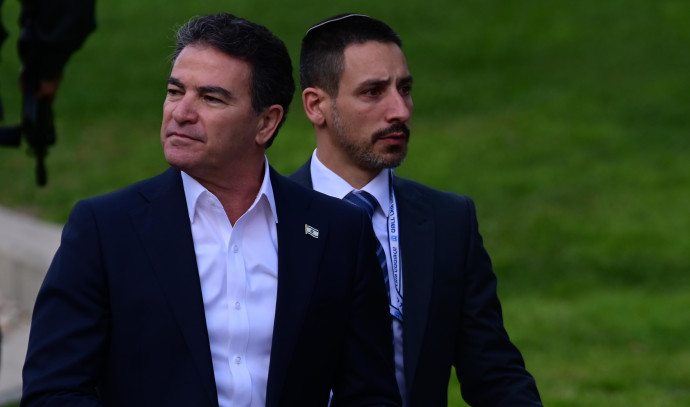
“On Saturday morning I was at my house in Modi’in,” said the former head of the Mossad, Yossi Cohen. “There was no siren, but the phone started going off, and people reached out to me, and that’s how I learned the magnitude of the horror. A year in the civil service, but you will never be sufficiently prepared for such a shocking event.”
“The first thing I did was to try to understand what happened. I started piecing together testimonies alongside all of Israel. I haven’t been in the formal update thread for two and a half years. Slowly the magnitude of the horror, which is difficult to describe, became clear to me as well.”
“In every transaction of this type, there are trade-offs that we unfortunately have to pay. This is a negotiation with the devil who demands heavy prices from us that we must pay. The fighting will not stop beyond what is agreed upon, and I hope that the Israeli government will not hesitate from here on out, and will continue to eliminate the military capabilities of Hamas.”
“I am convinced that while we are completing the transaction in question, negotiations are underway for additional transactions for the release of all the abductees with the aid and support of the American government and intermediaries from the Middle East.”
“It’s impossible. We all know, including the military and the intelligence community and heads of other organizations, that Hamas has been building such an operation for a long time. I appreciate that an operation on such a large scale, with such a precise level of execution, with trained teams holding in their hands schematic diagrams of an operation as we have seen its result, in which there is a trained, competent force, well equipped both in the military and in intelligence – this is not something that is prepared from moment to moment, it’s unequivocally clear. In my estimation, this is about long months of preparation, so the intelligence failure is unimaginable.”
“This is something that will have to be investigated, and in the most in-depth way, and I am not reinventing anything. Also the head of the Israeli Defense Forces, the chief of staff, and the heads of other organizations – we will have to investigate all of them. How did this happen that a proper security system was not provided to the citizens of Israel?”
Advertisement
“As the head of the Mossad during my time, the division of labor between me and the heads of the other organizations was that we take Hamas abroad and the Shin Bet responsible for Hamas in Israel. The IDF, the Mossad and the Shin Bet cooperate in an unusual way, in a complete and in-depth intelligence structure.
The Mossad can see all the updates of the other bodies, and other organizations can see what is received by the Mossad. We closely observe the intelligence assessments.
“But the practical work of who does what? Every organization does what it does so that we don’t step on each other’s toes, and a group called the ‘Committee of the Chiefs of Services’, which has the head of the Mossad, the head of the Shin Bet, the head of the Security Service, and the military secretary of the prime minister, who serves as an observer, makes the decisions of who does what. That’s where issues come up that we need to agree on in order to reach a correct national result.”
“The heads of the organizations admitted failure. Everyone who takes responsibility knows why he is taking responsibility. Those who do not take responsibility know why they are not taking responsibility.”
“I suggest that you address the question to the Prime Minister’s office.”
“In the dimension of responsibility, as I perceive it all my life, as soon as you get a position, you are responsible for everything that happens.”
“I served as the head of the Mossad from 2016 to June 2021. I am responsible for everything that happened during my shift at the Mossad, for better or for worse. I cannot take responsibility for things that were done before or after my time, unless I saw things that happened and did not correct them, then I am responsible for not correcting them”.
“It’s their personal decision.”
Since his retirement from the Mossad about two and a half years ago and the cooling off period he took, Cohen disappeared, except for one well-publicized glimpse last July.
“I haven’t been interviewed for two and a half years, since my exit from the Mossad,” he said now. “The judicial reform is not correct, but I first of all asked the political level to stop the process, because this process, as I experienced in conversations with the members of the security systems, is an experience that definitely weakens the security forces. Whether they are right or not, we will discuss it separately.
“And I said: dear friends, all of you, stop everything, nothing will happen to democracy, let’s sit down, talk, think, and strengthen the army. I remember saying that I fear for our security resilience from the response to the legislation, that I fear that our ability to defend ourselves will be compromised. Think about my personal position, a national security advisor, a decent and dedicated citizen, a great democrat and a liberal, coming out and saying: dear friends, this hurts our security edge. Stop.”
After the October 7 massacre and the news that Hamas was holding kidnapped civilians and soldiers, it was reported in the media that Cohen went to Qatar to assist in negotiations for their release. “I did not go to Qatar on this matter, despite the publications,” he said now.
At the end of last month, the Prime Minister’s Office reported that Netanyahu had appointed Cohen as an emissary “for special missions.”
Demonstration by the families of the abductees (credit: AVSHALOM SHOSHANI)
“I have no official position, and I never had an official position regarding the negotiations for the return of the hostages. There are other jobs I have done. One is according to the report of the Prime Minister’s Office, the other is in front of Gal Hirsch, to assist him when he received the position of supervisor of the POWs and Missing Persons.
I volunteered to be the link between the civil headquarters of the families of the abductees and his body, and that was the case for a certain period of time. Today it is no more, and I am left only at the civilian headquarters of the hostages, helping the families, explaining what is needed. But no longer alongside Gal Hirsch.”
“The people of Israel are a little confused, I know. According to Netanyahu’s announcement from last week, those who are doing the negotiations are Dedi Barnea, the head of the Mossad, and Nitzan Alon, the commander of Central Command for locating the kidnapped and missing persons, they are responsible for this.”
“Because he decided to appoint someone else, that’s fine. This is the prerogative of a prime minister, to appoint to state positions whoever he thinks is the most correct and suitable to bring about a national result, and I accept the decision.”
“A deal with Hamas also includes a deal with Jihad. We have no direct contact with the Islamic Jihad, but from what I understand, Hamas takes responsibility for all the abductees. We know that there are also people kidnapped by civilians, I can’t say if they are alive. We started the war with thousands of question marks that were reduced to dozens.”
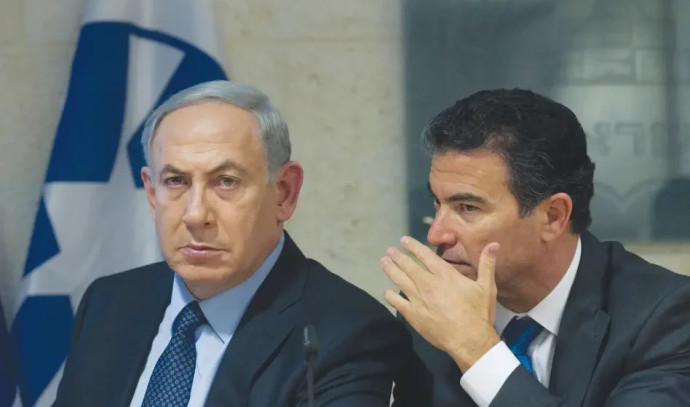
Yossi Cohen and Benjamin Netanyahu (credit: KOBI GIDEON/LAAM)
“As far as I’m concerned, nothing happened. I am still standing right and ready for any assistance that is required and for any national mission. At the moment my relationship with him is professional and to the point.”
“The consultations, if necessary, I hold over the phone.”
“I don’t know, it’s hard for me to estimate.”
“Only a state commission of inquiry. I don’t know or think there is anyone who thinks otherwise.”
“It’s not my business to decide on the issue.”
“There is no country that faces such a situation. There are countries that have unpleasant conflicts with their surroundings, but this is something related to the world of old. The Russia-Ukraine war is perhaps an opportunity to show that small countries can be threatened by large countries, whether or not they have the ability to fight and defend themselves. But the State of Israel is in a different situation, it is not in an existential threat and we are not in a communist war.”
“No. The State of Israel will certainly exist. There is no doubt that the Jewish people are going through a shake-up. Antisemitism that was probably hidden under the surface is now coming out with great force. It is a demon now out of the bottle. We know that antisemitism is a present and existing thing, which does not necessarily have a reason. All the researchers of global antisemitism claim that it happens for no reason.”
“It is difficult to assess. Certainly not immediately. Antisemitism is present, perhaps today it can be called anti-Israelism. Hamas is an antisemitic and anti-Israel organization, it does not accept our presence. Those abroad do not accept our existence, even as Jews.”
Yossi Cohen and Netanyahu – Google Search https://t.co/HXzE6kPXFE pic.twitter.com/LYMKkk84ar
— Michael Novakhov (@mikenov) January 27, 2024
The October Surprise 2016 as the battering ram strategy – G https://t.co/TgKQfce3lP
–#PoliticalPsychology #PoliticalPersonology #PoliticalCriminology #Counterintelligence #InvestigativeJournalism #Psychohistory#News #Times #NewsAndTimes #NT #TNT #Israel #World #USA #POTUS #DOJ… pic.twitter.com/CAPZv2wi68— Michael Novakhov (@mikenov) January 27, 2024
Some ‘October surprise’ conspiracies turn out to be true – Los Angeles Times https://t.co/uzBOX6SFzO
— Michael Novakhov (@mikenov) January 27, 2024
We Americans love conspiracies. They are like good spy stories: entertaining, intriguing and tantalizing. But historians learn to hate conspiracy stories. The evidence is often circular, circumstantial and infuriatingly slippery. And usually, the simplest explanation — not the conspiracy theory — turns out to be the best.
In my first biography, “The Chairman: John J. McCloy and the Making of the American Establishment,” about the influential Wall Street lawyer and perennial presidential advisor, I had to write about President Kennedy’s assassination. McCloy had been a member of the Warren Commission, charged with investigating the assassination. Early in the commission’s deliberations, another member, Allen Dulles, passed around copies of a 10-year-old book about seven previous attempts on the lives of various presidents. The author’s thesis was that would-be presidential assassins typically are misfits and loners — and not part of any conspiracy. Dulles observed, “You’ll find a pattern running through here that I think we’ll find in this present case.” McCloy quickly retorted, “The Lincoln assassination was a plot.”
I don’t know what President Trump and his minions were saying to the Russians before or after the November election. But it is true that foreigners routinely try to influence American elections. Democrats in particular have painful memories of the 1968 “October surprise,” in which Republican presidential candidate Richard Nixon passed messages to the South Vietnamese president, Nguyen Van Thieu, telling him to stall on the peace talks. Nixon always denied the allegation. But we now know from the private diary of H.R. Haldeman, Nixon’s chief of staff, recently discovered by the presidential historian John Farrell, that Nixon was lying.
As a historian, I am always skeptical of conspiracies. But as McCloy blurted out in 1963, some plots do exist.
And then there was the alleged October surprise of 1980. The Reagan administration and Republicans always denied that they had any back-door negotiations with Ayatollah Khomeini’s revolutionary regime during the Iran hostage crisis. Specifically, they denied that Reagan’s campaign manager, William J. Casey, traveled surreptitiously to Madrid in the summer of 1980 to meet with a representative of the ayatollah, and to suggest that it might be in Iran’s interest to stall the negotiations over the release of the American hostages. Casey allegedly intimated that a Reagan administration would resume arms sales to the Iranians.
These allegations seemed too outrageous, too outlandish to be believed. Journalists investigated. A House October Surprise Task Force delved into the story. Two good books, Gary Sick’s “October Surprise” (1992) and Robert Parry’s “Trick or Treason” (1993), made strong circumstantial arguments that something had happened, though neither were able to prove that Casey had flown to Madrid.
But just a few years ago, Parry discovered a damning memo in the George H.W. Bush Presidential Library. Dated Nov. 4, 1991, the memo was written by President Bush’s deputy counsel, Paul Beach, and it described the State Department’s efforts to collect documents in response to congressional subpoenas for “material potentially relevant to the October Surprise allegations.” Beach then specifically mentions “a cable from the Madrid embassy indicating that Bill Casey was in town, for purposes unknown.”
So we now know that Casey took time off from his campaign duties sometime in the summer of 1980 to visit Madrid. For “purposes unknown.” That’s all we know: There is a 1991 White House memo about a State Department cable that was presumably dated in 1980. We do not know if Casey went to Madrid with the knowledge of his candidate. Indeed, from what we know about Casey’s love for intrigue and even skullduggery, this former spy and veteran of the World War II-era Office of Strategic Services may have initiated his own back-door channel to the Iranians without any authorization from Reagan.
But I think it is now reasonable to conclude that Casey did something. The Iranians dragged out the negotiations over the release of the hostages. President Carter believed these negotiations were nearly successful in late September 1980, but suddenly new demands were made that stalled the talks. Polls showed Carter within single digits of catching Reagan until about 10 days before the election. Carter lost decisively, and the hostages were inexplicably released minutes after Reagan was sworn in as president.
The story does not end there. Months later, Reagan’s newly installed CIA director, Casey, gave the green light to Israel to sell weapons to Iran. In retrospect, this was the beginning of the scandal that broke in 1987, when it became known that the Reagan administration had been exchanging weapons for hostages. Casey died of a brain tumor soon after the scandal broke, taking to his grave further details of this October surprise.
As a historian, I am always skeptical of conspiracies. But as McCloy blurted out in 1963, some plots do exist. Nixon did try to thwart the Vietnam peace talks. And it seems the Iranians conspired in 1980 to tilt the election toward the Republicans. Russian President Vladimir Putin clearly disliked the prospect of Hillary Clinton as president. Did someone in Trump’s camp do what Casey did — and make a deal? If so, this will be very hard to unearth. But historically, Democrats have every reason to be wary.
Kai Bird, director of the Leon Levy Center for Biography at CUNY Graduate Center, is a Pulitzer Prize-winning historian and the author of a forthcoming biography of President Carter.
Follow the Opinion section on Twitter @latimesopinion or Facebook