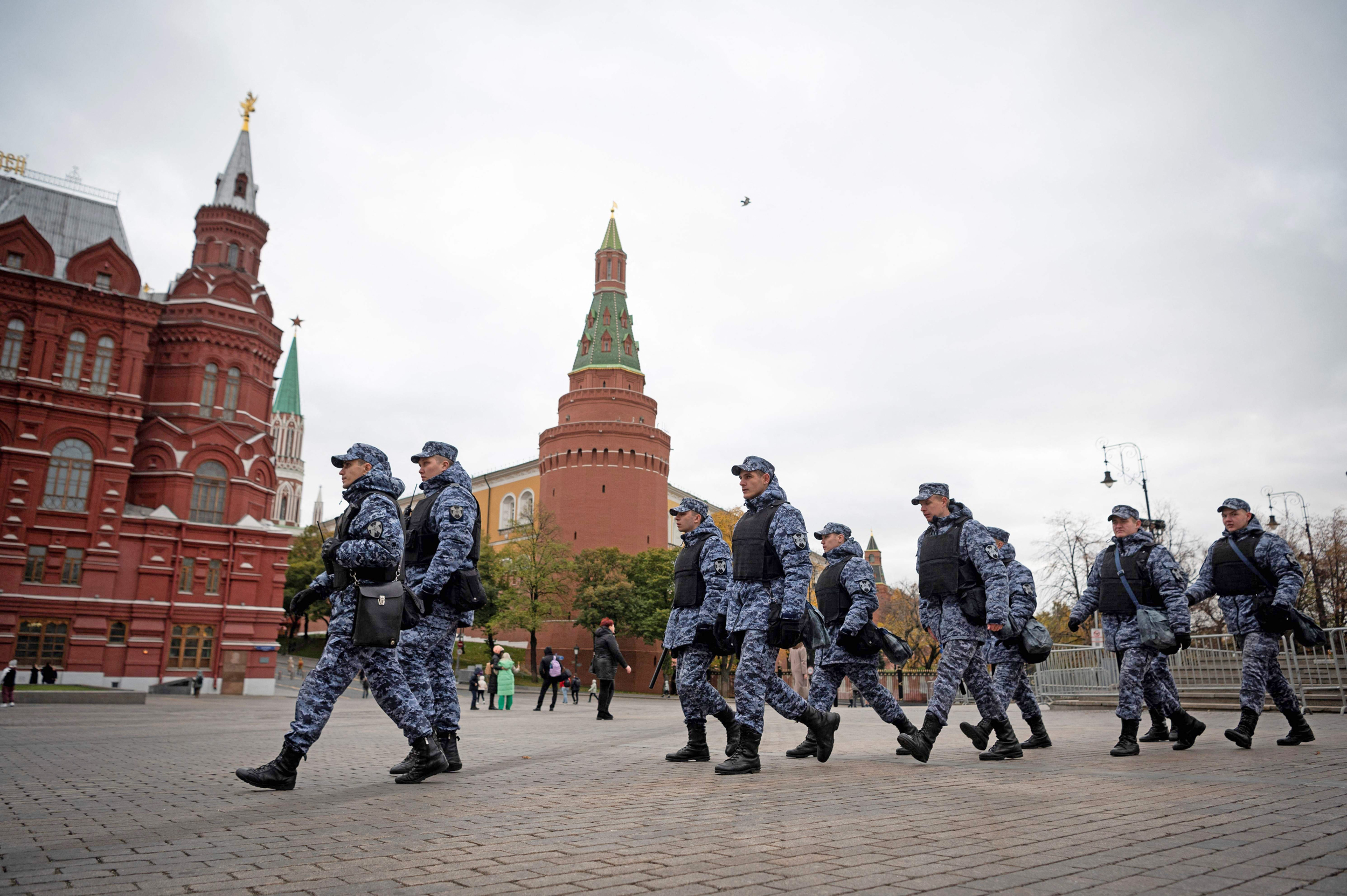
Zelensky sacks Ukraine’s commander-in-chief Valerii Zaluzhnyi https://t.co/O7JUGAi6x6 – The News And Times Reviewhttps://t.co/O0SIgLVWzM#NewsAndTimes #NT #TNT #News #Times#World #USA #POTUS #DOJ #FBI #CIA #DIA #ODNI#Israel #Mossad #Netanyahu#Ukraine #NewAbwehr #OSINT#Putin…
— Michael Novakhov (@mikenov) February 8, 2024
Day: February 8, 2024
valerii zaluzhnyi – Google Search https://t.co/ZWDU45iZCW https://t.co/O7JUGAi6x6
— Michael Novakhov (@mikenov) February 8, 2024
valerii zaluzhnyi – Google Search https://t.co/ZWDU45iZCW
— Michael Novakhov (@mikenov) February 8, 2024
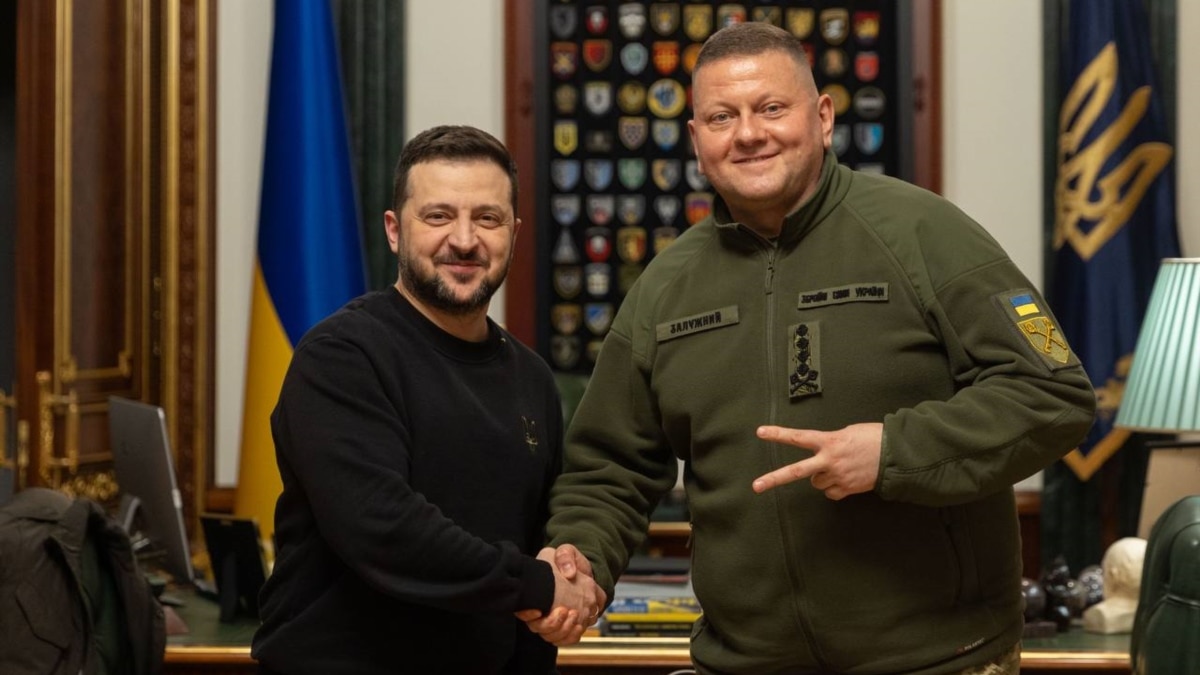
Владимир Зеленский отправил в отставку главкома ВСУ Валерия Залужного. Новым главнокомандующим Вооруженных сил Украины назначен командующий Сухопутными войсками генерал-полковник Александр Сырский. Об этом президент Украины написал в своем телеграм-канале.
“Встретился с генералом Валерием Залужным. Поблагодарил за два года защиты Украины. Обсудили, в каком обновлении нуждаются Вооруженные силы Украины. Обсудили также, кто может находиться в обновленном руководстве Вооруженных сил Украины. Время для такого обновления – именно сейчас. Предложил Валерию Федоровичу и дальше быть в команде”, – написал Зеленский.
Он также отметил, что сегодня к руководству Вооруженными силами Украины приступает новая управленческая команда.
“Я хочу, чтобы видение войны было единым и у наших воинов в Работино или Авдеевке, и в Генеральном штабе и Ставке. Я провел десятки разговоров с командирами разного уровня. В частности, сегодня говорил с бригадными генералами Андреем Гнатовым, Михаилом Драпатым, Игорем Скибюком и полковниками Павлом Палисой и Вадимом Сухаревским. Все они рассматриваются на руководящие должности в армии и будут служить под руководством наиболее опытного украинского командующего. У него есть успешный опыт защиты – провел Киевскую оборонную операцию. Он также имеет успешный опыт наступления – Харьковской освободительной операции. Я назначил генерал-полковника Сырского главнокомандующим Вооруженными силами Украины”, – сказал Зеленский.
Залужный, в свою очередь, отметил, что провел с президентом Украины “серьезный и важный разговор”.
“Задания 2022 года отличаются от задач 2024 года. Поэтому все должны измениться и адаптироваться к новым реалиям. Чтобы победить тоже вместе. Принято решение о необходимости изменения подходов и стратегии”, – подчеркнул Залужный.
В комментарии “Суспільне” глава Минобороны Украины Рустем Умеров заявил, что “сегодня одобрили решение сменить руководство ВСУ”.
“Война не остается одинаковой. Война меняется и требует перемен. Боевые действия 2022-го, 2023-го и 2024-го – это три разных реальности. 2024 год принесет новые изменения, к которым должны быть готовы. Нужны новые подходы, новые стратегии. Сегодня было принято решение о необходимости смены руководства Вооруженных сил Украины. Искренне благодарен Валерию Федоровичу [Залужному] за все достижения и победы”, – написал Умеров в своем фейсбуке.
Александр Сырский – уроженец России, в Украине живет с 1980 года. Первое военное образование получил в Московском высшем общевойсковом командном училище. Затем окончил Академию Вооруженных сил Украины и Национальную академию обороны Украины. Командовал Сухопутными войсками ВСУ с 2019 года. В феврале 2022 года Сырский руководил обороной Киева, за что впоследствии ему было присвоено звание Героя Украины.
залужный – Google Search https://t.co/5y1yCaGfMA – https://t.co/BrCCiCMKRV – https://t.co/aNxJkzHDUE
— Michael Novakhov (@mikenov) February 8, 2024

Published on Feb 08, 2024 02:14 PM IST
Russian President Vladimir Putin said that Moscow is working on freeing hostages held in captivity by Hamas in Gaza. Putin said this after meeting Russia’s chief rabbi, Berel Lazar, and the head of the Federation of Jewish Communities, Alexander Boroda, in the Kremlin. Putin claimed that Moscow had achieved “specific results” in its diplomatic efforts using its contacts within Hamas’s political wing. Watch this video to know more. #putin #hamas #hostages #moscow #kremlin #vladimirputin #russia #hostagedeal #jews #jewishcommunity #rabbi #berellazar #alexanderboroda #hamasleadership #israel #us #hostagerelease #palestine #twostatesolution #antonyblinken #mahmoudabbas Hindustan Times Videos brings all the News for the Global Indian under one umbrella. We break down news from across the globe from the unique lens of a Rising India. Tune in for Explainers, Opinions, Analysis and a 360 degree view of big events in India and the World which impact your present and future. Follow the Hindustan Times Channel on WhatsApp for News Alerts, Top Stories and Editor picks. Join Us Today – https://www.bit.ly/3PQ4kSv Subscribe to the Hindustan Times YT channel and press the bell icon to get notified when we go live. Visit our website https://www.hindustantimes.com/ Follow us on Twitter https://twitter.com/htTweets Follow us on Facebook https://www.facebook.com/hindustantimes
The Western stance
The Karabakh conflict risks falling into oblivion, and this, at least, does not contradict the interests of the West in the South Caucasus region. Taking over the role of the main moderator of negotiations between Armenia and Azerbaijan, Brussels aimed to construct the entire dialogue based primarily on the principle of the countries’ territorial integrity. This meant that official Yerevan had to recognize Nagorno-Karabakh as part of Azerbaijan, which, indeed occurred.
However, current events are unfolding differently from the anticipated scenario. Azerbaijani President Ilham Aliyev has long been unwilling to resume negotiations on Western platforms. Meanwhile, the Armenian-Azerbaijani conflict remains unresolved. With Baku’s reluctance to engage in talks, there is a significant risk of renewed hostilities, despite warnings from Western partners about their unacceptable nature.
Missed opportunity
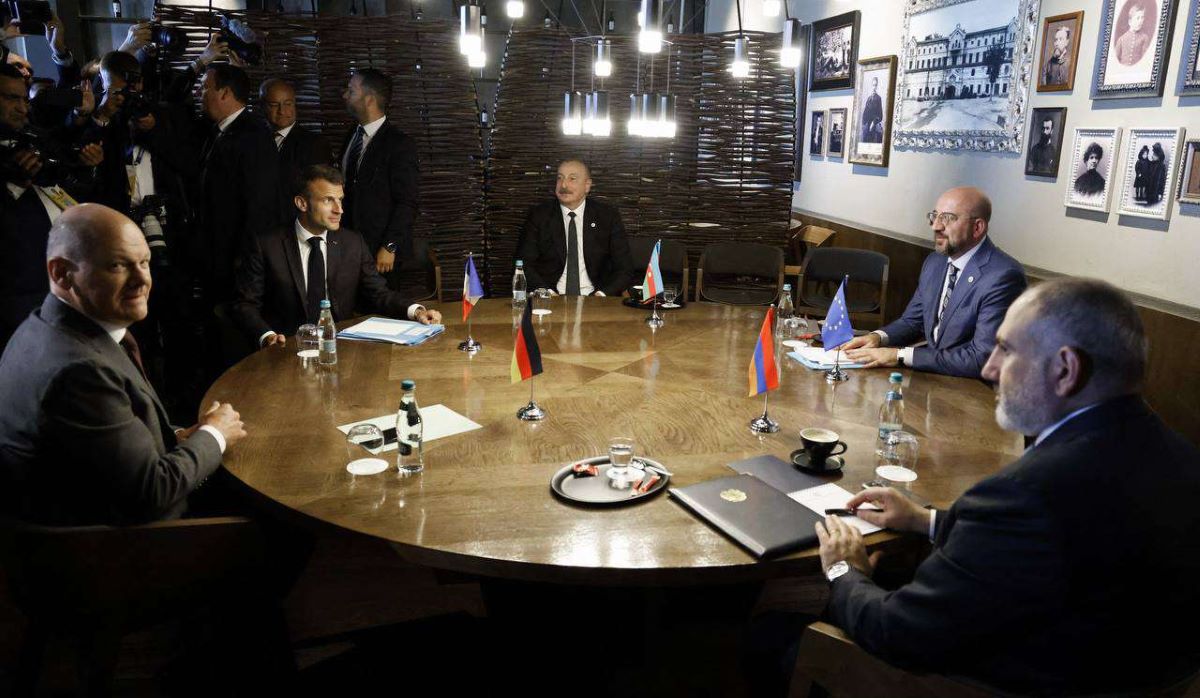
October 5, 2023, could have marked a significant moment in the history of Armenia-Azerbaijan relations. A five-party meeting was scheduled in Granada, Spain, facilitated by European Council President Charles Michel. Alongside the leaders of Armenia and Azerbaijan, German Chancellor Olaf Scholz and French President Emmanuel Macron were slated to attend. While the Armenian Prime Minister arrived in Spain, Ilham Aliyev declined to participate, citing France’s perceived bias. He also proposed inviting the president of Turkey, a suggestion opposed by Paris and Berlin.
This refusal sparked a period of turmoil in the negotiation process between Yerevan and Baku. However, this was just one aspect of the issue. In Granada, the leaders of the two conflict-ridden nations in the South Caucasus were meant to sign a declaration acknowledging mutual territorial integrity. Yet, only Pashinyan’s signature appeared on the document.
Consequently, Armenia fulfilled the expectations of its Western partners by recognizing Nagorno-Karabakh as part of Azerbaijan, without receiving anything in return. Aliyev not only refrained from signing the document acknowledging Armenia’s borders but also made statements afterward that could only be interpreted as territorial claims.
Success for the West and a setback for Russia
The outcomes of the 44-day Karabakh war in 2020 appeared to bolster Russia’s influence in the South Caucasus region. Through Moscow’s mediation, a trilateral ceasefire declaration was inked, effectively designating Russia as the guarantor for its enforcement. Just days following the cessation of hostilities, the Russian peacekeeping force was deployed to the territory of the unrecognized republic.
Following the war, the leaders of Armenia and Azerbaijan made multiple visits to the Kremlin and even endorsed two additional agreements. It appeared that Moscow had notably augmented its sway in the region and had effectively ensnared Yerevan. However, everything shifted with the onset of the Ukrainian crisis.
A few months into the Ukrainian conflict, the European Union visibly heightened its engagement in the Karabakh issue. While Moscow grappled with military matters, Brussels primed itself to assume the lead mediator role between Yerevan and Baku. And they succeeded in their endeavor.
In 2022-2023, the leaders of Armenia and Azerbaijan primarily convened in Brussels and other European capitals for their meetings. Consequently, the war of 2020, which was supposed to strengthen Russia’s influence, initiated another process: the Kremlin’s retreat from the region.
Demand for Armenia to “lower the bar”
“Today the international community is telling us: lower your bar a little on the status of Nagorno-Karabakh, and you will ensure greater international consolidation around Armenia and Artsakh. Otherwise, says the international community, please don’t count on us – not because we don’t want to help you, but because we can’t help you”.
This statement marked a turning point for Armenian society, signaling a departure from the previous pursuit of international recognition for Nagorno-Karabakh, as was the case before the 2020 war. By then, negotiations had begun to shift towards Western involvement, with the prime minister explicitly referring to European partners when mentioning the “international community.”
It’s evident now that Armenia has not just lowered its ambitions but completely relinquished its stance on the Nagorno-Karabakh issue. However, it never gained consolidation around itself.
Why did the West prioritize the principle of territorial integrity over the right to self-determination in the context of the Karabakh conflict? Before the 2020 war, Azerbaijan had offered Karabakh significant autonomy within its borders. However, post-war, Baku changed its stance, refusing to discuss any status for the region. Concurrently, the West became highly invested in a definitive resolution to the Karabakh issue, with emerging realities suggesting that such a resolution would hinge on upholding the principle of territorial integrity.
The eventual resolution of the Karabakh conflict rendered the presence of Russian peacekeepers in the region obsolete, a goal pursued by Brussels and Washington from the outset. This outcome materialized as anticipated.
While the peacekeeping contingent remains in Karabakh, the withdrawal of Russian forces from the region seems imminent following the exodus of nearly the entire Armenian population. The peacekeeping mission’s mandate expires in 2025, and Azerbaijan appears unwilling to extend it. And there are all formal grounds for this.
Has the confrontation ended?
Once Azerbaijan secured verbal and written acknowledgment from Armenia, recognizing Nagorno-Karabakh as part of Azerbaijan, Baku lost interest in Western platforms. Ilham Aliyev has boycotted several meetings and consistently declined invitations to attend events in Brussels or Washington. Instead, the Azerbaijani leader extends invitations to his Armenian counterpart to meet in Russia.
The primary focus of negotiations has shifted away from Nagorno-Karabakh to the delimitation and demarcation of the border between Armenia and Azerbaijan, along with the so-called “Zangezur corridor” issue.
“Zangezur corridor” refers to a route that would link Azerbaijan with its exclave, Nakhichevan. The Azerbaijani authorities insist that the road should not be under Armenian control.
Baku is well aware that it stands to gain the most from negotiations on these matters if they occur in Moscow. Russia aligns with Azerbaijan on these issues, driven by its own strategic interests. Specifically, Russia seeks to assert control over the road passing through Armenian territory.
“Our Western counterparts prefer a peace treaty between Azerbaijan and Armenia to be signed exclusively on their soil. This is a fact. Also factual is Azerbaijan’s readiness to sign it on Russian territory, where the initial efforts to end the conflict and establish a comprehensive system of interaction to address all issues began. As for Yerevan’s readiness for this, I am uncertain, although signals in that regard have been sent to the Armenian capital for some time.”
This statement by Russian Foreign Minister Sergey Lavrov accurately portrays not only the Kremlin’s stance on the negotiations but also Armenian-Azerbaijani relations.
Paradoxically, Yerevan is actively seeking to avoid and clearly wary of activating its strategic ally. It is becoming increasingly evident this could result in significant losses.
On the contrary, Armenian authorities anticipate increasing involvement from the West and are making progress in this regard. Specifically, they have succeeded in boosting the number of civilian observers from the EU mission tasked with patrolling the Armenian-Azerbaijani border.
The primary concern now revolves around whether Baku will initiate military action. Many in Armenia are convinced that it’s only a matter of time, and under favorable weather conditions, the border will become turbulent once again.
However, whether events will unfold according to this scenario will largely hinge on the stance of the European Union and the United States. Will Brussels and Washington be capable and inclined to rein in Baku’s ambitions? This question remains unanswered at the moment.
Follow us – Twitter | Facebook | Instagram
The Western stance

Rapid geopolitical change is curtailing Russian power in the South Caucasus, boosting the influence of Middle Eastern countries and bookending the region’s “post-Soviet” history.
The South Caucasus is undergoing a geopolitical transformation. The war in Ukraine and the effective resolution of the Nagorno-Karabakh conflict between Armenia and Azerbaijan mean that the region is entering a new age. Armenia, Azerbaijan, and Georgia have gradually become more confident on the world stage, with each trying to limit its dependence on Russia by diversifying its foreign policy.
Georgia has boosted relations with the European Union, China, and—to some extent—the United States, while Azerbaijan has sought closer ties with Turkey, Israel, Central Asia, and a number of European countries. Having gone through the traumatic loss of Nagorno-Karabakh, Armenia has pushed for closer engagement with the EU, rapprochement with Turkey, and even military links with India and some European states.
Instead of an arena for competition between Russia and the West, the South Caucasus has turned into a highly congested geopolitical space, with up to six major powers vying for influence. We are not, however, just witnessing the end of the post-Soviet period. We are witnessing the end of exclusive Russian influence in the South Caucasus, which has been the status quo for almost two hundred years.
The decline of Russian power has led to the reemergence of close links between the South Caucasus and the broader Middle East. Indeed, geography favors such a connection. Russia lies across the formidable Caucasus mountains, and Middle Eastern states have long regarded the South Caucasus as a natural continuation of their own territories.
The deepening ties are visible in growing trade, investment, energy infrastructure, and railways that link the South Caucasus to two large neighboring powers: Turkey and Iran.
Turkey is a key ally of Azerbaijan, and also enjoys close links with Georgia, while Armenia has Iran’s backing. In particular, Turkey has been pushing for the development of east-west connectivity that cuts through the traditional Russia-sponsored north-south infrastructure. The successful completion of the Baku-Tbilisi-Kars railway is one example; another is the push by Baku and Ankara to open a new route via Armenia’s southernmost province of Syunik.
Iran, too, has scored significant victories. In October, it inked a deal with Baku on a new transit corridor linking Azerbaijan to its exclave of Nakhchivan via Iranian territory. Tehran has also advanced work on the International North-South Transport Corridor, which runs from southern Iran to Russia via Azerbaijan and the Caspian Sea. Other initiatives involve the development of roads through Armenia, which could provide solid links between Iran and Georgia’s Black Sea ports of Poti and Batumi.
Energy infrastructure in the South Caucasus, too, is increasingly tied to the Middle East. Azerbaijan has become one of Turkey’s major gas suppliers, covering about 16 percent of the country’s needs in 2022, while Iran and Armenia have agreed to extend their gas trade agreement through 2030.
The civil war in Syria showed how political and military developments in the Middle East impact the South Caucasus. For instance, residents of the Pankisi Gorge in Georgia volunteered to fight with radical Islamist groups in Syria and Iraq, sparking fears of terrorism spreading. Syria is also one of few countries that has recognized the independence of Georgia’s separatist regions of Abkhazia and South Ossetia. And the Second Nagorno-Karabakh War of 2020 allegedly saw Syrian soldiers fighting for Azerbaijan.
Even beyond security, Armenia and Georgia have built robust relations with other prominent Middle Eastern countries. Saudi Arabia recently agreed to establish diplomatic relations with Armenia, which has also expanded its ties with other Gulf states. Similar trends are visible in Georgia’s relations with nations like Saudi Arabia, Iraq, and Jordan.
Other actors like Israel are also playing an increasingly active role. Israel’s relations with Azerbaijan are especially noteworthy, with the two states enjoying close military ties. Azerbaijan used high-tech Israeli weaponry to devastating effect in the Second Nagorno-Karabakh War, and, more recently, in September 2023, when it reclaimed full control over the disputed region. Azerbaijan is also a major supplier of oil to Israel, meeting as much as 40 percent of the country’s demand.
Azerbaijan’s links with the Middle East mean that flare-ups between Israel and Iran could have local consequences. Iran has expressed concern about Israel allegedly using Azerbaijan for espionage activities, and Azerbaijan was one of just a few Muslim countries not to condemn Israel’s military operation in Gaza, sparking anger in Tehran.
With an end to Russian dominance in the South Caucasus, it’s clear that the region is growing closer to the Middle East. Historically speaking, this is actually a return to normal practice, with Middle Eastern powers traditionally the most influential in the region. For Iran and Turkey, Russian hegemony was always an aberration.
The process could yield benefits for the West. After all, shifting tectonic plates create opportunities for multiple actors to project power. But the EU and United States are limited by geographical distance, and the absence of significant economic levers. Turkey and Iran are both nearby, and eager to accrue more influence in the South Caucasus.