#POTUS #JeffFlake #DeputySecState #SecBlinken #jensstoltenberg #Europarl_EN #EmmanuelMacron #Bundeskanzler #sweedishpm #unitednations #UNHCR #RishiSunak #vonderleyen BETTER LATE THAN NEVER I SUPPOSE👏👏👏👏👏 theguardian.com/world/article/…
Day: May 13, 2024
https://t.co/cPBcEWK8k1
The News And Times Review #NewsAndTimes #NT #TNT #News #Times#World #USA #POTUS #DOJ #FBI #CIA #DIA #ODNI#Israel #Mossad #Netanyahu#Ukraine #NewAbwehr #OSINT#Putin #Russia #GRU #Путин, #Россия #SouthCaucasus #Bloggershttps://t.co/O0SIgLVWzM… pic.twitter.com/yXLHsA6NJw— Michael Novakhov (@mikenov) May 13, 2024
AUDIO POST
Secret Hamas Files Show How It Spied on Everyday Palestinians https://t.co/m9Nsmqw3zq— Michael Novakhov (@mikenov) May 13, 2024
- liveUpdates
- Photos
- A Key Hamas Leader
- An Isolated and Defiant Israel
- Biden’s Clash With Netanyahu
- Israel’s Rafah Incursion
Hamas monitored political activity, online posts, and apparently even love lives. Palestinians were stuck between an Israeli blockade and a repressive security force.

A rally in support of Hamas in Gaza City in 2022. A secret police force overseen by Hamas’s leader in the enclave utilizes an extensive network of informants.Credit…Fatima Shbair/Associated Press
May 13, 2024, 5:03 a.m. ET
The Hamas leader Yahya Sinwar has for years overseen a secret police force in Gaza that conducted surveillance on everyday Palestinians and built files on young people, journalists and those who questioned the government, according to intelligence officials and a trove of internal documents reviewed by The New York Times.
The unit, known as the General Security Service, relied on a network of Gaza informants, some of whom reported their own neighbors to the police. People landed in security files for attending protests or publicly criticizing Hamas. In some cases, the records suggest that the authorities followed people to determine if they were carrying on romantic relationships outside marriage.
Hamas has long run an oppressive system of governance in Gaza, and many Palestinians there know that security officials watch them closely. But a 62-slide presentation on the activities of the General Security Service, delivered only weeks before the Oct. 7 attack on Israel, reveals the degree to which the largely unknown unit penetrated the lives of Palestinians.
The documents show that Hamas leaders, despite claiming to represent the people of Gaza, would not tolerate even a whiff of dissent. Security officials trailed journalists and people they suspected of immoral behavior. Agents got criticism removed from social media and discussed ways to defame political adversaries. Political protests were viewed as threats to be undermined.
Everyday Gazans were stuck — behind the wall of Israel’s crippling blockade and under the thumb and constant watch of a security force. That dilemma continues today, with the added threat of Israeli ground troops and airstrikes.
“We’re facing bombardment by the occupation and thuggery by the local authorities,” Ehab Fasfous, a journalist in the Gaza Strip who appeared in the files of the General Security Service, said in a phone interview from Gaza.
Damaged and destroyed buildings last month in Khan Younis, in the southern Gaza Strip.Credit…Fatima Shbair/Associated Press
Mr. Fasfous, 51, is labeled in one report as among “the major haters of the Hamas movement.”
The documents were provided to The Times by officials in Israel’s military intelligence directorate, who said they had been seized in raids in Gaza.
Reporters then interviewed people who were named in the files. Those people recounted key events, confirmed biographical information and, in Mr. Fasfous’s case, described interactions with the authorities that aligned with the secret files. The documents reviewed by The Times include seven intelligence files ranging from October 2016 to August 2023. The military intelligence directorate said it was aware of files containing information on at least 10,000 Palestinians in Gaza.
The General Security Service is formally part of the Hamas political party but functions like part of the government. One Palestinian individual familiar with the inner workings of Hamas, who spoke on the condition of anonymity because of the sensitivity of the matter, confirmed that the service was one of three powerful internal security bodies in Gaza. The others were Military Intelligence, which typically focuses on Israel, and the Internal Security Service, an arm of the Interior Ministry.
Basem Naim, a spokesman for Hamas, said the people responsible for the General Security Service were unreachable during the war.
With monthly expenses of $120,000 before the war with Israel, the unit comprised 856 people, records show. Of those, more than 160 were paid to spread Hamas propaganda and launch online attacks against opponents at home and abroad. The status of the unit today is unknown because Israel has dealt a significant blow to Hamas’s military and governing abilities.
The Israeli intelligence authorities believe that Mr. Sinwar directly oversaw the General Security Service, according to three Israeli intelligence officials, who spoke on the condition of anonymity because they were not authorized to discuss the matter publicly. They said the slide show was prepared for Mr. Sinwar personally, though they did not say how they knew that.
The presentation said that the General Security Service works to protect Hamas’s people, property and information, and to support its leadership’s decision-making.
Some slides focused on the personal security of Hamas leaders. Others discussed ways to stamp out protests, including the “We Want to Live” demonstrations last year that criticized power shortages and the cost of living. Security officials also tracked operatives from Palestinian Islamic Jihad, an ideologically aligned militant group that often partners with Hamas.
Some tactics, like amplifying Hamas’s own message, appeared to be routine politicking. In other instances, officials suggested using intelligence to undermine opponents and distort their reputations, though the files were vague about how that was to be done.
“Undertaking a number of offensive and defensive media campaigns to confuse and influence adversaries by using private and exclusive information,” the document read.
Security officers stopped Mr. Fasfous on his way to a protest last August, seized his phone and ordered him to leave, a report says. Mr. Fasfous confirmed that two plainclothes officers had approached him. The authorities searched his recent calls, and wrote that he was communicating with “suspicious people” in Israel.
“We advise that closing in on him is necessary because he’s a negative person who is full of hatred, and only brings forth the Strip’s shortcomings,” the document said.
The documents discussed ways to stamp out protests last year over power outages and difficult living conditions.Credit…Associated Press
The most frustrating thing, Mr. Fasfous said, was that the officers used his phone to send flirtatious messages to a colleague. “They wanted to pin a moral violation on me,” he said.
The report does not include that detail but does describe ways to “deal with” Mr. Fasfous. “Defame him,” the report said.
“If you’re not with them, you become an atheist, an infidel and a sinner,” Mr. Fasfous said. He acknowledged supporting protests and criticizing Hamas online, but said the people he was in touch with in Israel were Palestinians who owned food and clothing companies. He said he helped run their social media accounts.
The General Security Service’s goals are similar to those of security services in countries like Syria that have used secret units to quell dissent. The files of the General Security Service, though, mention tactics like censorship, intimidation and surveillance rather than physical violence.
“This General Security Service is just like the Stasi of East Germany,” said Michael Milshtein, a former Israeli military intelligence officer specializing in Palestinian affairs. “You always have an eye on the street.”
Yahya Sinwar, the leader of Hamas in Gaza, last year at a rally in Gaza City.Credit…Samar Abu Elouf for The New York Times
Palestinians in Gaza live in fear and hesitate to express dissent, analysts said.
“There are a lot of people practicing self-censorship,” said Mkhaimar Abusada, a professor of political science from Gaza City. “They just don’t want problems with the Hamas government.”
That view clashes with the most strident comments of Israel’s leaders, like President Isaac Herzog, who blamed Gazans for not toppling Hamas before the Oct. 7 attacks.
“There’s an entire nation that is responsible,” he said. “This rhetoric about civilians were not aware, not involved, it’s absolutely not true. They could have risen up.”
The General Security Service, the files show, also tried to enforce a conservative social order.
In December 2017, for example, the authorities investigated a tip that a woman was acting immorally with a man who owned a clothing shop. A security report noted that she visited the shop for an hour on one day, then more than two hours the next. The report presented no evidence of wrongdoing, but proposed that “relevant parties” address the matter.
An October 2016 report described young men and women performing unspecified “immoral acts” at a Palestine Liberation Organization office in Khan Younis at night. Hamas sees the Palestine Liberation Organization as a compromised entity, whose leader too often favors Israeli interests. The report offered no evidence of misdeeds but recommended summoning a man who claimed to be in possession of videos and pictures.
The files also show that Hamas was suspicious of foreign organizations and journalists.
Fishermen in the Port of Gaza in 2022. Even though many of the reports contain nothing more than notes on daily lives of Gazans, many people in the strip “think four times before doing any small thing,” said Michael Milshtein, a former Israeli intelligence officer specializing in Palestinian affairs.Credit…Samar Abu Elouf for The New York Times
When Monique van Hoogstraten, a Dutch reporter, visited a protest encampment along the border with Israel in April 2018, the authorities noted the most banal of details. They noted the make and model of her car and her license plate number. They said she took pictures of children and tried to interview an elderly woman Ms. van Hoogstraten confirmed the reporting trip in an interview with The Times.
The file recommended further “reconnaissance” on journalists.
None of the files reviewed by The Times were dated after the start of the war. But Mr. Fasfous said the government remained interested in him.
Early in the war, he said he took images of security forces hitting people who fought over spots in line outside a bakery. The authorities confiscated his camera.
Mr. Fasfous complained to a government official in Khan Younis, who told him to stop reporting and “destabilizing the internal front,” Mr. Fasfous recalled.
“I told him I was reporting on the truth and that the truth won’t hurt him, but that fell on deaf ears,” he said. “We can’t have a life here as long as these criminals remain in control.”
- U.S.
- World
- Business
- Arts
- Lifestyle
- Opinion
- Audio
- Games
- Cooking
- Wirecutter
- The Athletic

Credit…Jonathan Ernst/Reuters

Donald Trump sat silent, stone-faced and staring straight ahead as he listened to the intimate details in Stormy Daniels’s testimony on Tuesday, closing his eyes at times in an apparent attempt to maintain his composure.
But there was one moment when he lost it — when Ms. Daniels recounted asking Mr. Trump about his wife, Melania Trump, and recalled that he told her they didn’t “even sleep in the same room.” From the defense table Mr. Trump shook his head in disgust and muttered “bullshit” loud enough that he drew a rebuke from the judge, who called his actions “contemptuous.”
Mr. Trump has a great deal of experience sending a specific message to his intended audience — whether on television, at rallies, through social media or in the Oval Office. His intended audience, on Tuesday and throughout the trial, is the jury. And whether his emotion in that moment was authentic or strategic, the message to the jury seemed pretty clear: How dare she talk about my family?
Family. It’s a word that has come up repeatedly among Mr. Trump’s defenders, as they try to convince jurors that any action by Mr. Trump was not to break the law or influence an election but to protect his family. Throughout the trial, which is expected to resume on Thursday with Ms. Daniels’s continued cross-examination, Mr. Trump’s team has tried to paint the former president as a loving husband and father. In doing so, they are trying to convince jurors that Mr. Trump cares about his wife and children more than anything else — including his money or his reputation. The idea of “Donald Trump, family man” is one that jurors have to buy, or not.
His team sure is trying. “He’s not just our former president,” his lawyer argued during the trial’s opening statements. “He’s a husband. He’s a father. And he’s a person — just like you and just like me.” (Mr. Trump has denied the charges and says he did not have sex with Ms. Daniels.)
But consider me, um, skeptical.
Mr. Trump’s ability to have any relationship beyond the transactional is one of the great mysteries about him, and the current evidence on the matter is mixed. There have been moments in the trial that have emphasized that Mr. Trump thinks and acts like a family man — or, at least, that it’s all in the family and he’s the head of it. Hope Hicks, his former communications director, detailed last week how the Trump Organization was run “like a small family business,” and how, after a 2016 article in The Wall Street Journal detailed an alleged affair with a former Playboy model, Karen McDougal, Mr. Trump was most concerned about his wife — and asked Ms. Hicks to hide the newspapers from her. (What’s more honorable than a husband going to great lengths to conceal his affair?)
Meanwhile, Mr. Trump has made attending the high school graduation in Florida of his youngest son, Barron, a particular sticking point, railing on Truth Social: “Who will explain for me, to my wonderful son, Barron, who is a GREAT student at a fantastic School, that his Dad will likely not be allowed to attend his Graduation Ceremony?” (The judge has since given him the day off. Of course, he will also reportedly be squeezing in a fund-raiser that day — in Minnesota.)
And yet: Mr. Trump’s actual family has been largely absent from court, despite his wishing Melania Trump a “very happy birthday” from the hallway where he speaks to the press. On Tuesday, Mr. Trump’s son Eric did attend the trial, sitting in the front row while fiddling with his tie and peering at the exhibits on the courtroom screens as Ms. Daniels testified.
And as Ms. Daniels explained how Mr. Trump would call her “honeybunch” when he phoned her, and tell her he missed her, I found myself wondering: Is this a man who is capable of missing anyone? Do we have evidence of that, evidence that this man who doesn’t seem to have lasting close friends, or a family who stands by his side at his lowest moments, is credible as someone who puts loved ones (let alone the country) before his own interests?
What we have learned in this case is that Mr. Trump hung around with Stormy Daniels and Ms. McDougal in 2006 and 2007, which was not long after he and Melania Trump were married, and while she was at home with their newborn son. We also learned that sometimes this emphasis on being “fatherly” had a creepy vibe, as when Ms. Daniels testified that Mr. Trump said she reminded him of his elder daughter, Ivanka — blond, beautiful and smart, and often underestimated — all before stripping down to his underwear while she was in the bathroom.
How does a family man behave? It’s a little jarring to reconcile the testimonials about Mr. Trump’s love for his wife with the way he treats women who are not her. Ms. Daniels’s testimony about the sexual encounter with Mr. Trump — using descriptions including “The room spun in slow motion”; “I was staring up at the ceiling”; “I was ashamed” — will remind a lot of women not of family men, but of stories about unwanted but perhaps not entirely nonconsensual encounters that many of us harbor. I noticed that at certain points, the language echoed that of E. Jean Carroll, whose accusation of sexual abuse at the hands of Mr. Trump he was found liable for in civil court.
Still, playing up the family thing is a common tactic that male politicians use to justify lies and coverups or excuse bad behavior. We had one president, Bill Clinton, who was impeached after a sex scandal. We’ve had untold numbers of politicians who cheated on their spouses and then tried to dance around it, including in public appearances that gave rise to the Good Wife trope. And now we have Mr. Trump, on trial on criminal charges, again using his family, and his wife, as a shield — or, worse, prop.
My concern here isn’t so much Mr. Trump himself, but rather how his actions and the trial are a familiar referendum on the depths of his misogyny, from name-calling (see: “horseface,” his nickname for Ms. Daniels) to more serious accusations of assault. Mr. Trump’s treatment of women is not on trial — and yet the jury’s decision may hinge in part on whether it is willing to be convinced of that family-man argument, or all the evidence to the contrary.
That includes whether it believes Ms. Daniels. During her testimony on Tuesday, for close to five hours, she was at times frenetic, but also confident and composed throughout. The only time her voice cracked was when she spoke about her daughter — and wanting to protect her from the circus she found herself in. She became emotional at that point, talking about her family. It was impossible not to wonder: Is there any chance that Donald Trump would do the same?
Jessica Bennett is a contributing editor in the Opinion section of The Times. She teaches journalism at New York University and is the author of “Feminist Fight Club” and “This Is 18.” @jessicabennett • Facebook
A version of this article appears in print on , Section A, Page 22 of the New York edition with the headline: What Kind of Husband Behaves Like Trump?. Order Reprints | Today’s Paper | Subscribe
Notably, she said the United States was not quick enough to realize and prevent the expansionist ambitions of both Vladimir Putin and Xi Jinping.
A longtime champion of Ukraine and the effort to counter Russia, she also warned about the perils of Donald Trump blowing up NATO if he wins back the White House in November.
“Don’t throw it out,” she said of the trans-Atlantic alliance, “because you would never be able to re-create it again.”
The following has been edited for length and clarity:
How’s life on the outside?
Life is wonderful. I am doing a lot of projects that I had put off, seeing a lot of people that I love, and I’m staying involved in ways that are meaningful. I’m speaking on foreign policy issues I care about — whether it is Ukraine or ensuring that the United States leads strongly in the world. I’m getting a chance to prepare for my classes in the fall and work with the next generation of foreign policy leaders. I’ll be at Columbia’s School of International and Public Affairs.
Why leave the Biden administration, really? People said you felt passed over for the deputy secretary of State job. Is that true?
I actually didn’t compete for the deputy secretary of State job. I loved being undersecretary for political affairs. I love working with Secretary [Antony] Blinken. But as you know, I’ve done three years altogether and I’ve done eight months plus in both jobs, and so it was just the right time for me and my family to do something different.
Do you have any regrets from your time in the role?
I think whenever you finish a job like this, you wish you’d been able to do more on more issues. Travel more, touch more people, get more done faster, ensure the U.S. was leading strongly on as many continents as possible, mentor more of the next generation. And you’re always constrained by time, by resources, by the crises that overwhelm the inbox. So you always want to have done more.
Can Ukraine win this war against Russia? And how do you define winning?
Let’s start with the fact that Putin has already failed in his objective. He wanted to flatten Ukraine. He wanted to ensure that they had no sovereignty, independence, agency, no democratic future — because a democratic Ukraine, a European Ukraine, is a threat to his model for Russia, among other things, and because it’s the first building block for his larger territorial ambitions.
Can Ukraine succeed? Absolutely. Can Ukraine come out of this more sovereign, more economically independent, stronger, more European than it is now? Absolutely. And I think it will. But we’ve got to stay with it. We’ve got to make sure our allies stay with it.
“We’ve got to stay with it. We’ve got to make sure our allies stay with it,” former U.S. diplomat Victoria Nuland said of supporting Ukraine in its war with Russia.
|
Spencer Platt/Getty Images
And we have to accelerate a lot of the initiatives that were in the supplemental, like helping Ukraine build that highly deterrent military force of the future, like deploying these longer-range weapons to strategic effect, like ensuring that the critical infrastructure and the energy sector are protected, like building up our own defense industrial base and that of our allies and Ukraine’s again, so that we and Ukraine are building faster than Russia and China.
But can it get all its territory back, including Crimea?
It can definitely get to a place where it’s strong enough, I believe, and where Putin is stymied enough to go to the negotiating table from a position of strength. It’ll be up to the Ukrainian people what their territorial ambitions should be. But there are certain things that are existential.
Any deal that they cut in their interest and in the larger global interest has to be a deal that Putin is compelled to stick to. We can’t be doing this every six months, every three years. It has to actually lead to a deal that includes Russian withdrawal.
Putin is a master at what we call rope-a-dope negotiating, where he never actually cuts the deal. It has to be a deal that ensures that whatever is decided on Crimea, it can’t be remilitarized such that it’s a dagger at the heart of the center of Ukraine.
Was it a mistake not to push the Ukrainians harder to go for some sort of negotiated end to the war in 2022, especially the fall of 2022?
They were not in a strong enough position then. They’re not in a strong enough position now. The only deal Putin would have cut then, the only deal that he would cut today, at least before he sees what happens in our election, is a deal in which he says, “What’s mine is mine and what’s yours is negotiable.” And that’s not sustainable.
You’ve had a long career, especially when it comes to Europe. Where did the U.S. go wrong in its understanding of Russia?
With regard to both Russia and China, after the end of the Cold War, the prevailing wisdom among all of us — right, left and center — was that if you could knit Moscow and Beijing into the open and free global order that we had benefited from for so many years, that they would become prosperous, and they would become strong contributing members of that order. And that’s what we tried for a very long time.
That works if you have a leadership that is fundamentally accepting the current system. But once you have leaders who are telling their populations that this system keeps their country down, doesn’t allow it to have its rightful place, that has a territorial definition of greatness, that is bent on economic, political and or military coercion — that’s antithetical to this order, and then our policy has to change.
Did we realize fast enough Putin’s ambitions and Xi Jinping’s ambitions, and did we do enough to ensure that those ambitions stayed inside their own nations and didn’t spill out and coerce others? 20/20 hindsight? Probably not.
How much of it comes down to what particular guy is running the show? I sometimes wonder, could things be different if it wasn’t Putin in charge? If it wasn’t Xi? How much of it comes down to the dude at the top?
In highly centralized societies, which both China and Russia have historically been, without an electoral refresh of the kind that we all go through in the democratic world, it matters hugely, because it’s that human who’s defining what greatness means. It’s that human who’s deciding how to maintain order in that society. It’s that human — allowing them to speak, allowing a free press, allowing protests, allowing alternative political parties — who’s going to shape the options. And that constrains obviously the kind of relationship we can have.
What is the lesson we should learn about foreign policy in general when it comes to the experiences we’ve had in Russia and China?
We should always try to talk both to leaders and to people, to the extent that we’re allowed. We should always offer an opportunity to work together in common interest.
But if the ideology is inherently expansionist, is inherently illiberal, is inherently trying to change the system that benefits us, we’ve got to build protections and resilience for ourselves, for our friends and allies, and particularly for those neighbors of those countries who are likely to be on the front line of that first push.
Where do you see the Israel-Hamas war heading?
Essentially, there are two paths on the table. There is continuing this war with all of the destruction and horror and lack of clarity about how you end Hamas’ reign of terror.
The other path is the route that the administration and allies and partners and a lot of countries in the Gulf are pushing, and a lot of Israelis want, which is: a hostage deal leads to a long-term cease-fire, leads to a better future for Palestinians both in the West Bank and in Gaza, leads to Saudi-Israel normalization and a path to two states, and a region where the ideology and the violence that Hamas is offering is beaten by more opening, more opportunity, more peace, more stability.
Are you saying that because you believe it or because it’s the Biden administration’s position?
I’m saying it because, anything other than that, this is going to happen again and again and again.
If you could go back in time on that one, what, if anything, should the U.S. have done differently?
Beginning with the Trump administration, everybody fell in love with regional normalization as the cure-all for the instability and grievances and insecurity in the Middle East. And that’s a part of it.
But if you leave out the Palestinian issue, then somebody’s going to seize it and run with it, and that’s what Hamas did. I also think that both we and the Israelis knew too little about the terror state that had been established in Gaza.
You’re going to be teaching at Columbia, the epicenter of campus protests over this situation. If you could offer these protesters some advice as someone with significant policymaking experience, what would it be?
Peaceful protest is part of the fabric of who we are and the fact that we allow it, and the Chinese don’t and the Russians don’t, makes us Americans. But when that protest becomes violent, when it impinges on other people’s human rights or denigrates others, then you veer toward coercion.
So, express your views, ask for concrete paths forward. But stay away from violence, make sure that it’s actually indigenous to the campus, that you’re not becoming the tool of outside agitators. And be respectful of alternative views as you expect people to respect your views.
What if you are peaceful? And you say what you want and the people in charge just say, ‘Oh, that’s very nice, thank you,’ and then they ignore you and they keep doing what they’ve been doing for years. How do you do just keep pushing on that front? Do you join the government?
I would certainly say if you care enough to devote all day, every day to political change, come join the folks who are setting policy, commit your life to public service. I didn’t expect that that’s where my life would lead, but it’s been incredibly rewarding.
There are many, many ways to change policy, but being on the inside is not only extremely rewarding, but you can actually get stuff done.
If Trump wins, and leaves NATO or limits America’s role in NATO, does the alliance fall apart? What happens?
First and foremost, America suffers. Because if you look at every single one of the challenges we have globally, even as we make the security commitment to Europe, it is the European countries who have contributed more to Ukraine — on the security side, on the economic side, etc. It is the European countries who have to adapt their policies toward China if you want to have an impact on China’s eagerness to coerce others. It’s the European countries who we need to help fund the Haiti mission, to help defeat terrorism in Africa, and provide prosperity.
If we are not part of that family, on a daily basis, we are standing alone, our own influence in the world is greatly reduced, and we have no influence over how they choose to spend their energy and resources. And they’re less powerful in doing it without us.
What about this idea that look, we’re the U.S. at the end of the day. We’re the superpower. Whether we’re in NATO or not, people are going to come along with us. Isn’t there something to that argument?
I’ve worked for six presidents, Republicans and Democrats. I always believed that a new president with a fresh mandate from the American people should look at every global problem with fresh eyes, bring new solutions, and should have that opportunity, working with Congress, working with the American people, working with allies and partners.

“I always believed that a new president with a fresh mandate from the American people should look at every global problem with fresh eyes, bring new solutions,” said former U.S. diplomat Victoria Nuland.
|
Francis Chung/POLITICO
That’s a different thing than turning your back on bedrock, bipartisan institutions and policies that have protected Americans and advanced our own prosperity and global influence for 70 years.
Why do you want to throw out what’s working and what benefits us for no other reason than you’ve had a fit of pique? Work within the institution to make it work better. Don’t throw it out, because you would never be able to re-create it again.
Does the rest of the world fear the United States?
Is fear what we want from the rest of the world?
Sometimes.
I think what we want from the rest of the world is they see us leading in a manner that advances their own security, advances their own prosperity, creates this community of nations that can handle global problems — whether they are terrorist problems, whether they are health problems, whether they’re environmental problems — and we do it in a primarily self-interested but unselfish way, and we’re creating that community.
They should only fear us if they’re opponents of a largely liberal democratic way of advancing human prosperity. And in that context, if they are viciously invading a neighbor, if they are coercing a little state because they can, then I hope they would fear our reaction and the reaction that we will build with other democracies who want to protect the system that favors freedom.
Do you ever plan to go back into government?
I love what I did for 35 years. I’ve always loved it. And I continue to love it. So in the right circumstances, of course.
The Broadway box office numbers for the week of May 5 revealed that Hillary Clinton-produced stage play “Suffs” is on the bottom rung of shows in terms of filling capacity.
Broadway Theatre Industry official site “The Broadway League” shared the weekly grosses from the 35 shows currently playing on Broadway, which include “Suffs,” “Harry Potter and The Cursed Child,” and classics like “Romeo & Juliet,” Sweeney Tod” and “Moulin Rouge! The Musical.”
According to the data, Clinton’s play only reached 81% capacity across eight performances that week, placing it among the bottom eight productions in that category – the bottom 23% of all 35 shows for the week.
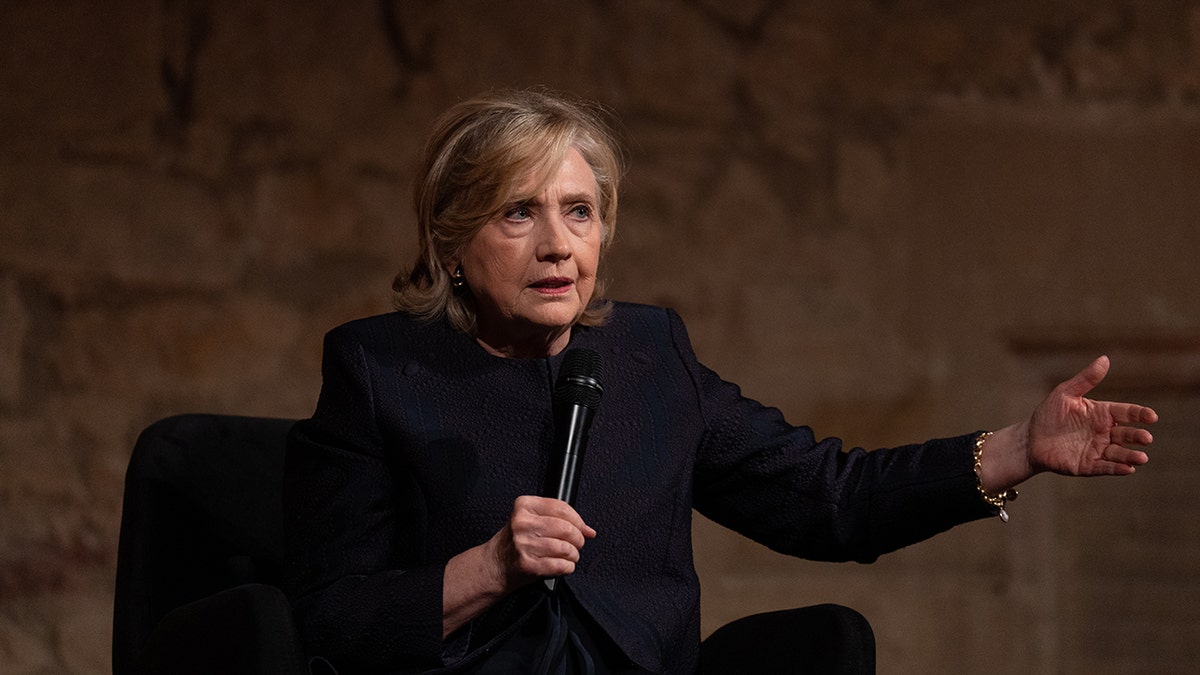
Noting that the play’s lagging numbers look even worse considering it’s a new show, Breitbart News argued the performance “should still be drawing big crowds during Broadway’s peak season – the month before the Tony Awards,” which is right now.
The play first opened on Broadway last month, following an Off-Broadway run that started in 2022 in New York City’s “The Public” theater. The musical was by singer-songwriter Shaina Taub, directed by Leigh Silverman, and produced by lead producers Jill Furman and Rachel Sussman, along with co-producers Hillary Clinton and Malala Yousafzai.
Breitbart also noted that Vice President Harris’s niece, Meena Harris, is another producer on the stage play.
The three-hour-long play brings the women’s suffrage movement of the early 1900s to the stage. According to the show’s website, Suffs “boldly explores the victories and failures of a struggle for equality that’s far from over.”
HILLARY CLINTON: ‘WHAT TRUMP REALLY WANTS’ IS TO ‘KILL HIS OPPOSITION’
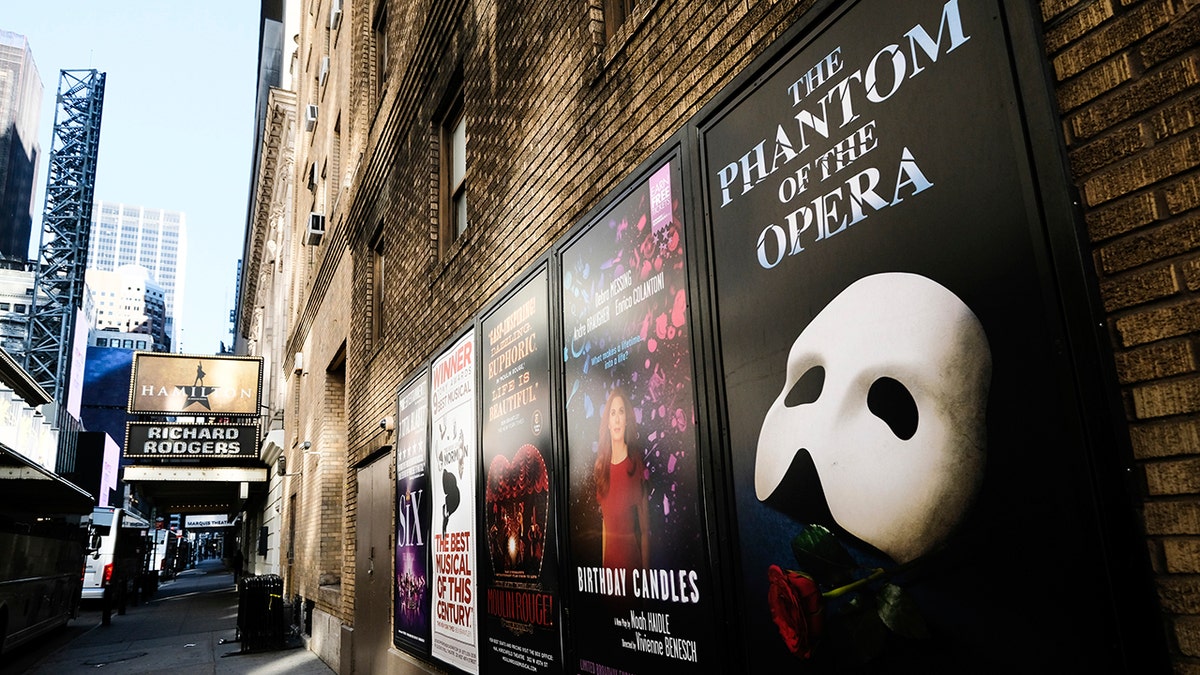
The play features an “entirely female and non-binary cast – among them Tony winner Nikki M. James, Jenn Colella, Emily Skinner, and Grace McLean as President Woodrow Wilson,” according to Playbill.com.
Clinton stated she relates to “all of” the characters in the play, telling the Associated Press last month she knows “how hard it is to make change.”
CLICK HERE FOR MORE COVERAGE OF MEDIA AND CULTURE
“I know how important it is to have relationships with the people you’re working for, as you’re taking risks and you’re doing things that have never been done, whether it’s running for president in my case or having a march on Washington in 1913 to try to convince the president and the Congress to adopt the amendment to let women vote,” she said.
The former U.S. Secretary of State added, “But more than that, I see it as relevant today. We have a lot of challenges in our country.”
CLICK HERE TO GET THE FOX NEWS APP
BroadwayLeague.com’s numbers also revealed that last week’s numbers for “Suffs” were even worse, with the show only filling 78% of its 7,784 total seats across performances.