Ziz iz zi Operation Butler Trump Farm Show, Pa! By Crooks – GS. pic.twitter.com/QuoysjAGPf
— Michael Novakhov (@mikenov) July 17, 2024
Category: Selected Articles
Category Added in a WPeMatico Campaign
If you have nothing to hide, publish the photo of the wound. “Donald Trump doesn’t have stitches after assassination attempt…” – The Operation Butler Farm Show https://t.co/MuZEpUfzGS pic.twitter.com/qGtxoKmgEx
— Michael Novakhov (@mikenov) July 17, 2024
https://t.co/PRnahdbY3p
Operation Butler Trump Farm Show #NewsAndTimes #NT #TNT #News #Times#World #USA #POTUS #DOJ #FBI #CIA #DIA #ODNI#Israel #Mossad #Netanyahu#Ukraine #NewAbwehr #OSINT#Putin #Russia #GRU #Путин, #Россия #SouthCaucasus #Bloggershttps://t.co/O0SIgLVWzM…— Michael Novakhov (@mikenov) July 17, 2024
“The FBI and DHS remain concerned about the potential for follow-on or retaliatory acts of violence following this attack, particularly given that individuals in some online communities have threatened, encouraged, or referenced acts of violence in response to the attempted assassination,” the bulletin said.
The warning comes amid what authorities had already determined was a “heightened threat” environment, with the country deeply polarized as the Republicans gather for their nominating convention in Milwaukee and the Democrats prepare for theirs in Chicago.
“This attack reinforces our assessment that election-related targets are under a heightened threat of attack or other types of disruptive incidents,” the bulletin said.
The agencies said that Thomas Matthew Crooks, the 20-year–old shooter in Saturday’s attack at the rally, had improvised explosive devices in his car as well as his home and ordered packages potentially containing hazardous material over the last several months.

Law enforcement officers survey the scene after the shooting in Butler, Pennsylvania, on July 13.
|
Scott Goldsmith for POLITICO
Authorities have not yet determined what motivated Crooks, who was shot and killed by the Secret Service after he opened fire on the rally, killing one spectator and critically wounding two others.
In the lead-up to the November election, federal and state law enforcement agencies have stepped up efforts to prevent political violence and lone-wolf attacks against elected officials, government officials, candidates, law enforcement and the media. The Justice Department has vowed to relentlessly crack down on threats against election workers and elections facilities.
Threats across the political spectrum have proliferated. Supporters of Trump sent death threats and envelopes full of white powder to Manhattan District Attorney Alvin Bragg, whose office led the hush money prosecution against the former president. Others “swatted” Maine Secretary of State Shenna Bellows after she found Trump to be ineligible to appear on the state’s 2024 primary ballot.
Russia took advantage of the assassination attempt on former U.S. President Donald Trump to attack American liberal values, describing what it called a suicide of democracy, and predicting a civil war and the dissolution of the United States.
Kremlin press secretary Dmitry Peskov said U.S. President Joe Biden and the Democratic Party have put Trump’s life in “obvious” danger and provoked his assassination attempt by trying but failing to remove him from the presidential race, “using first legal tools, the courts, prosecutors, attempts to politically discredit and compromise the candidate.”
The FBI said Thomas Matthew Crooks, 20, a resident of Bethel Park, Pennsylvania, was the suspect in the attempted assassination of Trump. Biden said Sunday, the shooting was “contrary to everything we stand for as a nation, everything. It’s not who we are as a nation. It’s not American. And we cannot allow this to happen.”
Contrary to the Kremlin’s claims, the separation of powers concept is not merely a paragraph in the U.S. Constitution but a working system, and President Biden has no control over the judiciary or the legislative branch of the government.
An array of top Russian lawmakers, diplomats and newsmakers pushed a narrative that the attempt on Trump’s life “confirmed” the “American type of democracy” is wrong, and “deeply corroded.”
Russian Foreign Ministry spokesperson Maria Zakharova said the attempt on Trump’s life was all about the American democracy, which “the liberals brought to the verge of suicide.” The “dissolution of the United States does not look like such an impossible prophesy any longer,” Zakharova said.
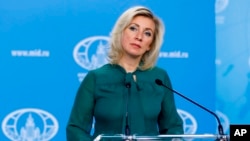
FILE – Russian Foreign Ministry’s spokeswoman Maria Zakharova speaks to the media in Moscow, Russia, Nov. 2, 2022.
Russia’s state news agency, RIA Novosti, featured the analysis from its top propagandist, Piotr Akopov.
Akopov played around Trump’s 2016 election promise to “drain the Washington swamp” to claim that the “swampers” have been “biting at their elbows” and regretting they “did not kill him before November 2016.”
The Democratic Party did not plot to kill Trump, but the attack was the result of an atmosphere of hatred they have been nurturing for the last eight years, Akopov wrote.
He then speculated that it came as “no surprise” that the Secret Service “only saw the shooter after he made eight shots,” because with Trump’s rising popularity, “killing him has become a scenario with no alternative for the deep state Washington swamp.”
Akopov repeated the conspiracy theory about “killing Trump” being the “only option” five times in his 600-word piece.
While Akopov’s “analysis” is merely a hybrid of propaganda, disinformation and conspiracy theories, he is an essential player in the Kremlin’s domestic messaging. Thousands of local news agencies and websites republish RIA Novosti publications across Russia and the countries of the former Soviet Union in Central Asia and Eastern Europe.
For foreign audiences, Russia utilizes the social media platforms like X, formerly Twitter, and a network of 270+ accounts of the Russian embassies and consulates worldwide, all boosting the Kremlin’s narratives in many different languages.
The Russia Embassy in South Africa is one of the most prominent propaganda superspreaders on X.
To a photograph of Trump’s bloodied face, the diplomatic mission added a commentary accusing the “Democrats” of being incapable of tolerance but capable of perpetrating “any crime… for the sake of their ‘ultimate goal.’”
X users reminded the embassy in South Africa of the death of Alexey Navalny, Russian President Vladimir Putin’s fiercest opponent, in prison earlier this year.
Navalny’s widow, Yulia Navalnaya, and numerous international institutions and governments accused Putin of ordering Navalny’s assassination. Germany and the United Nations Organization for the Prohibition of Chemical Weapons said the Russian FSB poisoned Navalny with military-grade nerve agent Novichok in 2020.
Rights watchdogs say that during the two decades of Putin’s rule, Russia has seen a systematic oppression of political and civil liberties and the erosion of human rights and press freedom.
SUBSCRIBER+ EXCLUSIVE REPORTING — On a Russian TV program recently, Dmitry Novikov, a Russian lawmaker, said that political chaos and divisions in the U.S. were “good for us,” meaning his country and its people. “Destabilization inside an adversary is always a good thing.”
That was before the attempted assassination of Donald Trump.
Kremlin propagandists have seized on Saturday’s shooting in Pennsylvania as the latest example of political dysfunction in the U.S. – themes that Russian media influencers have hammered for years, especially since the February 2022 full-scale invasion of Ukraine. After Trump was shot, the Russian Foreign Ministry said American democracy was “on the verge of suicide.”
Within hours of the attempt on Trump’s life, the spigots of Russian media disinformation were turned up to full blast – with three basic story lines: The Biden Administration had enabled or inspired the shooting; the U.S. had actually carried out the attack; or – in a variant that cast blame on two of Russia’s enemies – Ukrainians had conspired to kill Trump, with the help of U.S. intelligence agencies.
It was all baseless, but these theories have reached a nationwide audience in a country where fact-based news about the West is in short supply. While similar false narratives have flowered on American social media platforms, the Russian versions were propagated by government officials and some of the most popular media personalities and influencers in the country.
The Kremlin version of events
For years, Russian propagandists have warned – with no evidence – that members of the Democratic Party were conspiring to kill Trump. At one point they suggested the Russian security services should “start protecting our Donald.”
On Sunday night, Vladimir Solovyov, among the most influential Kremlin-backed media figures, opened his Sunday Evening With Solovyov television show with a reminder that he had predicted that Trump would be assassinated. He then said that unless the U.S. Secret Service was “unprofessional and stupid,” its agents had to have been in on the plot.
Earlier Sunday, in the Kremlin’s first official statement about the attack, President Vladimir Putin’s spokesman Dmitry Peskov echoed those sentiments.
“After numerous attempts to eliminate candidate Trump from the political arena,” Peskov said, “it was obvious to all outside observers that his life was in danger.”
The Kremlin then adopted the line of many Trump supporters, accusing the Biden Administration of creating an atmosphere that had “provoked an attack on (Trump).”
Peskov said Biden and the Democratic Party had provoked the assassination attempt via their failed attempts to oust him from the race, “using first legal tools, the courts, prosecutors, attempts to politically discredit and compromise the candidate.”
Maria Zakharova, the Russian Foreign Ministry spokeswoman, picked up the theme and took it further.
“Exactly 2 months ago I noticed that in the United States they are literally encouraging incitement of hatred towards political opponents,” Zakharova wrote on her Telegram channel. She suggested that the U.S. divert the money it has pledged for Ukraine to fund the “American police…and other services that should ensure law and order within the United States.”
Since the invasion of Ukraine, Russian officials – and the state media apparatus – have used every opportunity to criticize the U.S. and the West, and some prominent commentators appeared to gloat in the aftermath of the Trump attack, calling it evidence that the “American type of democracy” was “deeply corroded,” and warning that the end of that democracy was near.
Beyond her obviously influential Foreign Ministry position, Zakharova has a following on the Telegram and Vkontakte platforms of more than 1.5 million. In a subsequent post, she wrote that “All American media and commentators, commenting on the assassination attempt on Trump, are saying in one voice that this is a ‘threat to American democracy.’ I would just clarify that this IS American democracy, which has been driven to a suicidal state by liberalism.”
She added that “the dissolution of the United States does not look like such an impossible prophecy any longer.”
An American on Russian TV
Outside the halls of government, things got weirder.
Margarita Simonyan is one of Russia’s most influential voices – and not coincidentally, one of Putin’s favorite mouthpieces for propaganda. She is head of the RT media empire and her audience on various social networks is estimated to run to the tens of millions. Simonyan said that the attack on Trump bore similarities to the assassination of John F. Kennedy – who she suggested had been killed by elements in his own administration.
“When other ways to get rid of an inconvenient president have been exhausted,” Simonyan wrote on her Telegram channel, “good old Lee Harvey Oswald comes into play.”
Then she added, for good measure, “Watching America is like watching a TV series where the writers have run out of imagination long ago and now repeat themselves from episode to episode, but you already got used to the characters, like you get used to your house slippers, so you continue to watch.”
Solovyov also runs a network – “Solovyov Live” – and this week its Sunday morning program At Dawn hosted an American guest. John Varoli, a former Russia-based journalist who now works in public relations, has often toed a Kremlin line, and he did so on Sunday.
“The Democratic party is behind this attempted assassination,” Varoli said. “The Democratic party is doing everything to destroy Donald Trump. They have been threatening to exterminate him for many years”.
Russia and Putin have been sanctioned and charged in international criminal courts with extrajudicial killings around the world – but now another Kremlin propagandist, the political scientist Sergey Markov, said the attempt on Trump’s life was an example of U.S.-backed “political murder” that might be coming to Moscow.
“The new technology of political murder is creating an atmosphere of total hatred towards some politicians and pushing activists to murder them,” Markov said. “And so they are preparing assassination attempts on Putin, (Hungarian President Viktor) Orban, and (French opposition figure Marine) Le Pen.”
Beyond the absence of evidence in any of these statements, it’s worth emphasizing that all these people and their platforms are hardly on the Russian fringes; they have huge audiences and followings, and little competition from any legitimate unbiased sources of information.
To take another example, Russia’s state news agency, RIA Novosti, is carried by thousands of local media outlets all across Russia. One of its most-featured “analysts,” Piotr Akopov, wrote after the Pennsylvania shooting that Trump’s political enemies regretted that they “did not kill him before November 2016.”
It was “no surprise” that the Secret Service had failed to neutralize the assassin, Akopov said, as their agents had to have been in on the job. Given Trump’s popularity, he wrote, “killing him has become a scenario with no alternative for the deep state Washington swamp.”
Let’s blame the Ukrainians
It didn’t take long for Russian politicians to find another theory, an example of what is often referred to as “the Ukrainian trace” – the “evidence” of a Ukrainian connection to a crime.
Sergi Tsekov, a member of the international committee of the Council of Federation (the Russian Senate), told RIA Novosti, “Given that the Kyiv regime has repeatedly made very unflattering statements about Trump, who promised to end the military conflict in Ukraine if elected U.S. President, I urge the U.S. authorities to consider the version of the involvement of the Ukrainian special services in the assassination attempt.”
The possible reduction in aid to Ukraine in a second Trump administration, Tsekov added, gave Ukrainian President Volodymyr Zelensky an obvious motive to remove Trump.
Varoli, the American, added his voice to this theory. “In all seriousness, I believe that the Ukrainian special services may be behind this—on orders from the White House.”
Among Russian analysts, the only voices dissenting from the conspiracy theories were those heard outside the country. Vladimir Pastukhov, a prominent Russian political scientist who now lives in London, said Monday that when he heard the news from Pennsylvania, he had wondered immediately whether the Russian media would blame the Ukrainians.
“I just said in the morning that the search for a Ukrainian trace in the assassination attempt on Trump would soon fill all the media space in Russia. Even before this idea came into my head, at least two (Russian) senators…had already expressed it.”
He added that the likely next shoe to drop would be reports in the Russian media of Ukrainian connections to the would-be assassin.
“I think that in the near future, Moscow will fill the social media with installations on the Ukrainian background of the assassination attempt,” Pastukhov said. “They will find Ukrainian relatives, neighbors, girlfriends (of the shooter), they will discover connections with (Ukrainian Military Intelligence Chief Kyrylo) Budanov, they will get secret personal correspondence with Zelensky.”
Another voice outside Russia suggested the political drama in the U.S. was a gift to America’s adversaries.
“This election is doing more to discredit American democracy than Vladimir Putin and Xi Jinping could ever hope to,” Sergey Radchenko, a historian at the Johns Hopkins School of Advanced International Studies in Washington, wrote on X. “I am worried about the image projected to the outside world.”
Radchenko – like the Russian lawmaker Dmitri Novikov quoted in the first line of this piece – wrote those words before the shots were fired in Pennsylvania.
Who’s Reading this? More than 500K of the most influential national security experts in the world. Need full access to what the Experts are reading?
Read more expert-driven national security insights, perspective and analysis in The Cipher Brief because National Security is Everyone’s Business.

- Those We Have Lost
- Those We Have Lost
- Those we have lost
- Those We Have Lost
- Those We Have Lost
- Those We Have Lost
- Those we have lost
- Those We Have Lost
- Those We Have Lost
- Those we have lost
- Those we have lost
- Those we have lost
- Those we have lost
- Those We Have Lost
- Those We Have Lost
- Those we have lost
- Those We Have Lost
- Those we have lost
- Those we have lost
- Those we have lost
- Those we are missing
- Those we are missing
- Those we are missing
- Those we are missing
- Those we are missing
- Those we are missing
- Those we are missing
- Those we are missing
- Those we are missing
- Those we are missing
- Those we are missing
- Those we are missing
- Those we are missing
- Those we are missing
- Those we are missing
- Those we are missing
- Those we are missing
- Those we are missing
- Those we are missing
- Those we are missing
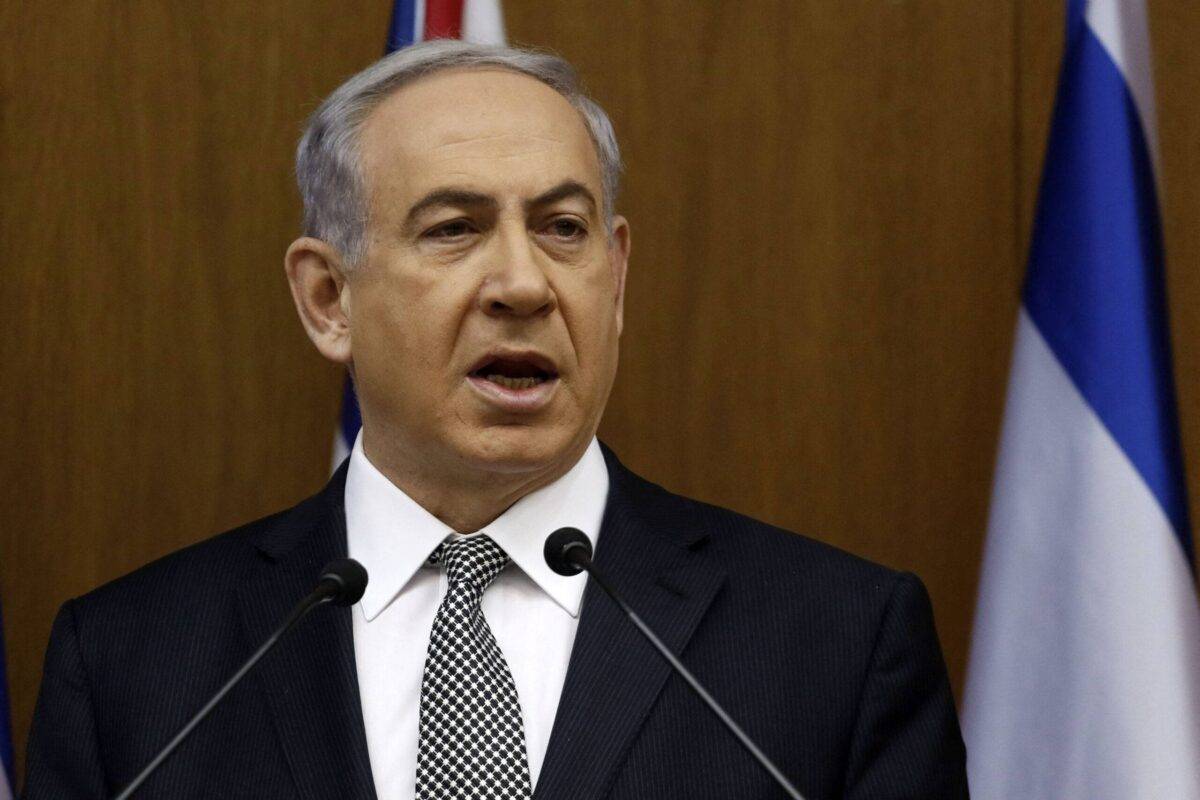
Benjamin Netanyahu, his close associates and ministers are trying to use the attempted assassination of former US President Donald Trump in Pennsylvania at the weekend to allege that there is incitement against him from the Israeli prime minister’s political opponents.
His weekly cabinet session on Sunday focused on this issue. Cabinet Secretary Yossi Fuchs showed a compilation of critics of the government engaging in “incitement against the prime minister”, with various protesters and others heard describing Netanyahu as a “traitor”, “Satan” and an “enemy of the people”.
After discussions lasting about two hours, Netanyahu ordered another session on the subject to be held next week, in the presence of the law enforcement agencies, the government’s judicial advisor and internal security agency Shin Bet, in order to obtain data regarding the incitement allegations and the steps to be taken. The ministers linked the Trump assassination attempt to “incitement against the prime minister.”
READ: Israel has no intention of bringing peace to Gaza, says Turkish FM
“The attempted assassination of President Trump is a direct result of the disrupted campaign of incitement and delegitimisation against him,” wrote Diaspora Affairs Minister Amichai Chikli on X. “In Israel, a shockingly identical campaign of incitement is being waged against Prime Minister Netanyahu and enjoys complete secrecy from the ombudsman and the law enforcement system solely because it is coming from the ‘right’.”
According to Justice Minister Yariv Levin during the cabinet session, “It is a miracle that what happened in the US has not happened here yet. It warned us of what could happen to us. The judiciary has abandoned the prime minister.”
Minister Miri Regev added that: “Incitement against the prime minister is accumulating. Democracy does not mean burning roads, nor does it mean putting up a picture of the prime minister with blood on his hands. We are facing an impossible reality, long after it is too late.”
READ: UN chief condemns Israeli air strike on humanitarian zone for displaced Palestinians in Gaza
Overlapping investigations will focus on the decisions the protection agency made before and immediately after bullets nearly hit former President Trump directly.
Listen to this article · 9:02 min Learn more

A Secret Service sniper team on watch before former President Donald J. Trump spoke at a rally in Butler, Pa., on Saturday.Credit…Eric Lee/The New York Times
The building from which a gunman fired at former President Trump on Saturday was — at least in hindsight — an obvious security risk. Its rooftop offered an ideal sniper’s perch, with a close, elevated and unobstructed view of Mr. Trump.
But when the Secret Service drew up plans for Saturday’s rally, it left that building outside its security perimeter. Instead, local law enforcement officials in Butler, Pa., were given responsibility for that building, and no police officers were stationed on the roof itself.
The building, used as a warehouse by equipment manufacturer AGR International, has become a focal point of myriad investigations into the shooting that nearly felled a former American president, one that Homeland Security Secretary Alejandro N. Mayorkas on Monday called a security failure.
The first question is why the building, about 450 feet from the stage, was left out of the perimeter. A Secret Service advance team visited the site and made the determination, and a supervisor would have had to approve it. The agency so far has not said who that was.
Video

-
“Look, they’re all pointing. Yeah, someone’s on top of the roof — look.” “There he is right there.” “Where?” “Right there, you see him? He’s laying down. You see him?” “Yeah, he’s laying down.” Trump: “Instead, I’m here with you, fighting like hell to get a sense —” “What’s happening?” Trump: “Because if we do, we’re going to make America better than ever before. We’re going to make it —” “Yeah, look, there he is. Trump: “Because we have millions —” “Officer.” Trump: “People in our country that shouldn’t be here. Dangerous people. Criminals, we have criminals.” “He’s on the roof. Right here, on the roof.” Trump: “It’s much tougher —” “On the roof.”
CreditCredit…@djlaughatme, via TikTok
That is just one of many unanswered questions. It is also unclear how the gunman got on the roof. People at the rally reported a suspicious person to local law enforcement. Quickly thereafter, rally visitors pointed out a man on the warehouse and the Secret Service shot and killed him after he began his assault.
The Secret Service has not said whether local law enforcement officers made service agents aware of a suspect or whether those officers were up to the task of dealing with the situation.
But the central question is whether the Secret Service failed at its most basic mission: keeping America’s leaders, including a former president, safe.
The security lapse is now the center of overlapping investigations, run by members of Congress and the Secret Service itself. On Monday, the leaders of the Senate’s Homeland Security Committee announced their own investigation into Saturday night’s shooting. Senators Gary Peters, Democrat of Michigan, and Rand Paul, Republican of Kentucky, told the Secret Service in a letter that they wanted to know “how the suspect was able to get this close to a Secret Service protectee.”
“An incident like this cannot happen,” Mr. Mayorkas told CNN, adding, “When I say something like this cannot happen, we are speaking of a failure.”
Former federal law enforcement officials have said the Secret Service should have ensured the building was secured before the rally took place. The agency often relies on local law enforcement agencies for security at events.
The empty stage, after the scene of the shooting was evacuated.Credit…Eric Lee/The New York Times
One witness to Saturday’s shooting said that he had been allowed to walk into the same area as the warehouse without a security check.
Nathan Steadman said that he and his daughter stood under a nearby tree, where they had a clear view of Mr. Trump.
Within minutes of Mr. Trump taking the stage, Mr. Steadman said, he noticed people pointing at the building adjacent to the tree they were sitting under. He went to take a closer look, then saw the shooter crawl across on the roof and pull out the black barrel of a gun. Mr. Steadman turned toward his daughter, who was about 30 feet away, and screamed, “He’s got a gun!”
Mr. Steadman said the shooter then rolled over onto his back, turned the opposite direction, and fired twice in the direction away from where Mr. Trump was speaking. Mr. Steadman said he could not see who the gunman was shooting at in that direction. After those first shots, Mr. Steadman started to run, and then heard another volley of gunshots.
He said he was stunned that he had been allowed to get so close. “We never should have been allowed to go where we were,” Mr. Steadman said. “Why that building was not secured, it makes no sense.”
It is still not clear when and how the gunman got on the roof of the warehouse.
Anthony Guglielmi, a Secret Service spokesman, said on Sunday that local law enforcement had been notified of a suspicious person by rally visitors before the event started.
In an interview on Monday, he said that local police officers were in contact through radio with the agency before the shooting, including about the concerned warnings from the passers-by.
“There were radio communications between the Secret Service and local authorities acknowledging that the local police were dealing with an incident, an issue of a suspicious person,” he said.
Mr. Guglielmi declined to provide more details, citing the pending investigations.
At 6:03 p.m. local time, Mr. Trump took the stage at the Butler Farm Show grounds, clapping and gesturing to the crowds as the song “God Bless the U.S.A.” played. By 6:09 p.m., videos analyzed by The New York Times show people in attendance were pointing at the roof of the warehouse. Two minutes later, the first shots rang out.
In aerial videos taken after the shooting, a ladder can be seen propped up against the building from which the shooter fired. An employee for AGR who works in the warehouse told The Times that employees there had never seen this ladder near the building before. It is unclear if this ladder was placed by the shooter, or law enforcement responders responding to the shooting.
Secret Service agents flanking Mr. Trump as he took the stage on Saturday.Credit…Doug Mills/The New York Times
Former Secret Service agents said that the agency begins planning for campaign events like this one days before, dispatching its advance team to survey the site and meet the local authorities.
In Butler, the Secret Service first reached out to the local authorities about the rally on July 5 — eight days beforehand — and held its first meeting with them on July 8, according to Steve Bicehouse, the county emergency services director.
Donald Mihalek, a former Secret Service agent who worked in the protective details for President George W. Bush and former President Barack Obama, said the service’s standard procedure is to finalize with the local authorities a security plan before the event, known as a “preliminary survey.”
The survey is then approved by a Secret Service supervisor. Leadership of other local law enforcement agencies also can weigh in, Mr. Mihalek said.
“Supervisors get briefed on the plan and check to see if there’s any gaps and try to fill those gaps. And once that’s done it’s game time,” Mr. Mihalek said.
Mr. Mihalek said the service tends to be stretched thin during campaigns, when they must protect both the sitting president and candidates simultaneously, he said.
For events like this one, the Secret Service divides the security zone into three sections: an inner perimeter staffed by the Secret Service, a middle perimeter that includes checkpoints staffed by both the Secret Service and local law enforcement and an outer perimeter typically policed by local law enforcement.
In towns that have previously hosted Trump rallies, police chiefs said that the Secret Service has the ultimate authority over where the security perimeters are set.
Michael Caron, chief of the Windham, N.H., police department, said his team had worked three presidential events, including a Trump rally in 2023 at the town’s high school. For that event, Mr. Caron said the Secret Services advance team contacted him about a week ahead to inform him of the location. During the team’s visit, the Secret Service discussed the site with local law enforcement officials, as well as contingency plans and what kind of assets and manpower the agency could provide.
“If we don’t have enough, we amend the plan and do what we can,” Mr. Caron said.
Vern Thomas, a captain at the Derry police department, worked with the Secret Service for a rally held in New Hampshire in 2023. Mr. Thomas said his department’s responsibility was not protection of the dignitary. Rather, officers focused their efforts on the surrounding areas, traffic and crowd control.
“We will walk through with the Secret Service, but it’s up to them to decide what is a threat and what’s not,” Mr. Thomas said.
Mr. Guglielmi said that in Butler, local law enforcement would have been responsible for sweeping the warehouse before the event started.
Former law enforcement officials with ties to the Secret Service have said the agency should have ensured that the building where the would-be assassin was positioned was covered by the federal agency’s security perimeter — in other words, by the protectors of the former president.
Jeffrey James, a 22-year veteran of the Secret Service, said that counter-sniper teams are trained to shoot from 1,000 yards away — and to scan areas out to that distance. He said close-up scans are typically done by those on foot.
The gunman in Butler County was only roughly 200 yards from Secret Service snipers. Mr. James said that might have been one reason that counter-sniper teams were slow to detect him.
“As a sniper, you’re not expecting anybody to be that close,” Mr. James said.
Hamed Aleaziz, Campbell Robertson, Aric Toler and Peter Baker contributed reporting. Kitty Bennett contributed research.
It’s not easy being green, golden and male, according to a researcher’s observation of attempted frog cannibalism in Australia.
Video

After hearing a male frog’s song, a female frog thought he made a better meal than mate.CreditCredit…John Gould
It was nighttime on Kooragang Island north of Sydney, Australia, when the high-pitched shrieking started.
John Gould, an ecologist at the University of Newcastle conducting postdoctoral research on the declining population of green and golden bell frogs, raced toward the chilling sounds. There, in a pond he had been surveying, he spotted a scene that might have fit in an amphibian reboot of a Hannibal Lecter movie: A large female frog was chomping down on the hind leg of a male while slowly pulling him into a hole.
“The male frog was trying really hard to prevent this from happening,” Dr. Gould said.
The act of apparent cannibalism was the first between adults recorded in this species, and it gave Dr. Gould an appetite to learn more about the topic. Ultimately, he believes that when a female green and golden bell frog isn’t pleased by the song of a male, she might opt to turn him into a meal.
The females “are almost the ultimate predators for males,” Dr. Gould said, because their ears are perfectly in tune to the calling of their would-be beaus.
Cannibalism is well known among amphibians. But usually it is the youngest frogs, toads or salamanders that end up as dinner. The tadpoles of various species eat smaller tadpoles, for example, to get ahead in life. In some cases, this happens regularly between siblings. In others, adults sometimes cannibalize eggs or larvae — researchers recently discovered that hellbender fathers may eat their young when faced with suboptimal water conditions.
But adult-on-adult cannibalism has seldom been witnessed. For a study published last month in the journal Ecology and Evolution, Dr. Gould scoured the literature and found only a couple of examples, many in the lab, of adult frogs’ cannibalizing other adults. Almost all of these occurred in cases where the females were bigger than the males. In green and golden bell frogs, for example, females can grow to about 2.75 inches in length while males usually max out at less than 2 inches.
Dr. Gould believes that a female may be able to tell whether a male is better for mating or eating based on the strength of his calls. This means males take a huge risk when trying to attract mates.
“You’ve really got to give props to the male frogs out there, that they are putting their lives on the line to reproduce,” Dr. Gould said. “Maybe there’s a reason why, males and females, you don’t often find them next to each other in ponds.”
David Pfennig, a biology professor at the University of North Carolina at Chapel Hill who was not involved in Dr. Gould’s research, called the study “a cool idea.” He has studied cannibalism among spadefoot toads — he has even seen tadpoles eat a toad that had already grown its legs.
But he would like to see more evidence of adult females cannibalizing males before agreeing that the phenomenon is more than occasional. While females may gain a clear benefit from cannibalizing males, there are also costs. Males might fight back, for example, or females could choke by biting off more than they could chew. Cannibalism can also spread disease in infected populations, Dr. Pfennig said.
Dr. Gould would also like to explore this idea more. And while tales of cannibalism don’t often have a happy ending, the male frog in Dr. Gould’s study lived to croak another day. After a struggle in which she pulled him deeper into the hole, he shrieked one more time and then managed to shake his leg free from the female’s mouth, hopping away to freedom.