Sam Altman warns AI could threaten the 2024 ELECTION with sophisticated troll farms – as he reveals his dramatic firing from OpenAI and re-hiring four days later was ‘painful and exhausting’ https://t.co/wRdHA46y8l pic.twitter.com/innHGdQbsJ
— Daily Mail Online (@MailOnline) December 13, 2023
Category: Selected Articles
Category Added in a WPeMatico Campaign
En el cuadro geopolítico global, hay regiones que, aunque geográficamente pequeñas, tienen una notable influencia en las relaciones internacionales. Osetia del Sur y Abjasia, dos entidades territoriales separatistas situadas en la región del Cáucaso en Georgia, son un vivo ejemplo de este fenómeno. Ambas regiones han estado en el centro de conflictos intensificados caracterizados por tensiones étnicas, desafíos territoriales y disputas geopolíticas.
CÁUCASO SUR, UNA REGIÓN HISTÓRICAMENTE CONVULSA
Si vamos a un mapa del mundo, vemos una región bastante turbulenta, situada en el Cáucaso, allí vemos que hay dos territorios, Osetia del Sur y Abjasia. Partiendo desde el inicio de estos problemas en ambos territorios, nos encontramos con la URSS. No es algo sorprendente. La historia de las tensiones entre estas dos regiones se remonta a la Edad Media, cuando ambos territorios formaban parte del reino georgiano.
En el siglo XIX, Osetia del Sur y Abjasia se convirtieron en territorios autónomos dentro de Georgia Imperial. La identidad étnica y cultural de estas regiones también se fue configurando de manera independiente por lo que hubo una creciente tensión étnica y política que hizo que se creara un conflicto abierto en 1918, cuando ambas regiones se declararon independientes. Georgia, por su parte, rechazó esta declaración y, en 1921, las fuerzas georgianas lanzaron una última campaña militar para someter al pueblo de Osetia del Sur y Abjasia.

Mapa de la guerra de Georgia en 2008 cuando tropas rusas entraron en territorio de Georgia en Abjazia y Osetia.
A principios del siglo XX, la región estaba inmersa en el contexto geopolítico del Imperio Ruso. Ambas regiones, tanto Osetia del Sur como Abjasia, eran parte de la periferia sur del imperio y compartían fronteras con el Imperio Otomano al sur y el Imperio Persa al sureste. En 1920, tras la Revolución Rusa y la creación de manera formal de la URSS, la región del Cáucaso fue escenario de cambios significativos, sobre todo en la zona sur. Un año más tarde, la RepúblicaDemocrática de Georgia fue ocupada por el Ejercito Rojo, y se estableció la Republica Socialista Soviética de Georgia. Esto solo buscaba consolidar el control centralizado y homogeneizar las identidades dentro de la URSS.
En 1930, Josef Stalin, nacido en Georgia, comenzó a desempeñar un papel crucial en la reconfiguración de las fronteras internas de la Unión Soviética. Se crearon repúblicas autónomas, como las de Osetia del Sur y Abjasia, que, bajo un marco soviético buscaba conciliar la diversidad étnica que existía en ambas regiones y ofrecerles un mínimo nivel de autogobierno, a pesar de que estaban subordinadas a Moscú.
Con la desintegración de la URSS llegaron los problemas
Tras la desintegración de la URSS en 1991, tanto Osetia del Sur como Abjasia se encontraron en una de las situaciones mas complejas de su corta vida. Las tensiones que habían estado latentes durante el periodo soviético se intensificaron, y ambos territorios declararon su independencia de Georgia. Este proceso llevó a grandes conflictos armados y a la creación de partidos políticos que abogaban por el separatismo de estas regiones.
En el caso de Abjasia, el conflicto más intenso tuvo lugar de 1992 a 1993, las fuerzas de abjasia, con el apoyo de voluntarios y tropas rusas, se enfrentaron a las fuerzas georgianas. El resultado del conflicto fue la independencia defacto de Abjasia en 1993, aunque, para la desgracia de todos los habitantes de la zona que apoyaban esto, la comunidad internacional, en su mayoría, no reconocieron su independencia. A pesar de ello, Rusia mantuvo su presencia militar en la región y, posteriormente, les otorgó la ciudadanía rusa a muchos abjasios.

Abjasia celebra el 30.º aniversario de su independencia de Georgia. Fuente: Agencia EFE
En el otro caso, el de Osetia del Sur, el conflicto armado más significativo fue en los mismos años que, tras una breve tregua, los enfrentamientos se reavivaron en 2008. El conflicto entre Georgia y Rusia, conocido como la Guerra Ruso-Georgiana, tuvo un grandísimo impacto en Osetia del Sur, recordemos que esta región esta altamente vinculada con Rusia. Después de estos enfrentamientos, Rusia reconoció también la independencia de Osetia del Sur, lo que genero aún mas rencillas entre Rusia y sus vecinos. En la actualidad, los países que reconocen a estas dos regiones son, Nicaragua, Venezuela, Nauru y Siria, aparte de Rusia.
Desde el momento del “fin” de la guerra entre Rusia y Georgia, el país liderado por Putin ha reafirmado su posición. Las relaciones comerciales que mantienen los ahora Estados de facto con Rusia son prácticamente exclusivas. Según un informe de Routledge, llamado “East European Politics” la economía de Osetia del Sur está basada en las importaciones e inversiones rusas, pero, por otro lado, sus importaciones no van más allá de productos agrícolas de una calidad muy inferior a la que el país ruso puede acceder. Abjasia, por su parte, sí se beneficia de una mayor inversión en infraestructura de varios países extranjeros entre los que se incluyen, por ejemplo, a Turquía.

Regiones separatistas ocupadas por Rusia en Georgia. (Instituto de Relaciones Internacionales)
Algo muy característico es que en ambas regiones se usa el rublo ruso, la cooperación también se extiende al plano militar, que es el que más le interesa a Rusia, se firmaron acuerdos militares con ambas regiones en 2014 y 2015generando un gran descontento en los países occidentales viendo el poder que tenía en la zona. Estos acuerdos vienen precedidos de la anexión rusa de Crimea en marzo de 2014.
¿Qué está pasando en la actualidad en la zona?
En la actualidad y con las recientes contiendas abiertas por parte de Rusia, varios medios se han hecho eco de los planes que pudieran tener en estas dos regiones. “La idea de unirse a Rusia sigue siendo popular en Abjasia y Osetia del Sur […] Es muy posible que se lleve a cabo si hay buenas razones para ello”, estas fueron las palabras que recogía el periódico ruso, Argumenty i Fakti, de un discurso que ofreció el actual vicepresidente del Consejo de Seguridad ruso,Dmitri Medvédv. Este plan podría ser altamente beneficioso para Rusia y a su vez letal. Georgia ha mejorado exponencialmente su relación con la Unión Europea. En el año 2014, se firmaron los Acuerdos de Asociación, que incluían un Acuerdo de Libre Comercio Integral y Reforzado. También la Unión Europea ha proporcionado asistencia financiera a Georgia para poder respaldar su desarrollo económico e implementar reformas, han creado un plan de facilidad de movilidad para las personas de diferentes lugares hasta Georgia y, la parte más importante, la Unión Europea también se ha reafirmado con su compromiso con la integridad territorial de Georgia y ha expresado su apoyo a una solución pacifica y negociada para los conflictos en las regiones de Osetia del Sur y Abjasia.

Influencia económica rusa en los países del Cáucaso Sur. (Geopolitical Futures)
Esto podría hacer que si, en un futuro, tal y como afirma Medvédv, Rusia se pone en marcha para conseguir anexionar los dos territorios, a pesar de su sentimiento ruso, la UE saldría en defensa del pueblo georgiano por lo que se abriría una contienda que, por rivales, Rusia no estaría dispuesta a jugar.
NOTA: Los planteamientos e ideas contenidas en los artículos de análisis y opinión son responsabilidad exclusiva, en cada caso, del analista, sin que necesariamente representen las ideas de GEOPOL 21.


- Those we are missing
- Those we are missing
- Those we are missing
- Those we are missing
- Those we are missing
- Those we are missing
- Those we are missing
- Those we are missing
- Those we are missing
- Those we are missing
- Those we are missing
- Those We Have Lost
- Those We Have Lost
- Those We Have Lost
- Those We Have Lost
- Those We Have Lost
- Those We Have Lost
- Those We Have Lost
- Those We Have Lost
- Those We Have Lost
- Those we have lost
- Those We Have Lost
- Those we have lost
- Those We Have Lost
- Those We Have Lost
- Those we have lost
- Those We Have Lost
- Those We Have Lost
- Those we have lost
- Those We Have Lost
- Those we have lost
- Interview
- Reporter’s notebook
- Interview
- Inside story
- Those We Call Heroes
- Those We Call Heroes
- Those We Call Heroes
- THOSE WE CALL HEROES
- Inside Story
- Inside story
- THOSE WE CALL HEROES
Stay informed with free updates
Simply sign up to the Global Economy myFT Digest — delivered directly to your inbox.
This article is an on-site version of our FirstFT newsletter. Sign up to our Asia, Europe/Africa or Americas edition to get it sent straight to your inbox every weekday morning
Good morning. Joe Biden said Benjamin Netanyahu must change tack, warning that Israel’s “indiscriminate bombing” in Gaza risked leaving the country isolated.
Offering his harshest criticism of the Israeli prime minister’s far-right coalition since Israel began its military offensive in response to Hamas’s October 7 attack, the US president said Israel is “starting to lose . . . support” around the world.
Speaking to donors at a political fundraiser, Biden described Netanyahu’s coalition as “the most conservative government in Israel’s history . . . [that] doesn’t want a two-state solution”, adding: “I think he has to change, and with this government, this government in Israel is making it very difficult for him to move.”
Biden until now had largely resisted publicly pressuring Netanyahu even as US officials said they have had tough conversations in private.
Earlier yesterday, Netanyahu acknowledged that his government and the Biden administration disagreed over how Gaza should be run once Israel’s war with Hamas ends. Here’s more on the emerging differences between the two leaders.
-
Related: Washington expects the most intensive phase of Israel’s war on Hamas in southern Gaza to be scaled back and become more targeted as soon as early January, US officials said.
Here’s what else I’m keeping tabs on today:
-
Economic data: EU reports monthly industrial production figures, while the UK releases its monthly GDP estimate for October.
-
Monetary policy: The US Federal Reserve is widely expected to hold rates steady when it announces its latest monetary policy decision.
-
Reports: Opec publishes its monthly Oil Market Report.
Five more top stories
1. China’s President Xi Jinping lauded Beijing’s security and commercial ties with Vietnam yesterday as he kicked off a state visit to the south-east Asian country. Vietnam has become a critical global supply hub not only for western companies diversifying out of China but also for Chinese manufacturers. Xi’s trip also sought to counter growing ties between the US and Vietnam.
-
US-China news: The Federal Reserve should be required to stress test US banks’ ability to “withstand a potential sudden loss of market access to China”, according to a congressional committee.
2. The UN climate summit was headed towards eleventh-hour negotiations yesterday as the majority of countries present clashed with Saudi Arabia and other oil-producing nations over whether to commit to the phaseout of fossil fuels. Diplomats said Riyadh was the key obstacle to a stronger declaration and was backed by other Opec and Opec+ countries such as Iraq and Russia.
3. The US has hit companies in Turkey, the UAE and China with sanctions as part of a sweeping effort to stop the Russian defence industry easily obtaining sensitive technologies for Vladimir Putin’s war in Ukraine. More than 250 entities were covered by the measures, which also reached deep into Russia’s war economy, even targeting a provincial bakery refitted to make drones.
4. Indian authorities have stepped up efforts to control domestic supplies and prices of agricultural commodities such as sugar, onions and wheat ahead of next year’s general election. The moves came on top of existing restrictions on exports of rice, wheat and sugar that have sent shockwaves through global markets.
5. UK businesses in China see 2024 as a “pivotal year” for Beijing to address growing concerns over its flagging economy and investment environment, the British Chambers of Commerce said yesterday. A survey of UK companies across China showed sentiment had improved from record levels of pessimism last year, but 60 per cent of respondents still believed business was more challenging than in 2022.
News in-depth

India’s appeal as a “China plus one” manufacturing hub may depend on how the country and foreign investors resolve one glaring issue: how and where to get enough workers in the right place. As the likes of Apple and Foxconn shift more production to India, executives hope staff will be willing to leave their homes and families to live on site at factories — with a dormitory bed as their only private space.
We’re also reading . . .
-
Iran’s ‘first lady’: It is highly unusual for the wife of an Iranian leader to promote her own views. But Jamileh-Sadat Alamolhoda has broken with tradition to speak to the FT.
-
Kishore Mahbubani: The west is losing the respect of the rest of the world, writes The Asian 21st Century author, who calls for the west and the global south to talk to each other as equals.
-
China’s deflation challenge: The country should stimulate consumption with spending on education, healthcare and public housing, writes Morgan Stanley’s chief Asia economist Chetan Ahya.
Chart of the day
A boom in private equity helped turn Kirkland & Ellis into the world’s most profitable law firm. But as dealmaking slows amid rising interest rates, the Chicago firm faces a reckoning, its fortunes entwined with those of the $13tn private capital industry.

Four years after it was razed in a bushfire, Australia’s Southern Ocean Lodge has risen from the ashes and welcomed its first guests last week. The FT’s Maria Shollenbarger recounts the emotional reopening of the celebrated wilderness lodge on Kangaroo Island.

Additional contributions from Tee Zhuo and Gordon Smith
Stay informed with free updates
Simply sign up to the Global Economy myFT Digest — delivered directly to your inbox.
This article is an on-site version of our FirstFT newsletter. Sign up to our Asia, Europe/Africa or Americas edition to get it sent straight to your inbox every weekday morning
Good morning. Joe Biden said Benjamin Netanyahu must change tack, warning that Israel’s “indiscriminate bombing” in Gaza risked leaving the country isolated.
Offering his harshest criticism of the Israeli prime minister’s far-right coalition since Israel began its military offensive in response to Hamas’s October 7 attack, the US president said Israel is “starting to lose . . . support” around the world.
Speaking to donors at a political fundraiser, Biden described Netanyahu’s coalition as “the most conservative government in Israel’s history . . . [that] doesn’t want a two-state solution”, adding: “I think he has to change, and with this government, this government in Israel is making it very difficult for him to move.”
Biden until now had largely resisted publicly pressuring Netanyahu even as US officials said they have had tough conversations in private.
Earlier yesterday, Netanyahu acknowledged that his government and the Biden administration disagreed over how Gaza should be run once Israel’s war with Hamas ends. Here’s more on the emerging differences between the two leaders.
-
Related: Washington expects the most intensive phase of Israel’s war on Hamas in southern Gaza to be scaled back and become more targeted as soon as early January, US officials said.
Here’s what else I’m keeping tabs on today:
-
Economic data: EU reports monthly industrial production figures, while the UK releases its monthly GDP estimate for October.
-
Monetary policy: The US Federal Reserve is widely expected to hold rates steady when it announces its latest monetary policy decision.
-
Reports: Opec publishes its monthly Oil Market Report.
Five more top stories
1. China’s President Xi Jinping lauded Beijing’s security and commercial ties with Vietnam yesterday as he kicked off a state visit to the south-east Asian country. Vietnam has become a critical global supply hub not only for western companies diversifying out of China but also for Chinese manufacturers. Xi’s trip also sought to counter growing ties between the US and Vietnam.
-
US-China news: The Federal Reserve should be required to stress test US banks’ ability to “withstand a potential sudden loss of market access to China”, according to a congressional committee.
2. The UN climate summit was headed towards eleventh-hour negotiations yesterday as the majority of countries present clashed with Saudi Arabia and other oil-producing nations over whether to commit to the phaseout of fossil fuels. Diplomats said Riyadh was the key obstacle to a stronger declaration and was backed by other Opec and Opec+ countries such as Iraq and Russia.
3. The US has hit companies in Turkey, the UAE and China with sanctions as part of a sweeping effort to stop the Russian defence industry easily obtaining sensitive technologies for Vladimir Putin’s war in Ukraine. More than 250 entities were covered by the measures, which also reached deep into Russia’s war economy, even targeting a provincial bakery refitted to make drones.
4. Indian authorities have stepped up efforts to control domestic supplies and prices of agricultural commodities such as sugar, onions and wheat ahead of next year’s general election. The moves came on top of existing restrictions on exports of rice, wheat and sugar that have sent shockwaves through global markets.
5. UK businesses in China see 2024 as a “pivotal year” for Beijing to address growing concerns over its flagging economy and investment environment, the British Chambers of Commerce said yesterday. A survey of UK companies across China showed sentiment had improved from record levels of pessimism last year, but 60 per cent of respondents still believed business was more challenging than in 2022.
News in-depth
India’s appeal as a “China plus one” manufacturing hub may depend on how the country and foreign investors resolve one glaring issue: how and where to get enough workers in the right place. As the likes of Apple and Foxconn shift more production to India, executives hope staff will be willing to leave their homes and families to live on site at factories — with a dormitory bed as their only private space.
We’re also reading . . .
-
Iran’s ‘first lady’: It is highly unusual for the wife of an Iranian leader to promote her own views. But Jamileh-Sadat Alamolhoda has broken with tradition to speak to the FT.
-
Kishore Mahbubani: The west is losing the respect of the rest of the world, writes The Asian 21st Century author, who calls for the west and the global south to talk to each other as equals.
-
China’s deflation challenge: The country should stimulate consumption with spending on education, healthcare and public housing, writes Morgan Stanley’s chief Asia economist Chetan Ahya.
Chart of the day
A boom in private equity helped turn Kirkland & Ellis into the world’s most profitable law firm. But as dealmaking slows amid rising interest rates, the Chicago firm faces a reckoning, its fortunes entwined with those of the $13tn private capital industry.
Four years after it was razed in a bushfire, Australia’s Southern Ocean Lodge has risen from the ashes and welcomed its first guests last week. The FT’s Maria Shollenbarger recounts the emotional reopening of the celebrated wilderness lodge on Kangaroo Island.
Additional contributions from Tee Zhuo and Gordon Smith
 Ukrainian President Volodymyr Zelensky (C), accompanied by US Senate Majority Leader Chuck Schumer (R) and Minority Leader Mitch McConnell (L), arrives to meet with members of the U.S. Senate on Capitol Hill on Dec. 12. Andrew Caballero-Reynolds / AFP
Ukrainian President Volodymyr Zelensky held last-ditch talks in Washington to plead for continued U.S. aid Tuesday, as Russia claimed advances on the battlefront and scornfully dismissed the impact of Western help for Kyiv.
After Zelensky met the leaders of both parties in the U.S. Senate, Democratic Majority leader Chuck Schumer warned that Ukraine needed the aid quickly to prevent Russian President Vladimir Putin claiming victory.
Zelensky then went on to the House of Representatives to confer with the Republican speaker, Mike Johnson, and was later set to move to the White House for one-on-one talks with President Joe Biden and a joint press conference.
“He made it clear and we all made it clear that if we lose, Putin wins,” Schumer said after the talks with Zelensky, who wore a black sweater with a small Ukrainian trident symbol, and olive-green military trousers.
Watch: Zelensky just finished meeting with senators and exited.Schumer: “very good and productive meeting”
Zelensky did not stop. pic.twitter.com/Vleb3K5wdy
The trip — coming as Ukraine’s main phone operator suffered what it said was a massive hacking attack — represents a desperate bid by Zelensky to keep Ukraine’s key international backer from drifting away.
But while Zelensky won a round of applause from senators, Republicans are increasingly lukewarm about the need to support Ukraine.
They are blocking Biden’s request for $60 billion in new military aid unless he agrees to measures on U.S.-Mexico border security and immigration reform — one of the most intractable issues in U.S. politics.
The White House has warned that money for Ukraine will run out by the end of the year without a deal with Congress.
In a speech Monday to U.S. military officials, Zelensky said that politics should not “betray” Ukraine’s soldiers and he echoed Biden’s frequent warning that the Ukrainian struggle against invasion has global implications.
‘Deadlock’
The Kremlin scoffed at the impact of U.S. support, echoing the arguments made by some senior Republicans who say that continuing the flood of weaponry to Ukraine would be futile after Kyiv’s summer counteroffensive stalled.
“It is important for everyone to understand: the tens of billions of dollars pumped into Ukraine did not help it gain success on the battlefield,” Kremlin spokesman Dmitry Peskov said Tuesday.
Putin said on Sunday that Ukraine was “running out” of arms because its defense industry was not able to produce enough.
Putin, with champagne: “Our military production is surging, we are making multiple times more weapons. Their (Ukraine’s) resources are dwindling.”
The West has to get its act together ASAP, otherwise there will be much greater celebrations in Moscow soon. pic.twitter.com/yThCZsLTRm
— Janis Kluge (@jakluge) December 10, 2023
Russia said it was pressing ahead on the ground, just as Ukraine’s freezing winter deepens.
“Our units have advanced significantly forward northeast of Novopokrovka,” said the Moscow-installed head of the Russian-occupied Zaporizhzhia region, Yevgeny Balitsky.
Ukraine said Russia had launched a “massive offensive” with armored vehicles in another part of the front near Avdiivka in the east.
In a blow felt by civilians behind the frontlines, Ukraine’s main mobile operator said it had been paralyzed by a “powerful hacker attack.”
The disruptions make it impossible to send out air raid alerts, just as Ukraine is dealing with nightly Russian bombing.
But the White House said Russia was paying a heavy price for small gains, with more than 13,000 dead and wounded in the east since it started its offensive in October.
“Russia seems to believe that a military deadlock through the winter will drain Western support for Ukraine and ultimately give Russia the advantage despite Russian losses,” National Security Council spokeswoman Adrienne Watson said.
‘Full mobilization’
Even as the United States ponders its future Ukraine policy, Kyiv’s main European ally Poland urged global support.
Polish prime minister-designate Donald Tusk called for the “full mobilization on the part of the free world, the West in support of Ukraine in this war.”
The message will likely be echoed loudly by Biden at the White House.
Republican senators last week blocked Biden’s request for $106 billion in emergency aid primarily for Ukraine and Israel.
Talks are ongoing behind the scenes on a deal that would make concessions to Republican demands for tough measures against illegal immigration in return for the Ukraine package.
However, Biden, who is seeking re-election next year, needs to thread a narrow passage between giving Republicans what they want and not alienating the left of his own party.
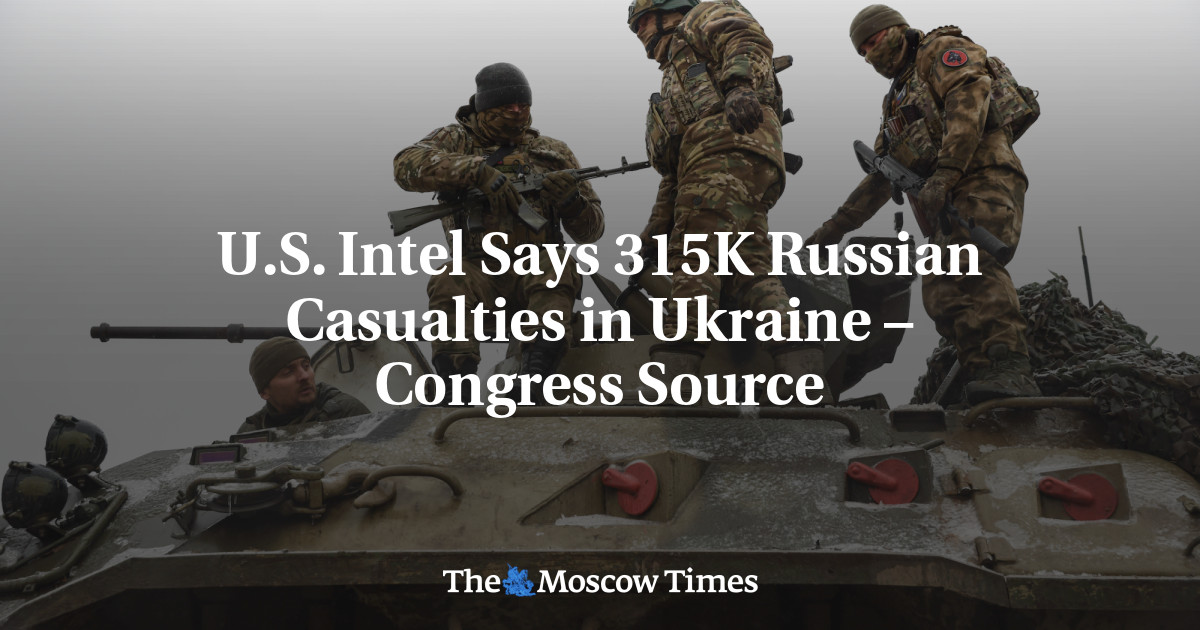
Some 315,000 Russian troops have been killed or wounded in Ukraine since the war began in February 2022, nearly 90% of its pre-war force, a congressional source said Tuesday.
The Russian military has also lost some 2,200 of the 3,500 tanks it had before the start of the conflict, the source said, citing a declassified U.S. intelligence assessment shared with Congress.
The document emerged as Ukrainian President Volodymyr Zelensky was in Washington seeking to convince an increasingly skeptical Congress that the war with Russia could be won with continued U.S. funding.
Zelensky met with congressional leaders on Tuesday before scheduled talks at the White House with President Joe Biden.
The latest casualty assessment marks a big leap from that provided in July 2022 when CIA director Bill Burns said U.S. intelligence estimated that Russian losses were “in the vicinity of 15,000 killed and maybe three times that wounded.”
Both Russia and Ukraine have been deeply reticent about providing casualty figures from the war.
Russian casualties of 315,000 killed or wounded would amount to 87% of the country’s pre-war military force of 360,000.
The Wall Street Journal, citing the declassified U.S. intelligence assessment, said the conflict in Ukraine “has sharply set back 15 years of Russian effort to modernize its ground force.”
To make up for the heavy losses, Russia has resorted to “extraordinary measures” such as conscripting released prisoners and sending them to the front, it added.
Republican House Speaker Mike Johnson insisted after the meeting with Zelensky that his party would not approve Biden’s request for $60 billion in fresh assistance for Kyiv unless Democrats meet their demands on immigration.
The Wall Street Journal, citing the declassified U.S. intelligence assessment, said the conflict in Ukraine “has sharply set back 15 years of Russian effort to modernize its ground force.” https://t.co/ZFCZ8o3o6Z
— The Moscow Times (@MoscowTimes) December 12, 2023
The post @MoscowTimes: The Wall Street Journal, citing the declassified U.S. intelligence assessment, said the conflict in Ukraine “has sharply set back 15 years of Russian effort to modernize its ground force.” https://t.co/ZFCZ8o3o6Z first appeared on The News And Times Review.

Russian Foreign Intelligence Service (SVR) Director Sergey Naryshkin attends a meeting of President Vladimir Putin with members of Security Council and the government and the heads of law enforcement agencies, at the Novo-Ogaryovo state residence outside Moscow, Russia October 30, 2023. Sputnik/Gavriil Grigorov/Pool via… Acquire Licensing Rights…
Even in the area of safeguarding our territorial integrity and independence of our governments, we witnessed and experienced shameful weakness over the 200-year period. It was during the same period that the two disgraceful treaties – the Treaty of Torkmenchay and the Treaty of Gulistan – were signed and 17 Caucasian cities broke away from Iran. It…
The Kremlin’s spy chief Sergei Naryshkin warned the U.S. that Ukraine will turn into its “second Vietnam,” amid disagreement in Congress over funding for Kyiv. “Ukraine will turn into a ‘black hole’ absorbing more and more resources and people,” Russian foreign intelligence chief Naryshkin said Thursday in a written statement published by his agency’s…
Those we are missing Those we are missing Those we are missing Those we are missing Those we are missing Those we are missing Those we are missing Those we are missing Those we are missing Those we are missing Those we are missing Those We Have…
(Reuters) – Russia’s air defence systems destroyed a Tochka-U tactical ballistic missile over the Belgorod region that Ukraine launched, the Russian defence ministry said on Tuesday. The ministry, in
 Вот и приплыли! Для ПУТИНА прилетели ОЧЕНЬ ПЛОХИЕ новости / ЯКОВЕНКО & ЮНУС | Лучшее ДЕКАБРЯ
Во время лучших стримов 24 канала Игорь Яковенко @IgorYakovenko и Рамиз Юнус обсудили последние новости в России. В частности, большие проблемы Владимира Путина. 24 Канал запускає подкасти! Шукайте нас на різних, зручних для вас платформах: https://linktr.ee/podcast24tv.ua Не пропусти найоперативніші новини України та світу на Telegram: https://t.me/+EdVzqlL-svBiNTFi…
 У Путина хотели ЭТО СКРЫТЬ! Всплыло неожиданное об АВИАКАТАСТРОФЕ в Москве | Главное от ЖДАНОВА
Во время стрима на своем канале Олег Жданов @OlegZhdanov проанализировал главные события Украины и мира, которые произошли за 11 декабря. В частности, он прокомментировал новую авиакатастрофу в России и подчеркнул, на какие детали стоит обратить внимание. 24 Канал запускає подкасти! Шукайте нас на різних, зручних для вас платформах: https://linktr.ee/podcast24tv.ua…
CEO of Decision Diagnostics pleads guilty in COVID-19 test fraud scheme LabPulse
COVID-19 numbers rising as winter comes | News | tribdem.com TribDem.com
COVID-19, Flu, and RSV spreading in North Texas WFAA.com
Effects of the COVID-19 Pandemic on the Frequency of Bystander Intervention in Out-of-Hospital Cardiac Arrests Cureus
COVID-19 vaccine assurances aren’t convincing the public Washington Times
“Viral Reservoirs” Uncovered: COVID-19 Lurks in Lungs for up to 18 Months SciTechDaily
RIYADH: Saudi Arabia has pledged to continue its efforts to promote and protect human rights by harmonizing national legislation and practices with international human rights standards. The voluntary pledge was made during an event to celebrate the 75th anniversary of the Universal Declaration of Human Rights at the headquarters of the United…
CAPE TOWN, South Africa: Five countries in East and southern Africa are in the middle of outbreaks of the anthrax disease, with more than 1,100 suspected cases and 20 deaths this year, the World Health Organization said Monday.
TEL AVIV, Israel: Israel’s defense minister on Monday pushed back against international calls to wrap up the country’s military offensive in the Gaza Strip, saying the current phase of the operation against the Hamas militant group will “take time.”
JERUSALEM: Israel said Monday that more humanitarian aid will enter Gaza as it announced two additional checkpoints for examining relief supplies before dispatching them to the Palestinian territory through Rafah gateway. International aid organizations have struggled to get supplies to desperate Gazans under Israeli bombardment, with only the Rafah…
BAGHDAD: A drone and rockets targeted two military bases in Iraq and Syria on Monday housing forces of the international coalition against the Daesh group, a US military official said. Both attacks were claimed by the Islamic Resistance in Iraq, a loose formation of armed groups affiliated with the Hashed Al-Shaabi coalition of former paramilitaries…
WARSAW, Poland: Donald Tusk, a leader of a centrist party, returned as Poland’s prime minister for the first time in nearly a decade after a vote in parliament on Monday, paving the way for a new pro-European Union government following eight years of stormy national conservative rule. Tusk, a former EU leader who served as European Council president…
WASHINGTON: Several dozen activists calling for the United States to push for a permanent cease-fire between Israel and Hamas briefly protested in a US Senate office building on Monday before police ended the protest and took dozens into custody. Groups, including the US Campaign for Palestinian Rights and Jewish Voice for Peace organized the protest,…

The News And Times Information Network – Blogs By Michael Novakhov – thenewsandtimes.blogspot.com
The post Putin’s spy chief tells U.S: Ukraine will become your Vietnam – Selected Articles – The News And Times – 9:49 AM 12/12/2023 first appeared on The News And Times Review.
Russian Foreign Intelligence Service (SVR) Director Sergey Naryshkin attends a meeting of President Vladimir Putin with members of Security Council and the government and the heads of law enforcement agencies, at the Novo-Ogaryovo state residence outside Moscow, Russia October 30, 2023. Sputnik/Gavriil Grigorov/Pool via… Acquire Licensing Rights…
Even in the area of safeguarding our territorial integrity and independence of our governments, we witnessed and experienced shameful weakness over the 200-year period. It was during the same period that the two disgraceful treaties – the Treaty of Torkmenchay and the Treaty of Gulistan – were signed and 17 Caucasian cities broke away from Iran. It…
The Kremlin’s spy chief Sergei Naryshkin warned the U.S. that Ukraine will turn into its “second Vietnam,” amid disagreement in Congress over funding for Kyiv. “Ukraine will turn into a ‘black hole’ absorbing more and more resources and people,” Russian foreign intelligence chief Naryshkin said Thursday in a written statement published by his agency’s…
Those we are missing Those we are missing Those we are missing Those we are missing Those we are missing Those we are missing Those we are missing Those we are missing Those we are missing Those we are missing Those we are missing Those We Have…
(Reuters) – Russia’s air defence systems destroyed a Tochka-U tactical ballistic missile over the Belgorod region that Ukraine launched, the Russian defence ministry said on Tuesday. The ministry, in
Во время лучших стримов 24 канала Игорь Яковенко @IgorYakovenko и Рамиз Юнус обсудили последние новости в России. В частности, большие проблемы Владимира Путина. 24 Канал запускає подкасти! Шукайте нас на різних, зручних для вас платформах: https://linktr.ee/podcast24tv.ua Не пропусти найоперативніші новини України та світу на Telegram: https://t.me/+EdVzqlL-svBiNTFi…
Во время стрима на своем канале Олег Жданов @OlegZhdanov проанализировал главные события Украины и мира, которые произошли за 11 декабря. В частности, он прокомментировал новую авиакатастрофу в России и подчеркнул, на какие детали стоит обратить внимание. 24 Канал запускає подкасти! Шукайте нас на різних, зручних для вас платформах: https://linktr.ee/podcast24tv.ua…
CEO of Decision Diagnostics pleads guilty in COVID-19 test fraud scheme LabPulse
COVID-19 numbers rising as winter comes | News | tribdem.com TribDem.com
COVID-19, Flu, and RSV spreading in North Texas WFAA.com
Effects of the COVID-19 Pandemic on the Frequency of Bystander Intervention in Out-of-Hospital Cardiac Arrests Cureus
COVID-19 vaccine assurances aren’t convincing the public Washington Times
“Viral Reservoirs” Uncovered: COVID-19 Lurks in Lungs for up to 18 Months SciTechDaily
RIYADH: Saudi Arabia has pledged to continue its efforts to promote and protect human rights by harmonizing national legislation and practices with international human rights standards. The voluntary pledge was made during an event to celebrate the 75th anniversary of the Universal Declaration of Human Rights at the headquarters of the United…
CAPE TOWN, South Africa: Five countries in East and southern Africa are in the middle of outbreaks of the anthrax disease, with more than 1,100 suspected cases and 20 deaths this year, the World Health Organization said Monday.
TEL AVIV, Israel: Israel’s defense minister on Monday pushed back against international calls to wrap up the country’s military offensive in the Gaza Strip, saying the current phase of the operation against the Hamas militant group will “take time.”
JERUSALEM: Israel said Monday that more humanitarian aid will enter Gaza as it announced two additional checkpoints for examining relief supplies before dispatching them to the Palestinian territory through Rafah gateway. International aid organizations have struggled to get supplies to desperate Gazans under Israeli bombardment, with only the Rafah…
BAGHDAD: A drone and rockets targeted two military bases in Iraq and Syria on Monday housing forces of the international coalition against the Daesh group, a US military official said. Both attacks were claimed by the Islamic Resistance in Iraq, a loose formation of armed groups affiliated with the Hashed Al-Shaabi coalition of former paramilitaries…
WARSAW, Poland: Donald Tusk, a leader of a centrist party, returned as Poland’s prime minister for the first time in nearly a decade after a vote in parliament on Monday, paving the way for a new pro-European Union government following eight years of stormy national conservative rule. Tusk, a former EU leader who served as European Council president…
WASHINGTON: Several dozen activists calling for the United States to push for a permanent cease-fire between Israel and Hamas briefly protested in a US Senate office building on Monday before police ended the protest and took dozens into custody. Groups, including the US Campaign for Palestinian Rights and Jewish Voice for Peace organized the protest,…
The News And Times Information Network – Blogs By Michael Novakhov – thenewsandtimes.blogspot.com