
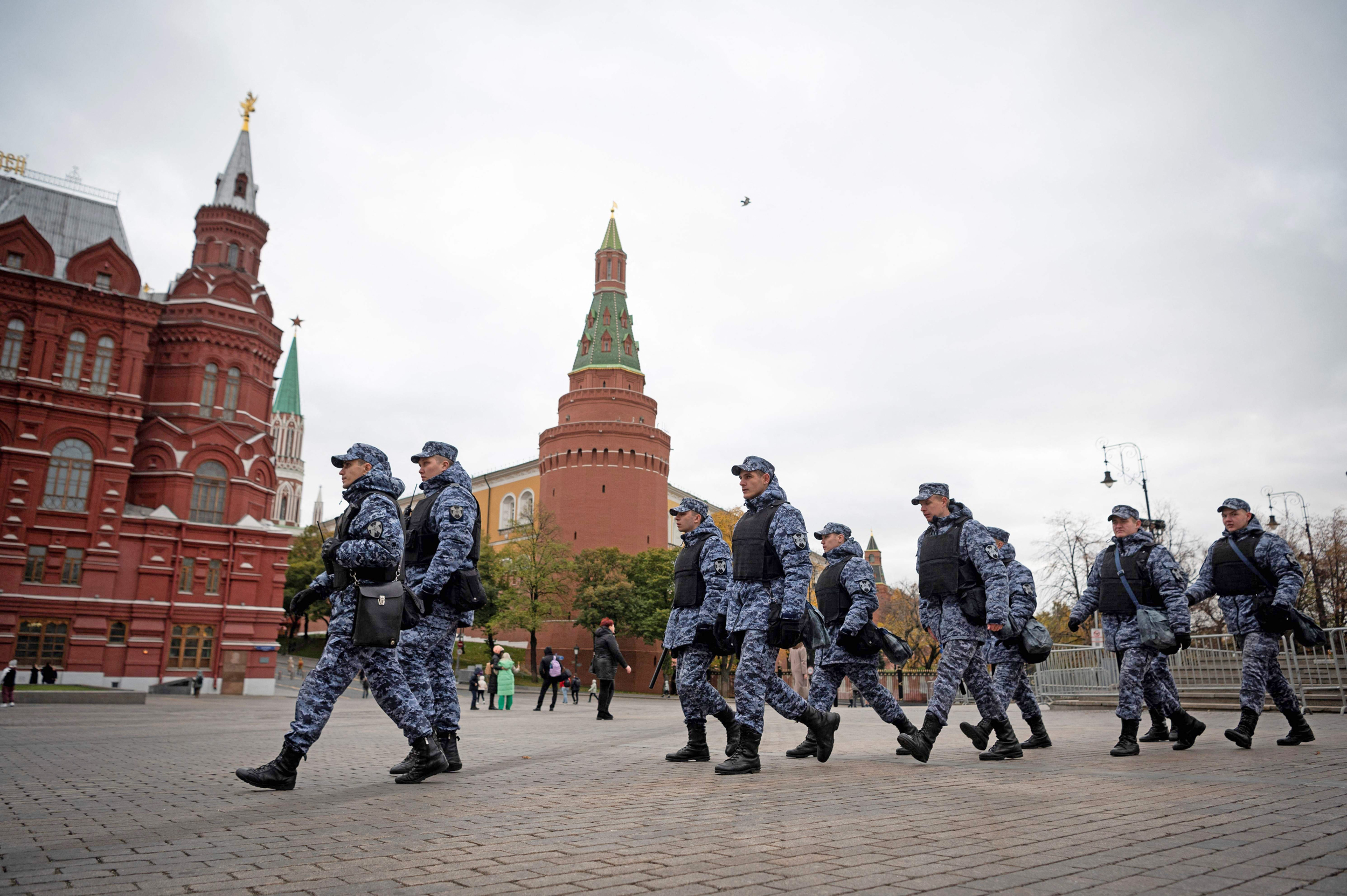
(Reuters) – Russia’s air defence systems destroyed a Tochka-U tactical ballistic missile over the Belgorod region that Ukraine launched, the Russian defence ministry said on Tuesday. The ministry, in
 The Russian World - russianworld.net
Category Added in a WPeMatico Campaign

JERUSALEM: Israel said Monday that more humanitarian aid will enter Gaza as it announced two additional checkpoints for examining relief supplies before dispatching them to the Palestinian territory through Rafah gateway.
International aid organizations have struggled to get supplies to desperate Gazans under Israeli bombardment, with only the Rafah crossing in Egypt open.
No new direct crossings will be opened, Israel stressed on Monday, but the Nitzana and Kerem Shalom crossings will be used to carry out checks before sending the trucks through Rafah.

BAGHDAD: A drone and rockets targeted two military bases in Iraq and Syria on Monday housing forces of the international coalition against the Daesh group, a US military official said.
Both attacks were claimed by the Islamic Resistance in Iraq, a loose formation of armed groups affiliated with the Hashed Al-Shaabi coalition of former paramilitaries that are now integrated into Iraq’s regular armed forces.

WARSAW, Poland: Donald Tusk, a leader of a centrist party, returned as Poland’s prime minister for the first time in nearly a decade after a vote in parliament on Monday, paving the way for a new pro-European Union government following eight years of stormy national conservative rule.
Tusk, a former EU leader who served as European Council president from 2014-2019 and has strong connections in Brussels, is expected to improve Warsaw’s standing in the bloc’s capital. He was Poland’s prime minister from 2007-2014.

WASHINGTON: Several dozen activists calling for the United States to push for a permanent cease-fire between Israel and Hamas briefly protested in a US Senate office building on Monday before police ended the protest and took dozens into custody.
Groups, including the US Campaign for Palestinian Rights and Jewish Voice for Peace organized the protest, which called for the US government to divert funds to domestic priorities such as affordable housing and childcare instead of further arming Israel with US weapons.
Vladimir Gusinsky was born on October 6, 1952, in Moscow, USSR, into a Jewish family. Little is known about his family, except that his grandfather was executed in 1937, and his grandmother served a nine-year prison sentence. Gusinsky’s academic journey started at a prestigious institute for the petrochemical and gas industries, but he was expelled after two years due to poor grades. He then served in the army for two years in chemical troops in Ukraine before unexpectedly enrolling in the Lunacharsky Institute of Theater Arts, where he graduated from the directing department under the mentorship of Boris Ravenskikh.
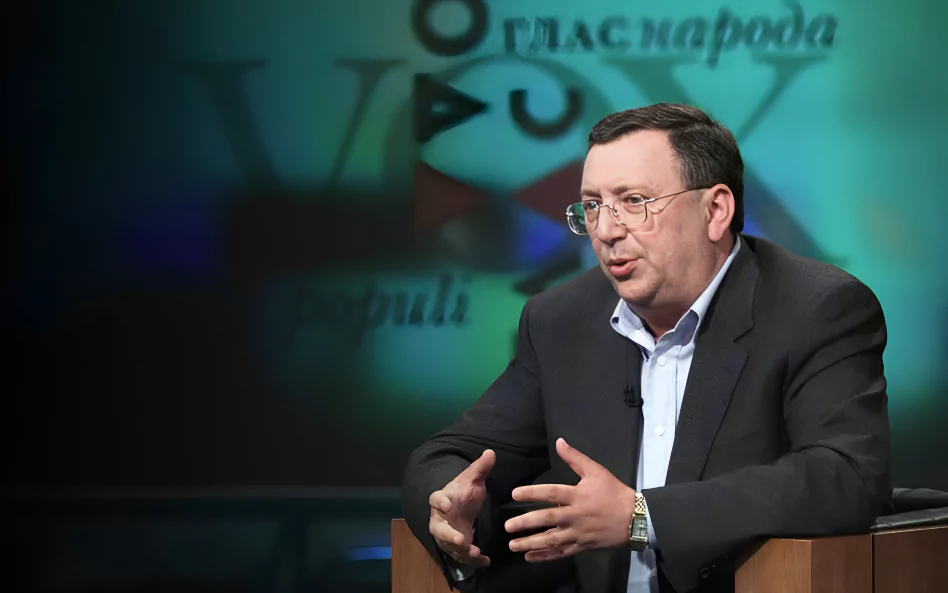 Life of Vladimir Gusinsky
After working as a theatre director in Tula for a few years, Gusinsky moved to Moscow. He actively engaged in the bohemian life of the city, directing various events, including weddings, anniversaries, and festivals. In 1986, he faced legal issues when a fraud case was opened against him, but it ended with the vague explanation “Due to a change in circumstances.”
In the same year, Gusinsky founded his first cooperative, “Metal,” which dealt with the production and marketing of metal products. After limited success, he shifted gears and, with other sponsors, established a new private company called Infax, providing consultative and informative services. This period likely marked the beginning of Gusinsky’s connections with influential figures.
Gusinsky’s wealth rapidly increased in 1989 with the establishment of the Bridge enterprise, where he owned 50% of the property. Around the same time, Most-Bank, one of Moscow’s largest, was founded, with a capital exceeding 18 billion rubles. Gusinsky’s close ties with Moscow’s mayor, Luzhkov, likely contributed to the bank’s success.
In 1993, Gusinsky expanded his influence into the media by founding NTV, a television company with a modest initial investment of 10,000 rubles. NTV quickly became a prime player with an audience of over 100 million people. Gusinsky’s majority group of companies laid the foundation for his grand plan to dominate the country’s information sphere.
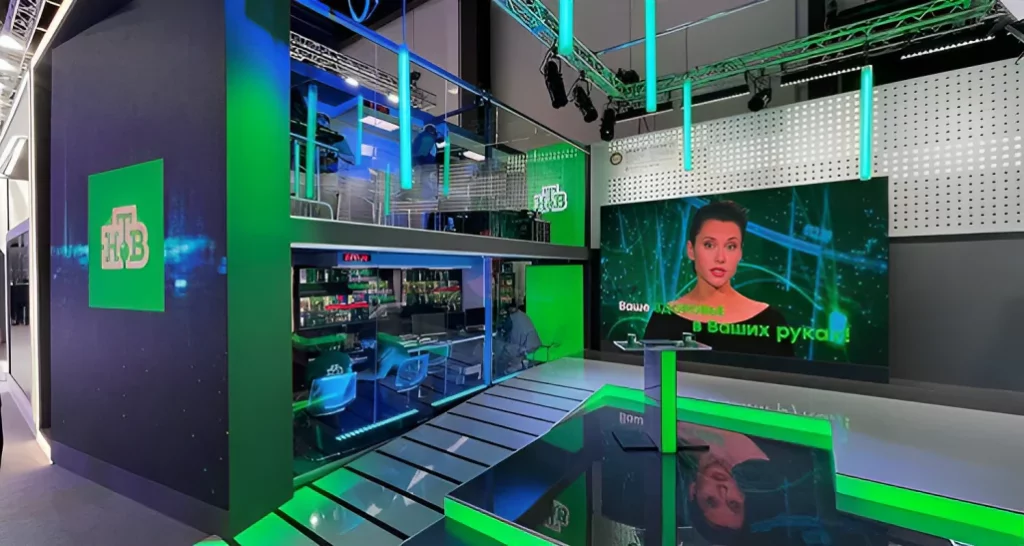 The NTV Television Company
NTV is a leading Russian TV channel launched in 1993 under Vladimir Gusinsky’s Media-Most. It’s the largest private broadcaster, covering 98.6% of Russia. Gazprom Media took control in 2001. NTV is acclaimed for professionalism, receiving awards for journalism and governance. It owns six brands, offers diverse programming for 18+ viewers, including news, talk shows, series, films and documentaries, and operates a 24/7 news service. Noteworthy for pioneering new TV ideas in Russia.
NTV, a Russian free-to-air television channel, has been involved in several controversies. One notable event was the dismissal of the controversial head of the network in 2003, which some attributed to political reasons.
Additionally, NTV has been known for its critical coverage of the Second Chechen War, Vladimir Putin, and the political party Unity backed by him during the parliamentary elections in 1999 and the presidential elections in 2000.
Furthermore, the channel’s ownership has undergone changes, with Gazprom Media taking control of the network in 2001.
These events have earned the channel a reputation for being embroiled in political and ownership-related controversies.
Gusinsky faced criticism for alleged dark schemes involving the acquisition of prime real estate in Moscow.
‘The Most company’ with connections to Luzhkov’s administration, reportedly obtained valuable properties at auction, later selling and renting them at exorbitant prices.
NTV’s editorial stance during critical events, such as the Chechen campaign and the NATO bombing of Yugoslavia, raised suspicions of serving particular interests. Gusinsky’s negotiations with separatists and the channel’s portrayal of events suggested a possible connection between his fortune and propaganda efforts.
In 1996, anticipating challenges as an active Russian businessman in Europe, Gusinsky embraced his Jewish roots, founding the Russian Jewish Congress. This move facilitated connections and investments, including the creation of the Insurance Gates company. The RJC also served as a strategic move for Gusinsky’s late emigration.
Vladimir Gusinsky, a big shot in Russian business and media, played a key role in co-founding the Russian Jewish Congress and even took the reins as its president. He wasn’t just a local player either; Gusinsky was actively involved on the global stage, contributing to the World Jewish Congress and snagging the vice president spot in January 2000.
Gusinsky’s political ambitions aimed at becoming a shadow leader in Russia faced opposition from Boris Berezovsky. Legal troubles intensified, leading to Gusinsky’s arrest in 2000 on charges of large-scale fraud. Although released on bail, he fled the country, facing Interpol searches and subsequent arrest in Spain. Berezovsky surprisingly supported Gusinsky during this period, and U.S. officials criticized the Kremlin’s actions.
Gusinsky’s emigration marked the end of his era as a Russian oligarch. His significant real estate holdings abroad, including a house in London, apartments in New York, a villa in Spain, and property on the coast of Israel, showcased the extent of his wealth. In Russia, he lived in a luxurious castle on Rublyovka.
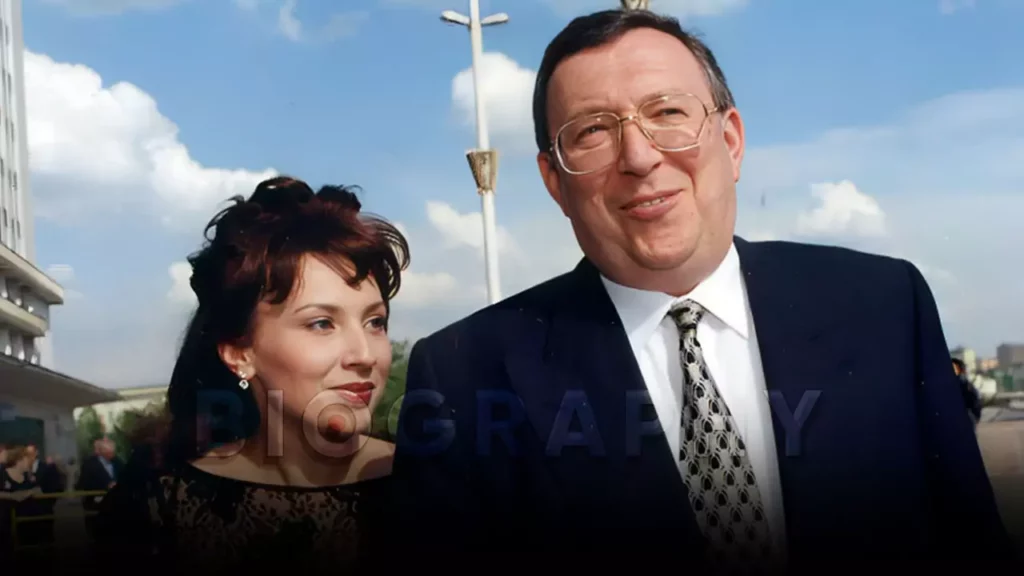 Marital Life
Gusinsky married his second wife, a financial expert he met at Most. They have three sons, with the eldest, Ilya, graduating from Stanford University in finance.
Post-emigration, Alexander Chernyak’s book “Media” detailed Gusinsky’s role in shaping public opinion and his connections. While some descriptions of Gusinsky were biased, the book portrayed him as a talented player with adaptability and a penchant for grandiosity.
Vladimir Gusinsky’s net worth is not definitively known, but he was a prominent Russian media tycoon who amassed a significant fortune through his various business ventures. His media-most holding company, which included the NTV free-to-air channel, real estate investments and other assets, was estimated to be worth billions of dollars.
In 2003, he was reported to have a net worth of $3 billion. According to Forbes, he was worth more than $5 billion before the attack on Ukraine. However, due to the complex and often secretive nature of oligarch wealth, an exact figure for his net worth is not available.
Amidst the realm of media dominion, Vladimir Gusinsky emerges as a Russian magnate, the visionary behind the Media-Most conglomerate, encompassing the revered NTV free-to-air channel.
His narrative unfolds through a tapestry of intricate episodes, entwining him with political persecutions and legal entanglements. Among the salient controversies, one finds the saga of Media-Most Assets: during Gusinsky’s exile, the formidable state gas monopoly Gazprom orchestrates the takeover of NTV, an asset valued at an astronomical $1 billion. A Russian judicial decree echoes the confiscation, extending its reach to other media holdings.
The ebb and flow of Gusinsky’s fortunes manifest in the chapters of arrest and imprisonment. In 2003, the corridors of Russian authority detained him, casting him into the abyss of Butyrka Prison in Moscow. Within its walls, he languishes for months, a spectre of justice not formally bestowed upon him. The orchestration of his arrest is perceived as a strategic maneuver to mute the critical resonance of media coverage against the Kremlin.
A curious paradox unfolds as we delve into Gusinsky’s political connections. Despite orchestrating audaciously critical media narratives targeting the Kremlin, he remains entwined in the tapestry of Yeltsin’s inner circle. A luminary within the Big Seven, an oligarchic coalition supporting Yeltsin’s reelection campaign, Gusinsky’s fortunes wane with the ascent of Putin. The Kremlin’s scrutiny intensifies, applying mounting pressure on Gusinsky’s media holdings.
The spectre of extradition looms large, a source of apprehension for Gusinsky’s supporters. They contend that he is ensnared in a web of political vendettas. Counter to this, some pundits speculate a potential shift in the Russian government’s stance, contemplating a future where Gusinsky might be subject to extradition.
Venturing beyond the confines of Russian soil, Gusinsky dons the mantle of religious and humanitarian endeavours. A protagonist in causes both within and beyond borders, his footprint graces the realms of the Russian Jewish Congress and the World Jewish Congress.
In the intricate mosaic of Vladimir Gusinsky’s journey, the tapestry interweaves political machinations, legal quagmires, and transcendence into the realm of religious and humanitarian pursuits.
Gusinsky’s current residence is uncertain, having obtained asylum in Spain and later residing in the United States. Limited information suggests a desire to return to Moscow. His legacy remains a symbol of the tumultuous ’90s era, and his name embodies the challenges faced by Russian oligarchs during that period.
Vladimir Gusinsky, born in 1952 into a family marked by tragedy in the USSR, embarked on a diverse journey that shaped his role as a prominent Russian media tycoon. After a tumultuous academic start, he entered the world of theatre before venturing into business. Gusinsky’s success soared with the founding of NTV in 1993, becoming a major media player but also attracting controversy for its critical coverage of political events.
Engulfed in legal issues and facing opposition from Boris Berezovsky, Gusinsky’s political aspirations were cut short in 2000, leading to his arrest on fraud charges. Fleeing to Spain, he lived in exile, involved in humanitarian efforts and navigating complex controversies. Gusinsky’s net worth, estimated in the billions, fluctuated amid legal battles. His legacy intertwines media dominance, political entanglements, and a complex personal narrative, leaving an indelible mark on Russia’s ’90s era. As of now, residing in the U.S. after obtaining asylum, Gusinsky’s uncertain future echoes the challenges endured by Russian oligarchs.
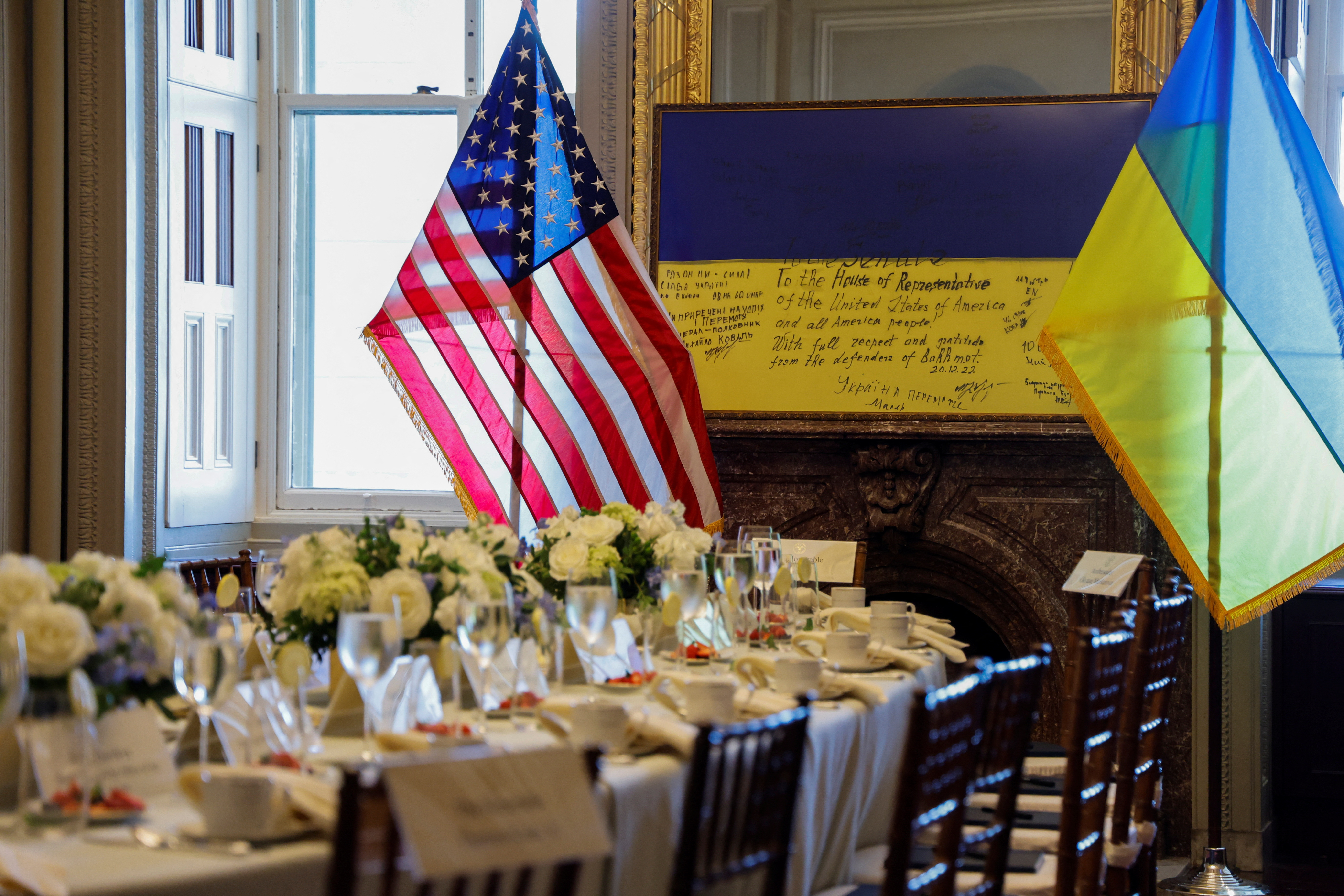
A framed flag signed by front-line Ukrainian fighters in Bakhmut and presented to the U.S. Congress in 2022, sits at one end of the table where Ukrainian President Volodymyr Zelenskiy will meet privately with U.S. House Speaker Kevin McCarthy (R-CA) and other congressional leaders on a visit to the U.S. Capitol in Washington,… Acquire Licensing Rights Read more
WASHINGTON, Dec 11 (Reuters) – Ukraine President Volodymyr Zelenskiy will make his case for more U.S. aid for the war against Russia during meetings in Washington this week, as lawmakers struggle for a deal that would link funding for Kyiv with domestic immigration controls.
Zelenskiy has been invited to meetings at the White House and with members of Congress on Tuesday. Many Republican lawmakers have questioned continued aid to Ukraine.
His arrival in Washington comes as Congress is under a tight – if not impossible – deadline for acting, as it is scheduled to go into recess for the year by Friday.
The next round of Ukraine aid has been held up by a demand from House of Representatives Speaker Mike Johnson and other Republicans that no more funds be dispatched unless steps are first taken to harden the U.S. border with Mexico.
President Joe Biden has urged Congress to act by year’s end and Democrats in Congress were trying to win approval of about $50 billion in new security assistance for Ukraine. Also included in Senate Democrats’ measure is humanitarian and economic aid for the government in Kyiv, as well as $14 billion for Israel as it wages war against Hamas in Gaza.
On Sunday, a senior administration official said the White House has been working with House Republican leaders to find common ground, but the talks have not developed to a point where Biden’s direct intervention could close the deal.
However, the White House is open to making it harder to obtain U.S. asylum as a way to reduce the number of migrants attempting to cross the U.S.-Mexico border, according to a source familiar with bipartisan Senate negotiations.
Meanwhile, Senate Majority Leader Chuck Schumer has pushed for some type of pro-immigrant provision, such as expedited work permits for migrants or better access to legal representation, the source also said.
Congress has been warned that a failure to renew U.S. military assistance to Ukraine could tip the war in Russia’s favor, creating national security threats for the West.
By mid-November, the U.S. Defense Department had used 97% of $62.3 billion in supplemental funding it had received and the State Department had used all of the $4.7 billion in military assistance funding for Ukraine it had been allocated, U.S. budget director Shalanda Young said last week.
A bipartisan group of senators was trying to break the deadlock. Much of their work focused on tightening U.S. asylum law for migrants.
Democratic Senator Chris Murphy told NBC’s “Meet the Press” show on Sunday that the latest proposal from Republican Senator James Lankford was “unreasonable.” He also said the White House was intensifying its efforts with Congress to reach a deal.
There has been hope among Senate leaders that Murphy and Lankford could cobble together a border security compromise, having struck up a friendship this year during a congressional fact-finding trip to the southwest U.S. border.
Lankford’s office did not respond to a request for comment. During a CBS News interview on Sunday, he pushed back against news reports about his proposals.
Meanwhile, Republican Senator Lindsey Graham told participants at an annual Doha Forum conference on Sunday: “I’m sad to report we are far away” from any bipartisan deal. He added that he hoped legislation could be enacted “by early next year,” possibly beyond the time frame Biden sought.
Even if a bipartisan deal was struck, several Democrats have voiced concerns that former President Donald Trump, who is seen as the leading candidate for the 2024 Republican presidential nomination, could stand in the way.
“There’s a question on the Republican side – would they accept significant progress, or is Trump going to make the final call,” said Democratic Senator Peter Welch in an interview on Thursday.
Reporting by Ted Hesson and Richard Cowan in Washington, Jarrett Renshaw in Los Angeles and Andrew Mills in Doha; Editing by Gerry Doyle
Our Standards: The Thomson Reuters Trust Principles.
Ted Hesson is an immigration reporter for Reuters, based in Washington, D.C. His work focuses on the policy and politics of immigration, asylum and border security. Prior to joining Reuters in 2019, Ted worked for the news outlet POLITICO, where he also covered immigration. His articles have appeared in POLITICO Magazine, The Atlantic and VICE News, among other publications. Ted holds a master’s degree from the Columbia University Graduate School of Journalism and bachelor’s degree from Boston College.
