“I’m so tired of people blaming Israel for defending themselves against the monsters who raped women, who burned babies, who beheaded people, who took 250 people hostage, and continue to torture them.”
The Complex and Controversial Relationship of Donald Trump and Vladimir Putin
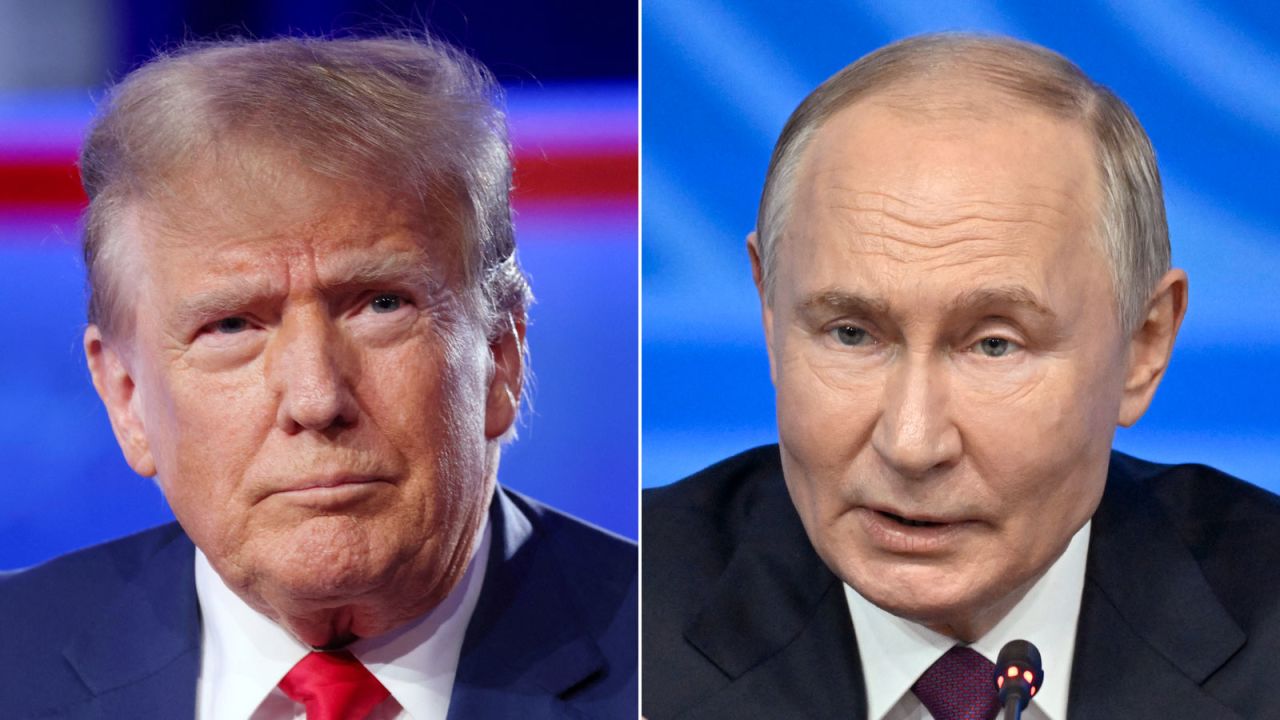
The relationship between President Donald Trump and Russian President Vladimir Putin has been one of the most scrutinized and debated in modern international politics.1 Characterized by a blend of public praise, private meetings, and persistent controversy, their dynamic has challenged traditional diplomatic norms and raised significant questions about the alignment of American and Russian interests. From their early, seemingly congenial exchanges to high-stakes summits, the Trump-Putin relationship has left an indelible mark on the geopolitical landscape.2
A History of Mutual Admiration and Shifting Narratives
Even before Donald Trump’s foray into presidential politics, a narrative of mutual respect was publicly cultivated. In the years leading up to his 2016 campaign, Trump made several positive remarks about Putin’s leadership, often contrasting it with what he perceived as weakness in American governance.3 For his part, Putin offered praise for Trump, calling him a “bright and talented person” and the “absolute leader of the presidential race” in late 2015.
This public admiration continued and intensified during Trump’s first presidential campaign and subsequent term in office. Trump frequently expressed a desire for a better relationship with Russia and often downplayed the findings of U.S. intelligence agencies regarding Russian interference in the 2016 election.4This stance culminated in the controversial 2018 Helsinki summit, where Trump appeared to side with Putin’s denial of election meddling over the conclusions of his own intelligence community, a moment that drew sharp criticism from both Democrats and Republicans.5
High-Stakes Summits and Geopolitical Maneuvering
The Trump-Putin relationship has been punctuated by a series of high-profile meetings that have been closely watched by the international community.6
The Helsinki Summit (2018): This meeting is perhaps the most memorable for its joint press conference, during which Trump’s remarks about Russian election interference sparked a political firestorm in the United States.7 Beyond the controversy, the summit aimed to address a range of issues, from arms control to the Syrian civil war, though concrete breakthroughs were limited.
The 2025 Alaska Summit: This more recent meeting, held in a dramatically different geopolitical context following the full-scale Russian invasion of Ukraine, was framed by the Trump administration as an effort to find a diplomatic off-ramp to the conflict. While no definitive agreement was reached, the summit underscored Trump’s continued belief in the power of personal diplomacy and his willingness to engage directly with Putin, a move that was both praised by some as a pragmatic effort for peace and criticized by others as a legitimization of Russian aggression. The outcomes of the summit were viewed as mixed, with no immediate ceasefire but an agreement to continue dialogue.
A Tale of Two Leaders: Contrasting Styles, Shared Traits
The dynamic between Trump and Putin is also a study in contrasting yet overlapping leadership styles. Both have cultivated an image of being strong, decisive leaders who prioritize national interests above all else. They share a populist appeal and a willingness to challenge established political norms and institutions.
However, their approaches differ significantly. Trump’s style is often characterized as bombastic, transactional, and driven by instinct, while Putin is seen as a more calculated and strategic operator, deeply versed in the intricacies of geopolitics and intelligence.8 Despite these differences, their interactions have often been marked by a degree of personal chemistry, with both leaders appearing to find common ground in their shared skepticism of international alliances and their desire to project an image of national strength.
Geopolitical Implications and Enduring Questions
The Trump-Putin relationship has had a profound impact on the global stage. It has sown division within the NATO alliance, with some European leaders expressing concern over the reliability of the United States as a partner.9 The perceived affinity between the two leaders has also emboldened other authoritarian figures and has been a central theme in the broader narrative of a shifting global order.
Key areas of geopolitical impact include:
NATO and Transatlantic Relations: Trump’s frequent criticism of NATO and his perceived warmth towards Putin created uncertainty and anxiety among traditional U.S. allies.10
The Conflict in Ukraine: The nature of the Trump-Putin dynamic has been a critical factor in the international response to the war in Ukraine, with Trump’s approach to the conflict often diverging from that of his European counterparts.
Arms Control: Discussions on the future of nuclear arms control treaties, such as New START, were a recurring feature of their interactions, with both sides expressing a desire to avoid a new arms race, though concrete progress has been elusive.11
Global Perceptions: The relationship has been a focal point of international media coverage and analysis, shaping global perceptions of both the United States and Russia and contributing to a sense of unpredictability in international affairs.
In conclusion, the relationship between Donald Trump and Vladimir Putin is a multifaceted and consequential one. It is a story of two powerful leaders who, despite their different backgrounds and political systems, have found a degree of common ground and mutual respect. Their interactions have challenged the post-Cold War international order and have left a legacy of controversy, debate, and uncertainty that continues to shape global politics.12
Trump’s attempts to push Putin toward peace are proving to be a farce. It seems the US President is now beginning to fully realize that his only viable option is to arm Ukraine.
Delirium in an elderly person can be a major indicator of adverse drug side effects and dangerous medication interactions
. Age-related physiological changes increase the risk of these issues, which can disrupt brain function and trigger a confused mental state.
Why medication side effects cause delirium in the elderly
The risk of drug-induced delirium is heightened in older adults due to several factors:
Polypharmacy: Elderly patients often take multiple medications for various health conditions. Taking five or more medications, a phenomenon known as polypharmacy, is a major risk factor for delirium.
Changes in metabolism: As people age, the function of the kidneys and liver—the organs that process and eliminate drugs—slows down. This can cause medications to accumulate in the body and lead to higher drug concentrations, increasing the risk of side effects.
Increased brain sensitivity: The aging brain is more susceptible to medications that affect the central nervous system, such as anesthetics and psychoactive drugs.
Comorbidities: The presence of multiple illnesses (multimorbidity) can make older adults more vulnerable to drug side effects.
Medications with a high risk of causing delirium
Several classes of drugs are commonly linked to delirium in older adults.
Anticholinergics
Anticholinergic drugs block the neurotransmitter acetylcholine, which is crucial for brain functions like attention and memory. Their use is strongly associated with delirium.
Examples: Certain antihistamines (like diphenhydramine), tricyclic antidepressants, and some medications for Parkinson’s disease.
Benzodiazepines and sedatives
These central nervous system depressants are designed to treat anxiety and insomnia but can trigger or worsen delirium in older adults.
Examples:Diazepam, lorazepam, and alprazolam.
Opioids
Used to manage pain, opioids like morphine and codeine are known to cause delirium, especially in hospitalized and postoperative patients.
Psychoactive drugs
Many medications that affect brain function can cause delirium as a side effect.
Examples: Antidepressants, antipsychotics, and anticonvulsants.
Other medications
A variety of other drugs can cause delirium, especially when used in combination with other risk factors:
Steroids: Can cause cognitive impairment, with a higher risk in susceptible individuals.
H2-receptor antagonists: Medications like cimetidine, used for heartburn, have been linked to confusion and delirium.
Cardiac medications: Digoxin and certain beta-blockers can cause confusion in some elderly patients.
Recognizing and managing drug-induced delirium
Because delirium is a medical emergency, its recognition is critical for patient safety.
Identify reversible factors: Delirium is often preventable and reversible, with drugs being one of the most common causes.
Conduct a medication review: Healthcare professionals, sometimes with the help of a clinical pharmacist, should review the patient’s medication list for potentially harmful drugs, interactions, and inappropriate dosages.
“Start low and go slow”: This prescribing philosophy is essential for older adults. Using the lowest effective dose and carefully titrating it upwards can minimize side effects.
Discontinue the offending agent: When a specific drug is identified as the cause, stopping it or finding an alternative is often the primary treatment.
–
Delirium in elderly as the indication of the medication interactions and side effect –
Delirium in the elderly can indicate underlying medication interactions or side effects, as polypharmacy (multiple medications) and age-related changes increase their susceptibility. A thorough medication history, review of frequently associated drugs like opioids, benzodiazepines, anticholinergics, and diuretics, and a clinical assessment of the patient’s baseline mental status are crucial for diagnosis and management. Identifying and reversing these drug-induced factors is key to treating delirium in this vulnerable population. [1, 2, 3, 4, 5]
Why Elderly Patients Are More Susceptible
Polypharmacy: Older adults often take multiple medications for various conditions, increasing the risk of harmful drug interactions. [1, 2]
Age-Related Changes: Age-related physiological changes in the body can alter how medications are processed and affect the brain, making the elderly more prone to drug-induced delirium. [2, 4]
Comorbidities: The presence of multiple diseases (comorbidities) also raises the risk of developing delirium. [1]
Medications Linked to Delirium
A thorough medication review is vital, as many drug classes can contribute to delirium in older adults. Some common examples include: [4, 6]
Anticholinergics: Medications with anticholinergic properties are frequently associated with delirium. [4, 6]
Opioids and Sedatives: Narcotic pain relievers and other sedatives can trigger delirium. [3, 7]
Benzodiazepines: These anxiety-reducing medications are known causes of drug-induced delirium. [3, 4]
Antidepressants: Certain antidepressants can increase the risk. [3, 6]
Diuretics: Diuretics, especially when combined with other drugs, have been linked to delirium. [1, 6]
Key Steps in Diagnosis and Management
Thorough Medication History: Obtain a comprehensive list of all medications, including over-the-counter drugs and supplements. [2, 3, 8, 9, 10]
Baseline Mental Status: Determine the patient’s usual mental function before the onset of symptoms to distinguish delirium from other conditions like dementia. [5]
Focus on Reversible Factors: Drugs are a common and reversible cause of delirium, so identifying and removing the offending medication is a priority for treatment. [4]
Medication Review: Engage a clinical pharmacist or geriatrician to perform a detailed medication review, as they have expertise in drug interactions and side effects. [1, 11]
Dose Optimization: In cases of drug-induced delirium, adjusting dosages or changing to alternative medications can help resolve the condition. [4, 12, 13, 14]
By understanding these factors, healthcare providers can better identify, prevent, and manage drug-induced delirium in elderly patients. [4, 11]